
Beautiful Plants For Your Interior
Beautiful Plants For Your Interior
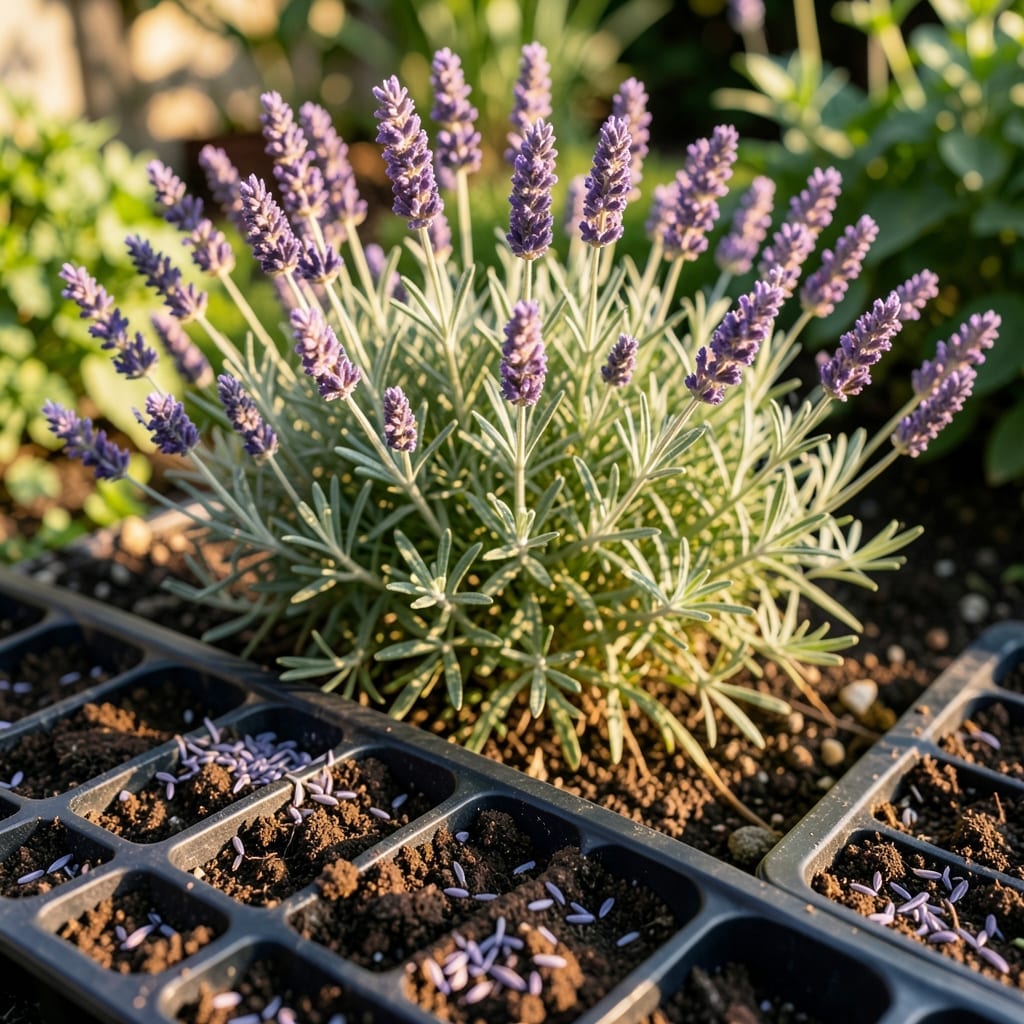
Patience is the key when growing Lavender 🟣 from seed, as this fragrant herb has a reputation for slow germination.
Understanding the timeline and ideal conditions can mean the difference between disappointment and a thriving lavender patch. It’s not just about waiting—it’s about knowing what to expect.
I’ll walk you through the typical germination process, the factors that influence it, and how to set yourself up for success from the start.

Growing lavender from seed tests my patience, but understanding the typical timeline makes it easier. Most varieties take 14-28 days to sprout under ideal conditions.
However, I’ve learned that factors like soil temperature, moisture levels, and light exposure can significantly speed up or delay this process. Some slow-growing types may even take up to 90 days to germinate.
| Stage | Timeframe | Key Conditions |
|---|---|---|
| Pre-Germination | 0-7 days | 70-75°F soil, moist medium |
| Early Sprouting | 7-14 days | Consistent warmth, good drainage |
| Active Germination | 14-21 days | Bright light, even moisture |
| Seedling Emergence | 21-28 days | Reduced humidity, gentle air flow |
| Slow Varieties | Up to 90 days | Cooler temps, less ideal conditions |
In my experience, English lavender tends to sprout faster, often within 2 weeks, while Spanish lavender can take a bit longer. The first sign I look for is a tiny green shoot pushing through the soil.
I always recommend using a seed-starting mix rather than regular garden soil. This ensures proper drainage and prevents compaction, which can suffocate emerging seedlings. A heat mat can also help maintain that optimal 70-75°F range.
Light is crucial once those first shoots appear. I place my trays under grow lights or in a sunny window to provide 12-16 hours of light daily. Without enough light, seedlings become leggy and weak.
I’ve noticed that moisture consistency is more important than overwatering. I keep the soil evenly damp but never soggy. A spray bottle works well for gentle watering without disturbing the seeds.
For those in cooler climates, starting seeds indoors 8-10 weeks before the last frost gives lavender a head start. This method helps me avoid the unpredictable spring weather that can hinder outdoor germination.
Remember, even within the same batch, germination rates can vary. Some seeds may sprout quickly while others take their time. I always plant extra seeds to account for this natural variation.
Once most seedlings have two sets of true leaves, I begin hardening them off. This gradual process prepares them for transplanting outdoors where they’ll eventually thrive in full sun and well-draining soil 🌱
If you’re eager to see those first lavender sprouts, I’ve discovered five reliable methods to encourage faster germination. The key is creating optimal conditions that mimic nature’s best growing environment.
First, I always start with stratification, which involves chilling seeds for 2-4 weeks before planting. This cold treatment breaks dormancy and signals the seeds that it’s time to grow.
I’ve found that seed-starting mixes work far better than regular garden soil. They’re formulated to provide excellent drainage while retaining just enough moisture to encourage germination without risking rot.
A heat mat is my secret weapon for maintaining that perfect 70-75°F range. Lavender seeds are finicky about temperature, and this simple tool can shave days off your germination time.
Light exposure becomes critical once sprouts appear. I use grow lights on a timer to ensure my seedlings get consistent light without the risk of leggy growth from insufficient exposure.
Finally, I can’t stress enough how important consistent moisture is. I check my trays daily, using a spray bottle to mist the surface rather than pouring water, which can displace seeds or compact the soil 🌱