
Beautiful Plants For Your Interior
Beautiful Plants For Your Interior
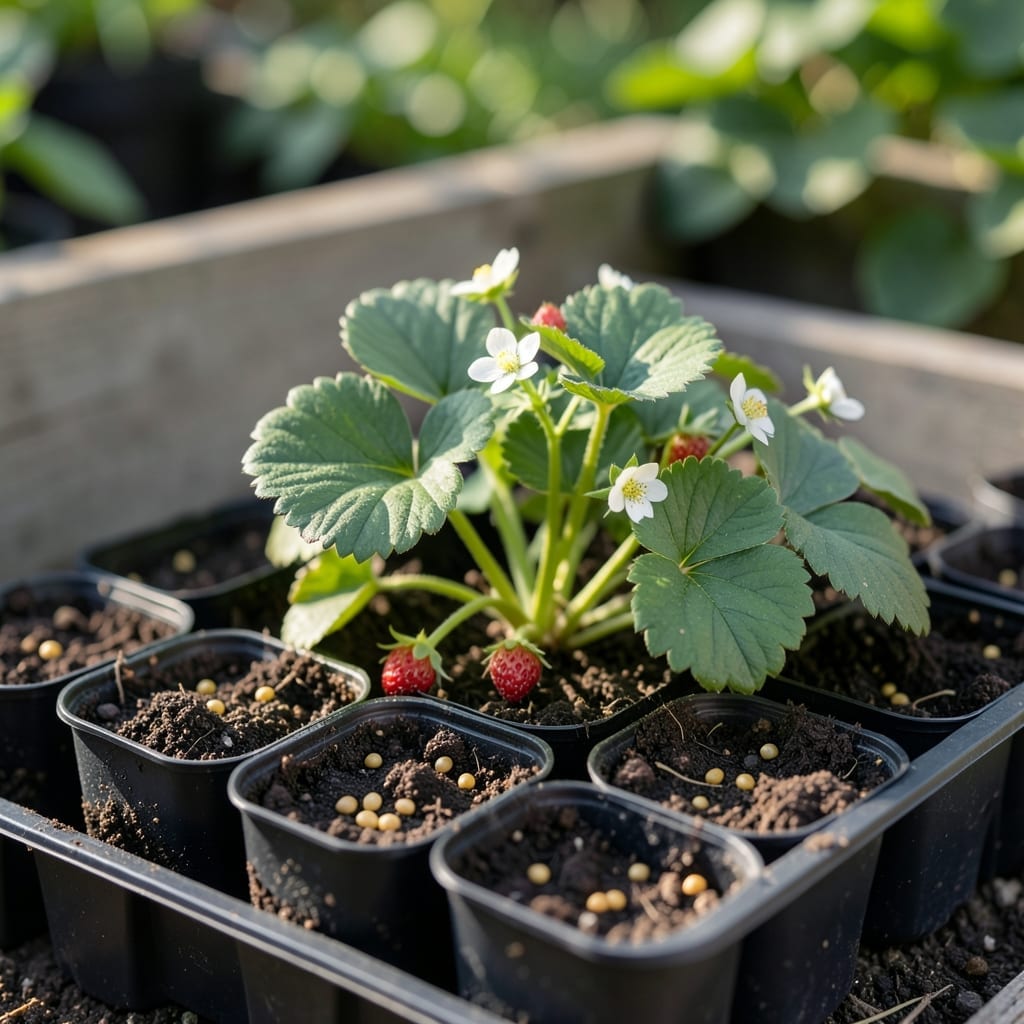
If you’ve ever planted 🍓 Strawberry seeds and stared at empty soil for weeks, you’re not alone. These tiny seeds have a reputation for taking their sweet time to sprout.
Unlike faster garden favorites, Strawberry seeds often need 2-6 weeks to show any action. The waiting game tests even the most patient gardeners.
I’ll walk you through what’s actually happening underground and how to set your seeds up for success from day one. Let’s turn that frustration into thriving seedlings.
Patience is key with strawberry seeds. Unlike quick-sprouting radishes or lettuce, these tiny seeds can take 2-6 weeks to show life. The timeline varies based on conditions.
I’ve seen seeds sprout in as little as 10 days under perfect conditions, but 3-4 weeks is more typical. Temperature, light, and moisture all play a role in speeding up or slowing down the process.
| Stage | Timeframe | What’s Happening |
|---|---|---|
| Dormancy Break | Week 1-2 | Seeds absorb moisture, enzymes activate |
| Initial Sprouting | Week 3-4 | Radicle emerges, first roots appear |
| Leaf Development | Week 5-6 | First true leaves form above soil |
The first phase, dormancy break, is invisible but critical. Seeds need consistent moisture and warmth to activate internal processes. Without this, they may never sprout.
In the second phase, you’ll see tiny white roots emerging. This is the most exciting part! Keep soil evenly moist but not soggy to encourage growth.
Temperature is a game-changer. Seeds germinate fastest at 70-85°F. Below 60°F, germination slows dramatically. A seedling heat mat can shave days off your wait time.
Light requirements change as seeds progress. Initially, they don’t need light, but once sprouts appear, bright indirect light prevents leggy growth. A south-facing window or grow lights work well.
Seed age matters more than you think. Fresh seeds (1 year old) germinate faster. Older seeds may take longer or have lower success rates. Always check your seed packet’s date.
I recommend starting seeds indoors 6-8 weeks before your last frost date. This gives them a head start before transplanting outdoors. It also lets you control conditions for better success.
Remember, consistency is everything. Fluctuating temperatures or moisture levels can set your seeds back. Keep them in a stable environment for the best results.
With the right care, you’ll see those first green shoots pushing through the soil. It’s a rewarding sight after the long wait!
🌱If you’re tired of waiting 4-6 weeks for strawberry seeds to sprout, these proven techniques can cut your germination time significantly. I’ve tested each method with great success in my own garden.
First, try cold stratification. Place seeds in a damp paper towel inside a sealed bag in your fridge for 2-4 weeks. This mimics winter and tricks seeds into germinating faster.
The heat mat is my top recommendation. It maintains the perfect soil temperature that seeds love, often reducing germination time by 30-50%. I’ve seen seeds sprout in just 10-14 days with one.
Seed starting mix is crucial because garden soil compacts too easily. This can smother tiny strawberry seeds. A light, fluffy mix allows for better root penetration and moisture control.
Moisture consistency is more important than you think. I use a spray bottle to mist my seeds daily, keeping the soil evenly damp. A clear plastic cover helps maintain humidity until germination begins.
Once those first green shoots appear, move them to bright indirect light. Direct sun can scorch tender seedlings. A south-facing window or grow lights work perfectly for this stage.
🌱