
Beautiful Plants For Your Interior
Beautiful Plants For Your Interior
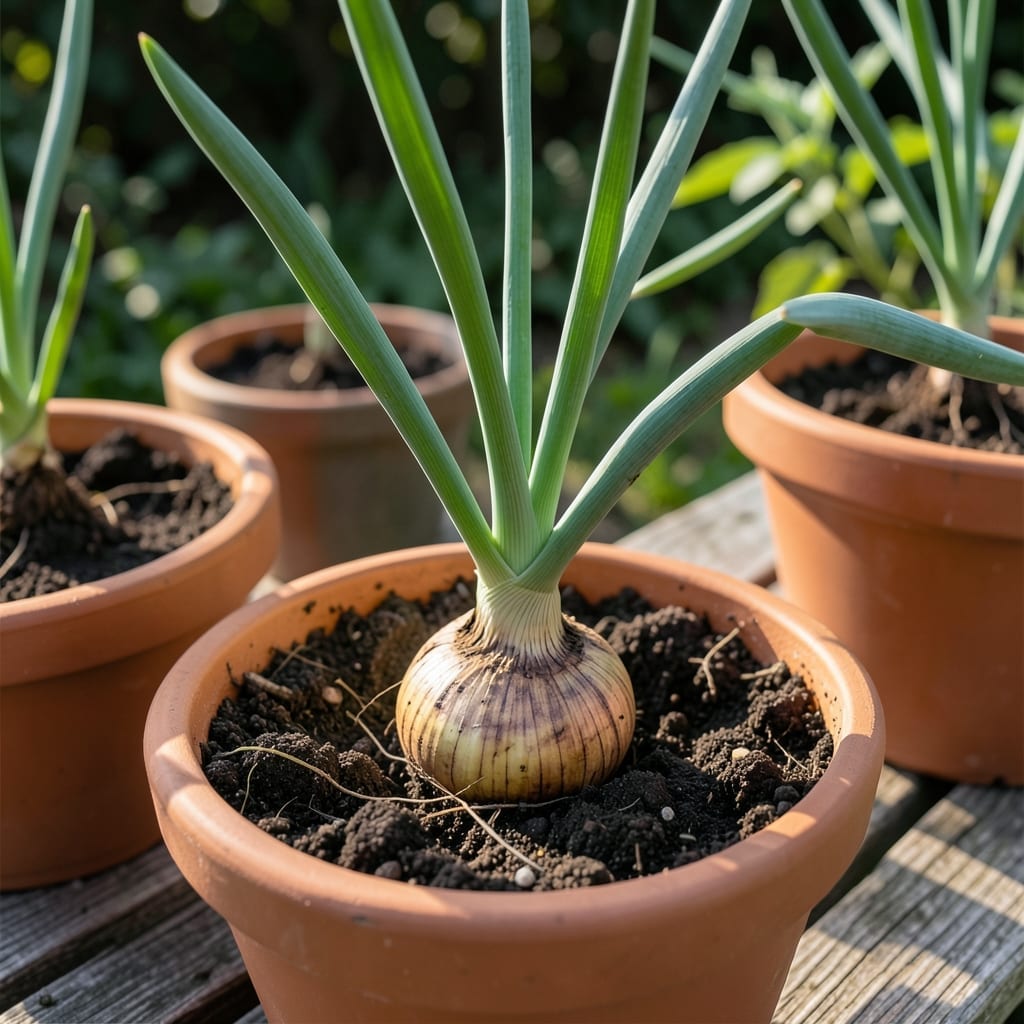
Growing onions in pots is a game-changer for gardeners with limited space, but timing is everything. Whether you’re cultivating green onions or bulb varieties, knowing the exact growth timeline ensures a bountiful container harvest.
The 🧅 Onion doesn’t follow a one-size-fits-all schedule. From the first sprouts to that satisfying pull from the soil, several factors can speed up or slow down your harvest.
I’ve tested different varieties and conditions to find what works best. The good news? With the right approach, you can enjoy fresh onions in as little as 60 days.
Let me walk you through the key stages and share practical tips to help you time your Onion growth perfectly in containers.

Growing onions in containers is simpler than you think, but the growth timeline varies by type. Green onions can be ready in 60 days, while bulb onions often take 90-120 days to mature.
I’ve found that container-grown onions thrive with consistent care. The key is understanding each growth stage, from germination to harvest readiness, and adjusting for your climate.☀️
| Stage | Duration | Key Action |
|---|---|---|
| Germination | 7-14 days | Keep soil moist |
| Foliage Growth | 30-40 days | Fertilize lightly |
| Bulb Formation | 30-50 days | Reduce watering |
| Maturation | 20-30 days | Stop fertilizing |
For green onions, the process is faster. You’ll see sprouts in 7-10 days, and they’re ready to harvest as soon as they reach 6-8 inches tall. I love how quick and rewarding these are for beginners.
Bulb onions require more patience. After germination, they focus on leaf growth for about a month. Then, bulb formation begins, which is when the plant starts storing energy underground. This stage is critical for size.
During bulb formation, I make sure my pots get full sun and well-draining soil. This prevents rot and encourages healthy growth. If you’re in a cooler climate, expect the process to take a bit longer.
As the onions mature, their tops will yellow and flop over. This is your sign that they’re almost ready. I usually stop watering at this point to let the outer layers dry for better storage.
For faster results, try onion sets instead of seeds. Sets are young bulbs that skip the germination stage, cutting your wait time by 3-4 weeks. They’re perfect for container gardening.
Remember, pot size matters. For bulb onions, I use containers that are at least 8 inches deep and 12 inches wide. This gives the roots room to expand and the bulbs space to form properly.
Finally, harvest timing depends on the variety. Sweet onions often take 110-120 days, while storage onions can be ready in 90-100 days. Always check the seed packet for specifics.
With the right care, you’ll be pulling fresh onions from your pots in no time. Happy gardening!🌱
Growing onions in pots lets me control their environment, but several variables can accelerate or delay the harvest. I’ve found that container depth and soil quality often make the biggest difference in growth speed.
Shallow pots restrict root development, while rich, loose soil promotes faster bulb formation. Even with perfect conditions, the onion variety itself sets the baseline for how long it will take to mature.
I always remind gardeners that watering consistency is key. Too much water causes rot, while dry spells stunt development. A drip irrigation system can help maintain steady moisture levels.
Temperature plays a huge role too. Onions grow faster in warm weather, but extreme heat can stress plants. In my experience, spring and fall offer the most reliable conditions for container onions.
Don’t overlook the container material. Terracotta pots dry out quickly, while plastic retains moisture longer. I prefer fabric grow bags for their excellent drainage and air circulation.
Finally, remember that fertilizing every 3-4 weeks with a balanced feed gives onions the nutrients they need to reach maturity faster. I’ve seen 30% quicker growth with regular feeding compared to unfertilized plants.
🌱