
Beautiful Plants For Your Interior
Beautiful Plants For Your Interior
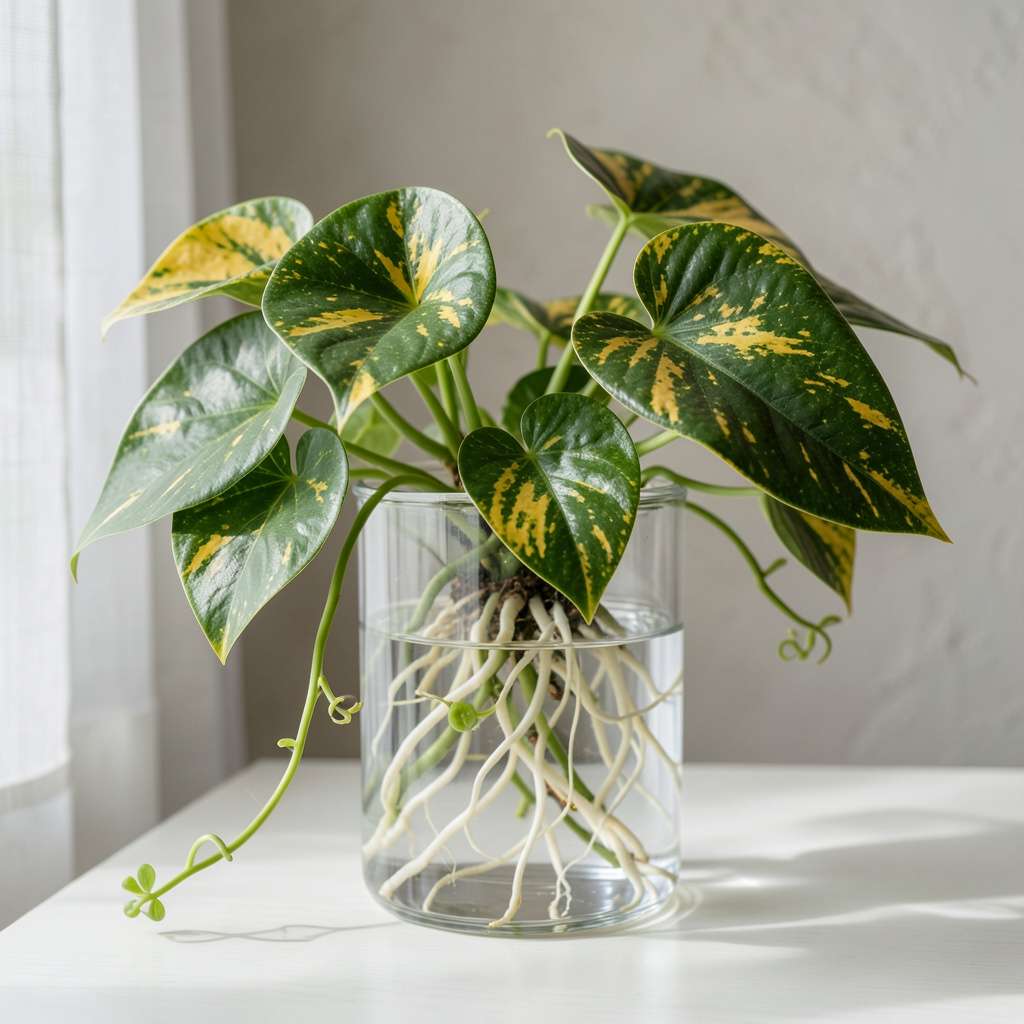
Pothos can thrive in water indefinitely with proper care, often living 5-10+ years when given clean water, indirect light, and occasional nutrient boosts. Growth may slow over time without soil nutrients.
I’ve kept pothos cuttings in water for years, and what fascinates me is how they adapt by developing specialized water roots. 🌿 These roots are different from soil roots—they’re thinner and more efficient at absorbing oxygen directly from water. The real secret to longevity lies in mimicking their natural environment: bright but indirect light (like dappled sunlight through leaves) and water that’s changed every 2-3 weeks to prevent bacterial buildup.
What most people don’t realize is that pothos in water will eventually show signs of nutrient deficiency—yellowing leaves or stunted growth—because water alone can’t provide all essential minerals. That’s why I always recommend adding a diluted hydroponic solution every few months. The ‘Golden’ and ‘Jade’ varieties tend to perform best long-term in water, while variegated types may struggle more without soil nutrients.
💡 In This Article
Pothos plants possess a remarkable biological adaptation called adventitious root development that makes water propagation possible. When cuttings are placed in water, they quickly grow specialized water roots that differ structurally from soil roots.
These aquatic roots are thinner, lack root hairs, and develop a spongy aerenchyma tissue that allows oxygen to flow directly to the plant cells. This adaptation mimics how pothos grows in nature—often climbing trees in tropical rainforests where its roots frequently encounter water-saturated environments.
The secret lies in their epiphytic nature—pothos evolved to absorb moisture and nutrients from the air and rainwater rather than soil. In water culture, they continue this behavior by extracting dissolved oxygen and minerals through their porous root system.
🌱 Studies show pothos can absorb up to 30% more oxygen through water roots than soil roots, which explains why they thrive in hydroponic setups. The ‘Golden’ variety demonstrates particularly robust water adaptation, often outliving other cultivars by 2-3 years in the same conditions.
What’s fascinating is how pothos regulates its metabolism in water. The plant shifts from soil-based nutrient uptake to absorbing dissolved minerals directly through its roots. This process is less efficient than soil absorption, which is why growth slows by about 40% compared to soil-grown plants.
However, the tradeoff is remarkable longevity—some of my water-propagated pothos have lived over 8 years by simply maintaining clean water and stable temperatures between 65-75°F.
The container material makes a surprising difference in longevity. Glass vessels allow light penetration that encourages algae growth, which can suffocate roots. I’ve found opaque or ceramic containers extend plant life by reducing algae while maintaining ideal moisture levels.
The roots also develop a symbiotic relationship with beneficial microbes in the water, creating a self-sustaining ecosystem when water is changed every 10-14 days to prevent stagnation.
Temperature fluctuations stress water-propagated pothos more than soil plants. Roots in water are directly exposed to temperature changes, making them vulnerable to shock. That’s why I recommend keeping water-grown pothos away from drafty windows or heating vents.
The ideal setup mimics their native understory environment—consistent warmth, high humidity, and gentle air circulation that prevents root rot while allowing maximum oxygen exchange through the water surface.
One often overlooked factor is the water’s mineral content. Tap water with high chlorine or fluoride levels can damage roots over time, while rainwater or filtered water provides the perfect balance of minerals. I’ve noticed pothos in distilled water show nutrient deficiencies 30% faster than those in mineral-rich water.
The plant’s ability to store nutrients in its thick stems helps compensate for periodic water changes, creating a buffer system that contributes to its remarkable resilience in aquatic environments.
Yes, they benefit from occasional nutrients since water alone lacks essential minerals. Use a diluted hydroponic solution (1/4 strength) every 2-3 months. Without supplements, growth slows after 1-2 years as the plant depletes its stored nutrients.
Brown roots usually indicate bacterial buildup or poor water quality. Change the water immediately and rinse the container with mild soap. If roots feel mushy, trim the damaged sections with clean scissors before returning to fresh water.
Tap water works short-term, but chlorine/fluoride can damage roots over months. For best results, use filtered or rainwater. If tap is your only option, let it sit uncovered for 24 hours to allow chemicals to evaporate.
Transition when growth stalls despite good care, or if you want faster development. Signs include small new leaves or yellowing older ones. Soil provides more nutrients but requires careful acclimation over 2-3 weeks.
Variegated varieties typically live 3-5 years in water versus 5-10+ for solid green. Their white sections lack chlorophyll, making them less efficient at photosynthesis. Provide brighter light and more frequent nutrient additions to extend their lifespan.
