
Beautiful Plants For Your Interior
Beautiful Plants For Your Interior
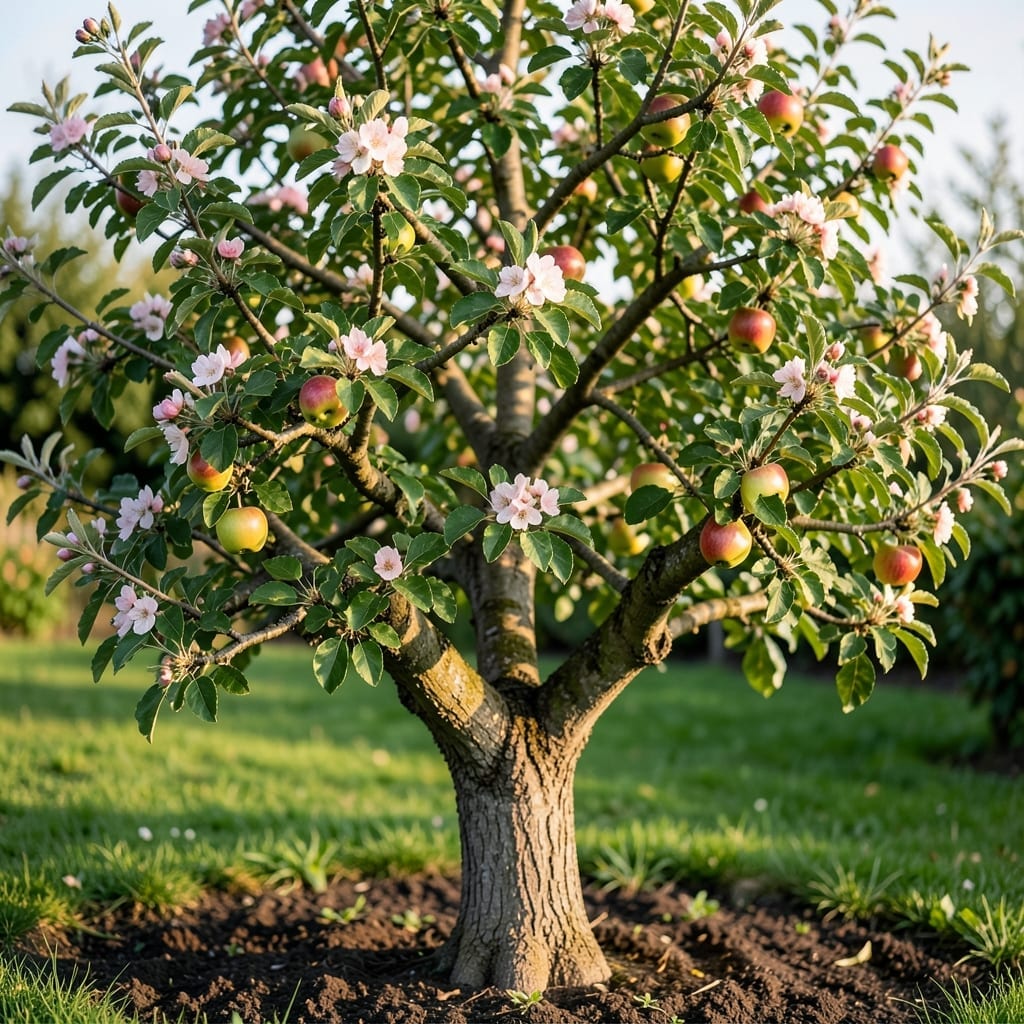
Planting an Apple Tree 🍎 is like making a promise to your future self – but how long until that promise pays off with juicy fruit?
The waiting game can feel endless, but understanding the timeline helps set realistic expectations. Different varieties have different schedules, and your care plays a huge role in speeding things up.
Let me break down what to expect, from the first planting season to that exciting first harvest. You might be surprised by how much control you have over the process.
If you’re wondering how long before an apple tree produces fruit, the answer depends largely on the variety you plant. Dwarf trees can bear fruit in as little as 2-3 years, while standard varieties may take 5-8 years or more. 🌳
Semi-dwarf trees typically fall in the middle, producing their first apples around year 4. Grafted trees, which are common in nurseries, tend to fruit sooner than those grown from seed. The rootstock also plays a critical role in determining fruiting time.
| Variety | Fruiting Time | Notes |
|---|---|---|
| Dwarf | 2-3 years | Compact size, ideal for small spaces |
| Semi-Dwarf | 3-5 years | Balanced size and yield |
| Standard | 5-8 years | Larger trees, longer wait |
| Grafted | 2-4 years | Faster fruiting than seed-grown |
| Seed-Grown | 7-10 years | Longest wait, less predictable |
Fuji apples are a great example of a variety that fruits relatively quickly, often producing in 3-4 years under ideal conditions. Gala and Granny Smith trees also tend to bear fruit on the earlier side, especially when grafted. 🌿
On the other hand, heirloom varieties may take longer to mature but often produce fruit with more complex flavors. If you’re planting from seed, expect to wait 7-10 years for fruit, and even then, the apples may not resemble the parent tree.
I’ve found that rootstock selection can significantly impact fruiting time. For example, M.9 rootstock is known for producing dwarf trees that fruit early, while M.25 rootstock results in larger, slower-maturing trees.
Another factor is your growing conditions. Apple trees need full sun (at least 6-8 hours daily) and well-draining soil to thrive. If your tree isn’t getting enough light or is struggling with poor soil, fruiting will be delayed. ☀️
Proper pruning and training can also encourage earlier fruiting. By shaping your tree and removing excess growth, you help it focus its energy on producing fruit rather than just foliage. I recommend pruning in late winter or early spring before new growth starts.
Lastly, remember that pollination is key. Most apple trees need a pollination partner of a different variety that blooms at the same time. Without proper pollination, even a mature tree may not produce fruit. ✂️
Want to see apple blossoms and fruit sooner? While you can’t rush nature, you can give your tree the best possible start. I’ve found that proper care in the early years makes a huge difference in fruiting time. 🌱
Young apple trees need the right conditions to focus their energy on fruit rather than just foliage. The good news is that with a few simple techniques, you can shave years off the waiting period.
First, always choose grafted trees from a nursery. These are typically 2-3 years old and will fruit much sooner than seed-grown trees. I recommend dwarf or semi-dwarf varieties for faster results. 🌿
Pruning is essential for directing energy toward fruit production. In late winter, remove any dead or diseased wood and thin out crowded branches. This improves air circulation and sunlight penetration, both critical for fruiting.
For fertilization, use a balanced 10-10-10 formula in early spring. Apply 1 lb per inch of trunk diameter, and repeat every 4-6 weeks until midsummer. This gives your tree the nutrients it needs without promoting excessive leafy growth.
Finally, don’t overlook pollination needs. Most apple varieties require cross-pollination from a different variety that blooms at the same time. Plant at least two compatible trees within 50 feet of each other for best results. ✂️