
Beautiful Plants For Your Interior
Beautiful Plants For Your Interior
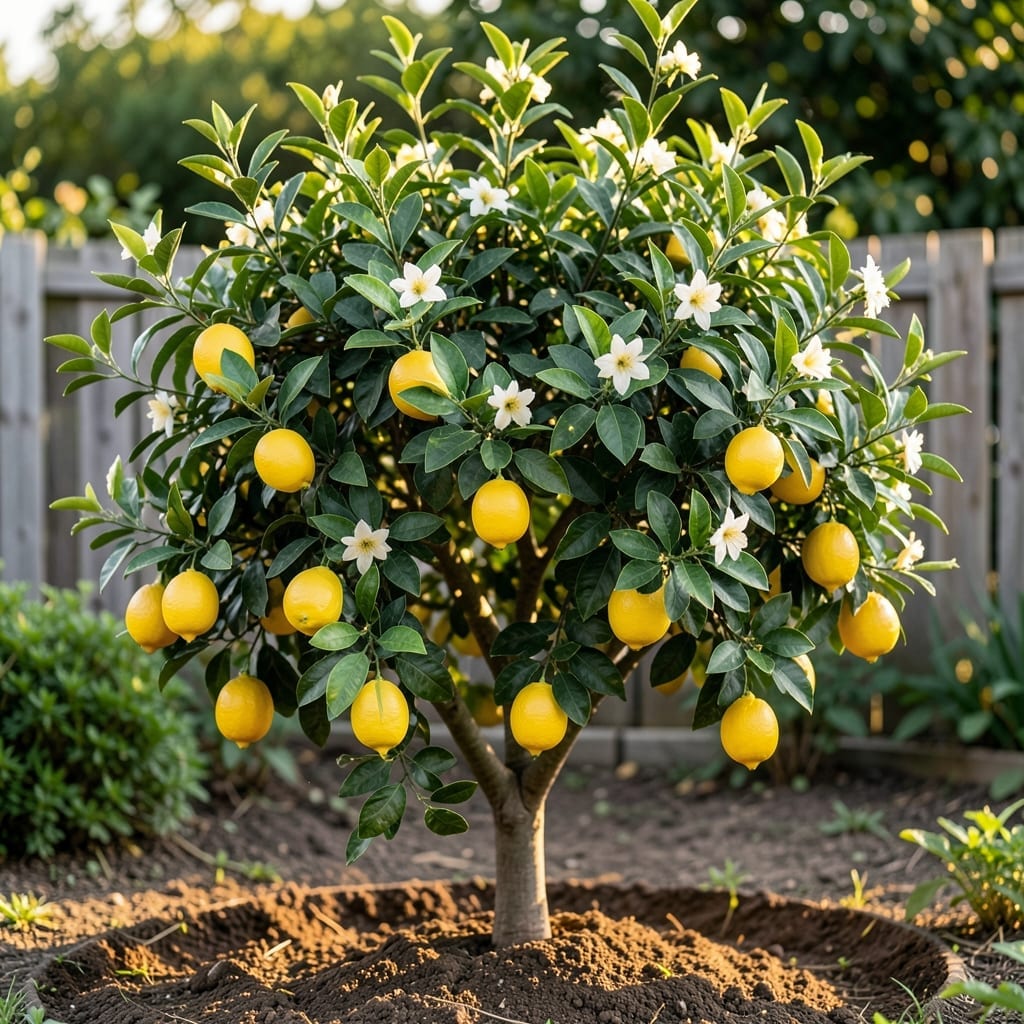
Picture this: a lush 🍋 Lemon Tree thriving in your backyard, but how much space will it actually need? These citrus beauties can surprise you with their size range, from manageable patio plants to impressive orchard centerpieces.
Whether you’re working with a cozy balcony or a sprawling garden, knowing the mature dimensions of your variety is the key to successful planning. Some stay compact while others reach for the sky.
Discover what to expect from different types and how to guide their growth. You might be amazed at just how adaptable these trees can be to your space.

When planning your citrus garden, knowing the mature size of each lemon tree variety is essential. Some types stay small enough for containers, while others demand ample garden space.
From dwarf Meyer lemons to towering Eureka trees, each cultivar has unique dimensions that influence where and how you plant it.
| Variety | Mature Height | Mature Spread |
|---|---|---|
| Meyer Lemon | 8-10 ft | 6-8 ft |
| Eureka Lemon | 15-20 ft | 10-15 ft |
| Lisbon Lemon | 15-20 ft | 12-15 ft |
| Dwarf Varieties | 6-8 ft | 5-6 ft |
The Meyer lemon is a favorite for small spaces, typically reaching 8-10 feet tall with a 6-8 foot spread. It’s perfect for containers or cozy garden corners.
In contrast, Eureka and Lisbon lemons can grow 15-20 feet tall with spreads of 10-15 feet. These varieties need room to stretch their branches.
Dwarf lemon trees, grafted onto size-controlling rootstocks, usually top out at 6-8 feet. They’re ideal for patios, balconies, or small yards.
Remember that growing conditions like soil, sunlight, and water can influence size. Trees in containers often stay smaller than those planted in the ground.
If you’re planting multiple trees, space them according to their mature spread. This prevents overcrowding and ensures each tree gets enough light and air circulation.
For those with limited space, consider pruning techniques to manage size. Regular trimming can keep even larger varieties at a more manageable height.
Always check the rootstock when purchasing, as this greatly affects the tree’s ultimate size. Some rootstocks are specifically chosen to keep trees compact.
🌳Understanding what makes lemon trees grow larger or stay compact helps you control their size effectively. Several key factors play a role in how tall and wide your tree will become.
From climate conditions to your pruning habits, each element impacts growth. Even the same variety can vary significantly based on how you care for it.
The climate where you plant plays a major role. In USDA Zones 9-11, lemon trees can reach their full genetic potential, while cooler areas may result in smaller trees.
Soil quality directly affects growth rate. Trees in poor, compacted soil will struggle to reach full size, while those in fertile, loose soil thrive and expand more.
Your pruning approach is another powerful tool. Regular, strategic pruning can maintain a desired height and shape. I recommend pruning in late winter before new growth starts.
Container gardening offers natural size control. Even large varieties stay smaller when root-bound in pots, typically reaching just 60-70% of their ground-planted size.
🌳