
Beautiful Plants For Your Interior
Beautiful Plants For Your Interior
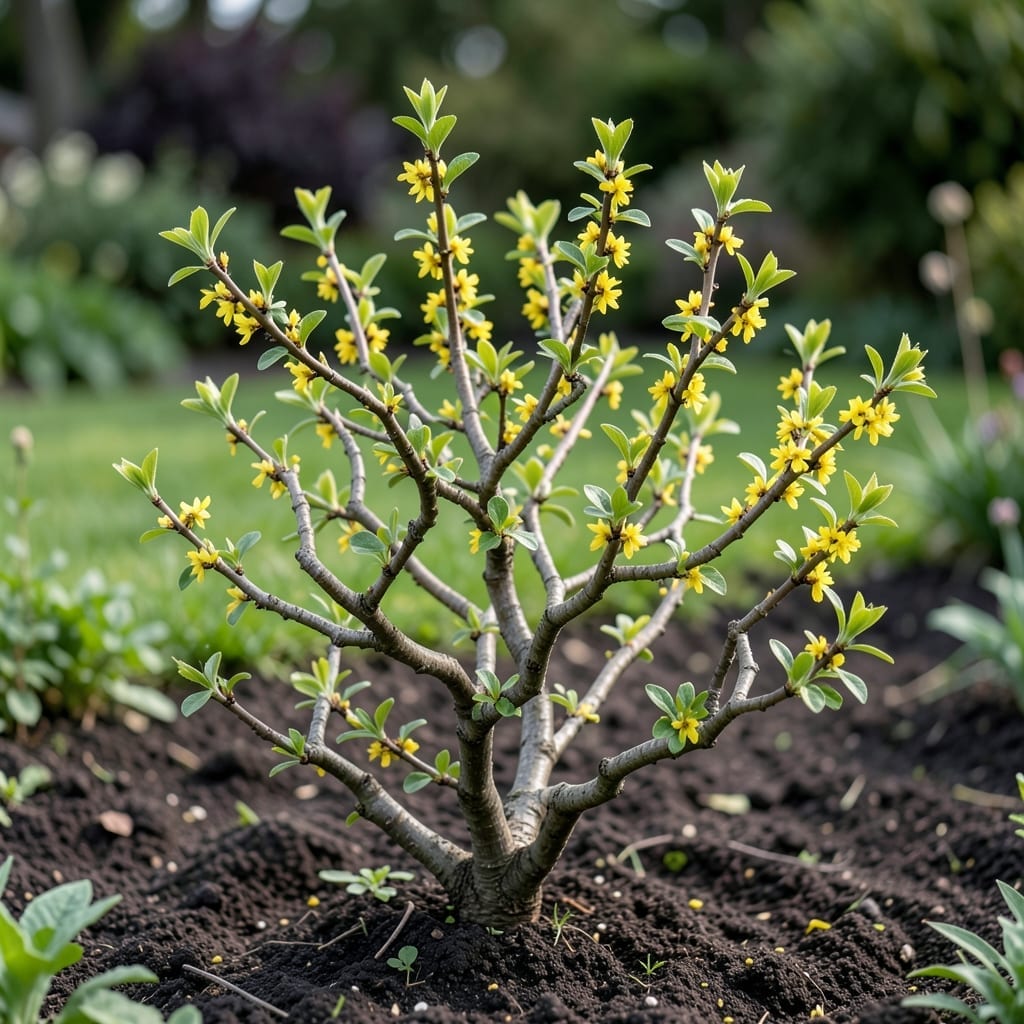
If you’re considering adding Harry Lauder’s Walking Stick 🌳 to your garden, you might be curious about its growth speed. This unique shrub, known for its twisted branches, has a moderate growth rate that can surprise many gardeners.
Understanding how quickly it grows helps you plan your landscape effectively. Typically, you can expect this plant to add about 1-2 feet per year under ideal conditions.
Let me share what affects its growth and how you can create the perfect environment for your Harry Lauder’s Walking Stick to thrive.


When I first planted my Harry Lauder’s Walking Stick, I was amazed by its unique twisted branches but unsure about its growth pace. This ornamental shrub has a moderate growth rate, typically adding 1-2 feet in height annually under ideal conditions.
In the first year, expect your shrub to establish its root system with 1-2 feet of growth. By year two, it can reach 3-4 feet, and by year three, 5-6 feet is common. Full maturity at 6-15 feet usually takes 5-7 years.
| Year | Height Range | Growth Notes |
|---|---|---|
| Year 1 | 1-2 ft | Root establishment phase |
| Year 2 | 3-4 ft | Accelerated vertical growth |
| Year 3 | 5-6 ft | Branching becomes more pronounced |
| Mature | 6-15 ft | Full twisted branch display |
The spread of this shrub is equally important to consider. It typically matches its height, creating a rounded form that can reach 6-10 feet wide at maturity. This makes it ideal for specimen planting or as a focal point.
I’ve noticed that soil quality dramatically affects growth speed. Well-draining, loamy soil with a pH between 6.0-7.5 produces the best results. In poorer soils, growth may slow to just 6-12 inches per year.
Climate plays a significant role too. In USDA zones 4-8, where it thrives, growth is most vigorous. In colder zones, the plant may grow slower and stay smaller. I’ve seen specimens in zone 4 that only reach 6-8 feet tall.
Watering consistently during the first two years helps establish a strong root system. I recommend deep watering once a week, allowing the soil to dry slightly between waterings. Overwatering can actually stunt growth by suffocating roots.
The twisted branches, this plant’s signature feature, become more pronounced as it matures. You’ll start seeing the characteristic corkscrew shapes in the second or third year, with the most dramatic twists appearing on mature wood.
For the fastest growth, plant in full sun (6+ hours daily). While it tolerates partial shade, the growth rate may decrease by 30-40% in shadier spots. I’ve experimented with both conditions and always get better results in sunnier locations.
Remember that pruning affects growth patterns. Light pruning in late winter encourages bushier growth, while heavy pruning can reduce the annual height increase. I find that removing just 1/3 of the oldest stems each year maintains both health and the iconic twisted shape. 🌿
I’ve found that light exposure is the biggest factor in growth speed. Full sun (6+ hours daily) produces the fastest growth, while partial shade can reduce the rate by 30-40%.
Soil quality comes next. Well-draining, loamy soil with a pH of 6.0-7.5 gives the best results. In poor soil, growth may slow to just 6-12 inches per year.
Watering practices matter too. I recommend deep watering once or twice weekly for the first two years. This helps establish a strong root system for faster growth.
Fertilizing with a balanced 10-10-10 formula in spring gives growth a boost. I apply it every 6-8 weeks during the growing season for best results.
Pruning affects growth patterns significantly. Light pruning in late winter encourages bushier growth. I remove about 1/3 of the oldest stems each year to maintain health.
Climate plays a role as well. In USDA zones 4-8, growth is most vigorous. In colder areas, the plant may grow slower and stay smaller. I’ve seen specimens in zone 4 that only reach 6-8 feet tall. 🌳