
Beautiful Plants For Your Interior
Beautiful Plants For Your Interior
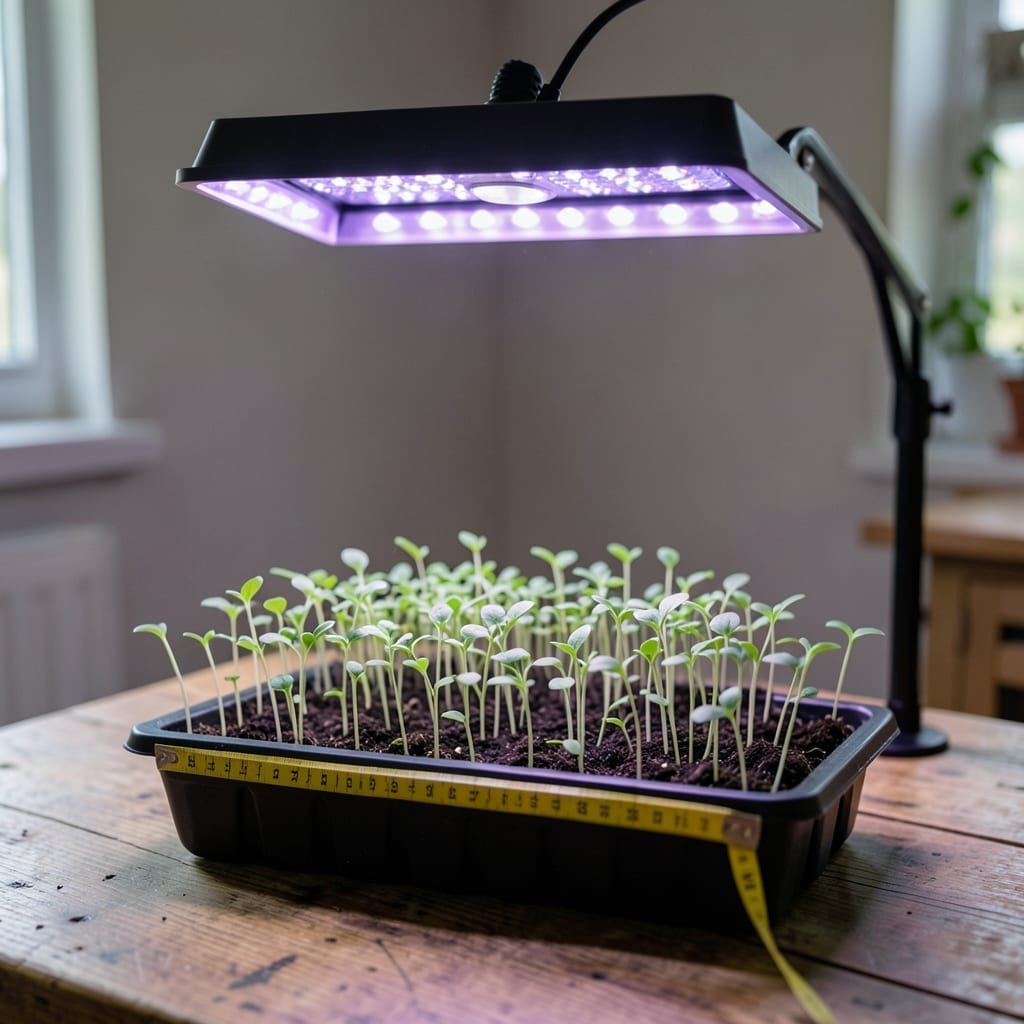
Getting the right distance between your grow lights and 🌱 Seedlings can make or break your garden. Too close, and you risk burning those tender leaves. Too far, and they’ll stretch out weakly, searching for light.
I’ve seen both scenarios play out in my own garden, and let me tell you, it’s heartbreaking to watch weak seedlings struggle when a simple adjustment could have prevented it.
Let me show you exactly how to position your lights for healthy, sturdy growth at every stage. The difference it makes is truly remarkable.
Finding the perfect height for grow lights above seedlings is crucial for their development. I’ve learned that each growth stage requires different light distances to prevent issues like leggy growth or leaf burn. ☀️
For most seedlings, starting with LED lights about 12-18 inches above them works well. This distance allows for even light distribution without overwhelming the young plants. 🌱
| Growth Stage | LED Distance | Fluorescent Distance |
|---|---|---|
| Germination | 18-24 inches | 12-18 inches |
| Early Seedling | 12-18 inches | 6-12 inches |
| Established Seedling | 18-24 inches | 12-18 inches |
I always start my tomato seedlings with lights at 18 inches and lower them to 12 inches once they develop their first true leaves. This adjustment helps prevent stretching while providing enough light for photosynthesis.
Fluorescent lights can be placed closer than LEDs because they emit less heat. For my pepper plants, I keep fluorescents about 6-12 inches above the seedlings, which gives them the intensity they need without risk of burning.
Remember that light intensity decreases with distance. If your seedlings are stretching or looking pale, they likely need the lights moved closer. I check mine daily and adjust as needed.
For incandescent bulbs, which produce more heat, I maintain a minimum distance of 24 inches to prevent heat damage. These work better for supplemental lighting rather than as the primary source.
As seedlings grow taller, I gradually raise the lights to maintain that optimal distance. This constant adjustment ensures they receive consistent light without being stressed by either too much or too little.
I’ve found that using a light meter helps me fine-tune the setup. Aim for 2000-3000 foot-candles for most seedlings, which you can achieve with proper distance and the right type of light.
Don’t forget that light duration matters too. I give my seedlings 14-16 hours of light daily, which mimics the long days of spring and encourages strong, healthy growth. ⏰
Your seedlings will often tell you if the light distance isn’t right. I watch for leggy growth first—when stems stretch thin and pale as they reach for more light.
Another red flag is yellowing leaves or slow growth, which usually means the lights are too far away. Conversely, brown spots or leaf burn suggest the lights are too close. ☀️
⚠️ Warning: Light Stress Signs
If your seedlings show curling leaves or bleached spots, move lights up immediately. Stunted growth can mean insufficient light—lower them gradually.
I once ignored the leggy appearance of my basil seedlings, thinking they’d outgrow it. By the time I adjusted the LED lights closer, they were too weak to recover. Lesson learned!
For tomato seedlings, if they start leaning toward the light, it’s a clear sign they need more intensity or shorter distance. I rotate my trays daily to ensure even exposure on all sides.
Leaf color is another great indicator. Dark green leaves with short internodes mean your light distance is spot on. If they turn light green or yellow, the lights are likely too far.
Don’t overlook heat stress. If the tops of your seedlings feel hot to touch, raise the lights immediately. I use my hand as a guide—if it feels warm after 30 seconds, the lights are too close.
Regular checks and small adjustments make all the difference for healthy seedling development. 🌱