
Beautiful Plants For Your Interior
Beautiful Plants For Your Interior
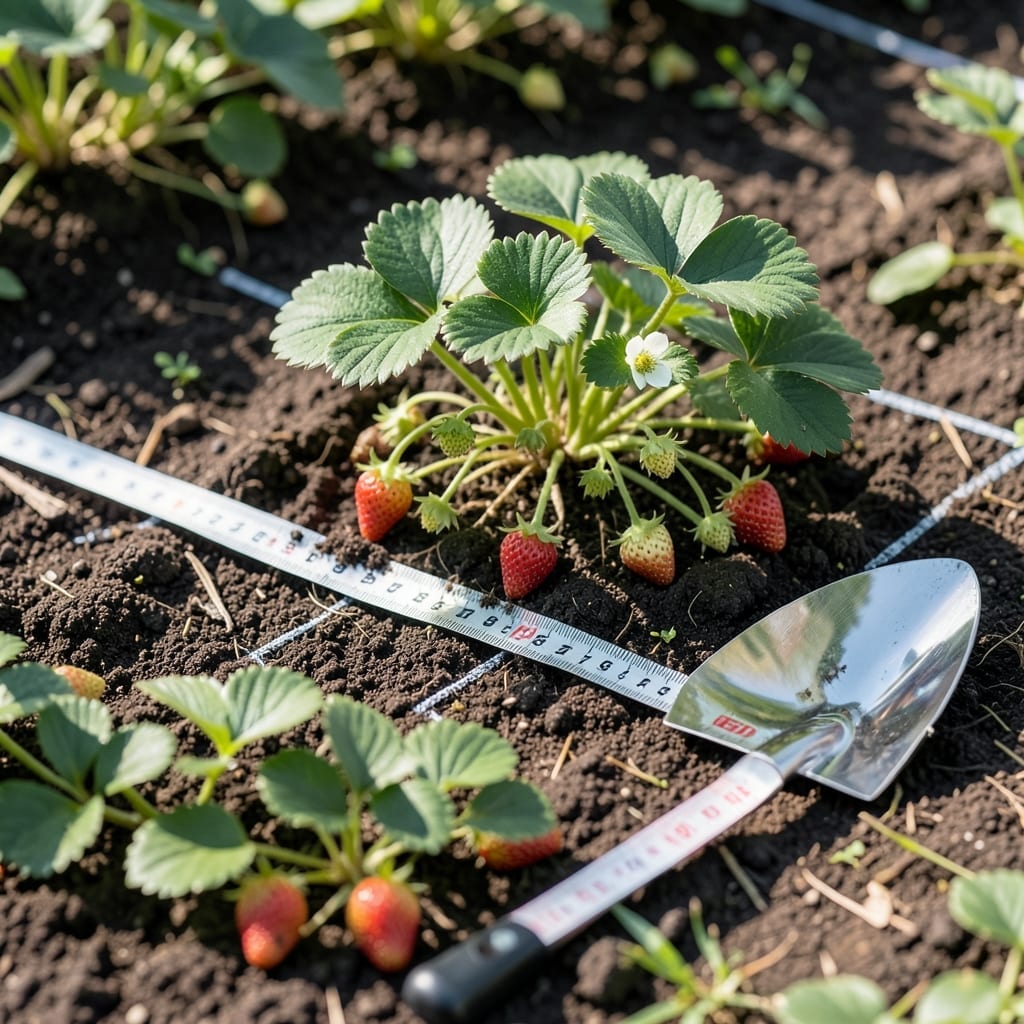
I remember my first strawberry patch – a tangled mess of plants competing for space. Don’t make my mistake with your 🍓 Strawberry crop. Proper spacing is the difference between a mediocre harvest and a bumper crop.
When you give each plant room to breathe, you’re not just preventing disease – you’re setting the stage for bigger, sweeter berries. And in Zone 6a, that means more fruit come May and June.
Discover the exact distances that work for rows, containers, and raised beds. Your future self will thank you when you’re picking basket after basket of perfect strawberries.
Getting strawberry plant spacing right is crucial for healthy growth. I’ve learned that June-bearing varieties need more room than everbearing types due to their vigorous runners. Proper spacing prevents disease spread and ensures each plant gets enough nutrients. 🌱
For June-bearing strawberries, I recommend 18–24 inches between plants in rows spaced 3–4 feet apart. This gives runners space to spread. Everbearing and day-neutral types can be closer at 12–18 inches apart in rows. 🌿
| Variety | In-Row Spacing | Row Spacing | Notes |
|---|---|---|---|
| June-Bearing | 18–24 inches | 3–4 feet | Needs room for runners |
| Everbearing | 12–18 inches | 2–3 feet | Compact growth habit |
| Day-Neutral | 12–18 inches | 2–3 feet | Continuous fruiting |
| Raised Beds | 12 inches | N/A | Intensive planting |
In raised beds, I’ve had success with 12-inch spacing in all directions. The improved drainage and soil quality allow for tighter planting. Just ensure your bed is at least 8 inches deep for root development. ✂️
For container gardening, use a pot that’s at least 8–10 inches deep with 12-inch spacing between plants. Hanging baskets work well for everbearing types with 6–8 inch spacing. 🪴
Matted row system is ideal for June-bearing strawberries. I plant them 24 inches apart and let runners fill in to form a dense mat. This method maximizes yield but requires 4-foot row spacing for proper air circulation.
With day-neutral strawberries, I’ve found 12-inch spacing works well in both ground and containers. These plants produce fruit continuously, so giving them adequate space ensures consistent production throughout the season. ☀️
Remember, overcrowding leads to smaller berries and increased disease risk. I always thin out excess runners to maintain optimal spacing. This practice has significantly improved my harvest quality and quantity.
In Zone 6a, where I garden, proper spacing also helps with winter survival. Well-spaced plants have better air circulation, reducing the risk of frost damage and fungal diseases during our damp springs. 🌧️
Finally, I mark my planting spots with string lines to ensure consistent spacing. This simple trick has saved me from many uneven plantings and ensures every strawberry gets its fair share of space to thrive.
I’ve seen many gardeners struggle with strawberry spacing mistakes that cost them a good harvest. The most common error is planting too close, which leads to competition for nutrients and light. 🌱
Another frequent issue is ignoring row spacing. Even if plants are properly spaced in-row, crowded rows reduce air circulation and increase disease risk. 🌿
I once planted everbearing strawberries at 24-inch spacing, treating them like June-bearing. The result was wasted space and fewer berries. Each variety has unique spacing needs for best results. ✂️
Forgetting to thin runners is another mistake I’ve made. While it feels counterintuitive, removing excess runners ensures stronger mother plants and larger fruit. I now thin runners to 3–4 per plant. 🪴
In small spaces, I’ve learned that vertical planting can help. Using stacked planters or hanging pockets allows for closer spacing while maintaining good air circulation. This works well for everbearing types. ☀️
Finally, I always measure twice before planting. Using a tape measure or marked stick ensures consistent spacing. This simple step prevents the uneven growth that plagues many strawberry patches.