
Beautiful Plants For Your Interior
Beautiful Plants For Your Interior
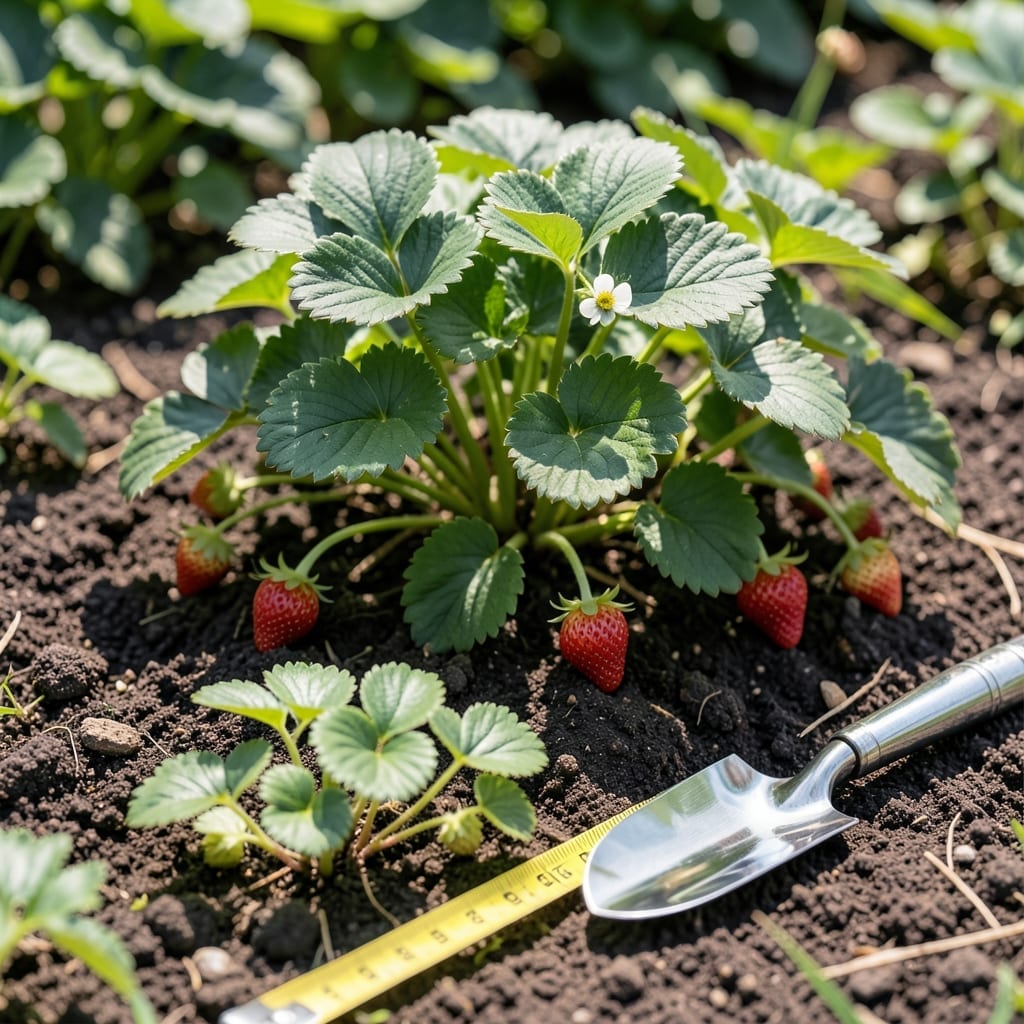
Proper strawberry plant spacing is the secret to a bountiful harvest, preventing overcrowding and ensuring healthy growth. Get it wrong, and you risk disease, poor yields, or stunted plants.
With the 🍓 Strawberry season in spring, knowing the ideal distance between plants can make all the difference. Whether you’re planting in rows or raised beds, spacing impacts air circulation and fruit quality.
Discover the perfect approach to maximize your yield and keep your Strawberry patch thriving for years to come.

Getting the spacing right is crucial for healthy strawberry plants. Each variety has unique growth habits that affect how much room it needs to thrive.
June-bearing strawberries produce one large harvest and need 18-24 inches between plants. They spread via runners, so give them space to expand naturally.
| Variety | In-Row Spacing | Row Spacing |
|---|---|---|
| June-Bearing | 18-24 inches | 3-4 feet |
| Everbearing | 12-18 inches | 2-3 feet |
| Day-Neutral | 10-12 inches | 2 feet |
Everbearing strawberries produce multiple smaller harvests and can be planted 12-18 inches apart. They’re more compact but still need airflow to prevent disease.
Day-neutral strawberries are the most compact, thriving with just 10-12 inches between plants. They produce fruit continuously and are ideal for small spaces.
For raised beds, I recommend tightening the spacing slightly. The improved drainage and soil quality allow plants to tolerate closer quarters, about 12 inches apart for most varieties.
Remember that row spacing matters too. Keep rows 3-4 feet apart for June-bearing, 2-3 feet for everbearing, and 2 feet for day-neutral types to ensure good access and airflow.
In my experience, overcrowding leads to smaller berries and increased disease risk. If you’re unsure, it’s better to space plants farther apart than too close.
Consider your garden layout as well. If you’re using a square foot gardening approach, plant 4 strawberries per square foot for day-neutral varieties.
Finally, don’t forget that mulching between plants helps maintain moisture and suppress weeds, which is especially important with proper spacing. I use straw mulch for best results. 🌿
Even experienced gardeners sometimes misjudge strawberry plant spacing. The most common error I see is overcrowding, which leads to poor air circulation and increased disease risk.
Another frequent mistake is ignoring row spacing. Even if your plants are properly spaced in rows, crowded rows can still cause problems with access and airflow.
⚠️ Spacing Pitfalls to Avoid
Planting too close causes smaller berries and disease spread. Always follow variety-specific guidelines for best results.
Under-spacing is particularly problematic with June-bearing strawberries, as their runner production can quickly turn a neat bed into a tangled mess.
I’ve found that soil type affects spacing needs too. In heavy clay, plants may need slightly more room, while sandy soil allows for tighter spacing.
Climate considerations matter as well. In humid regions, extra space helps prevent fungal diseases. In dry climates, you can get away with slightly closer spacing.
Don’t forget about future growth. Strawberry plants spread over time, so what looks sparse at planting will fill in. I always mark my spacing with temporary flags. 🌱
Finally, remember that container gardening has different rules. We’ll cover those special cases next, but for in-ground planting, stick to the variety-specific guidelines we’ve discussed.