
Beautiful Plants For Your Interior
Beautiful Plants For Your Interior
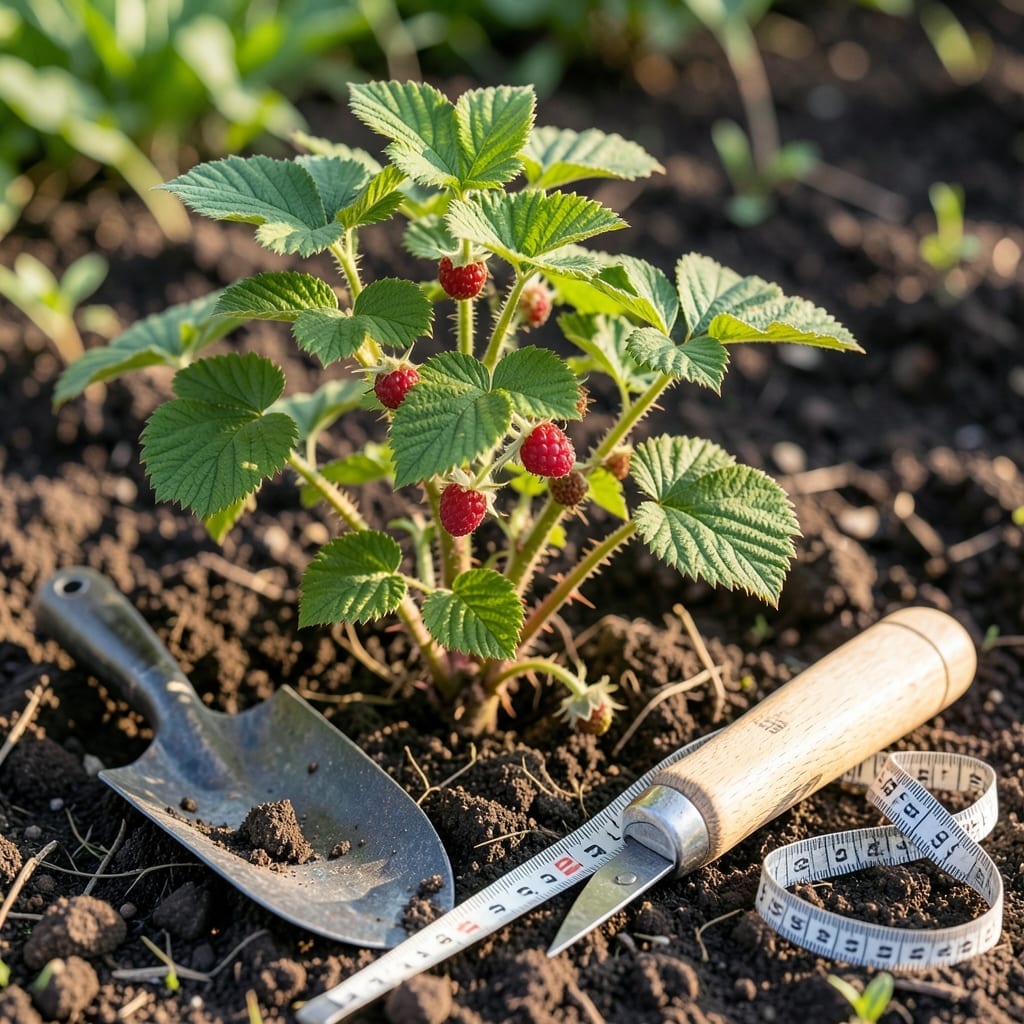
Proper spacing is the key to thriving 🍇 Raspberry plants that produce abundant fruit without competing for resources. Get it wrong, and you risk stunted growth or poor yields.
Whether you’re planting your first Raspberry patch or expanding an existing one, knowing the right distance between plants makes all the difference. I’ll show you how to set them up for success.
Discover the ideal spacing for your variety and growing conditions. Let’s ensure your Raspberries have room to flourish and deliver that sweet, juicy harvest you’re craving.


Getting raspberry spacing right is crucial for healthy growth. Different varieties have unique needs based on their growth habit and mature size.
For summer-bearing raspberries, I recommend 18-24 inches between plants. This gives them enough room to spread while maintaining good air circulation.
| Variety | Plant Spacing | Row Spacing |
|---|---|---|
| Summer-Bearing | 18-24 inches | 6 feet |
| Fall-Bearing | 24-30 inches | 6-8 feet |
| Everbearing | 24 inches | 6 feet |
| Trailing Types | 36-48 inches | 8 feet |
Fall-bearing raspberries need a bit more space at 24-30 inches apart. Their later fruiting season benefits from better airflow to prevent disease.
For everbearing varieties, I’ve found 24 inches works well. These produce fruit on both first and second-year canes, so they appreciate consistent spacing.
Trailing raspberries are the most space-hungry. I give them 36-48 inches between plants and 8 feet between rows to accommodate their long, arching canes.
Remember that row spacing is just as important. I maintain 6 feet between rows for most varieties, which allows for easy access during harvest and pruning.
In my experience, upright varieties can handle slightly tighter spacing, but I never go below 18 inches. Crowding leads to disease and poor fruit quality.
For small gardens, consider using a trellis system. This lets me plant at the closer end of the recommended range while keeping canes organized and fruit off the ground.
Always check the mature size for your specific variety. Some newer cultivars stay more compact, allowing for slightly tighter spacing without sacrificing health or yield. 🌱
Even experienced gardeners make spacing errors with raspberries. The most common is planting too close, which creates a tangled mess of canes that’s hard to manage.
I’ve learned that ignoring row orientation leads to uneven sunlight distribution. Always run your rows north to south for maximum light exposure.
⚠️ Avoid These Spacing Pitfalls
Planting too close causes disease and poor air circulation. Under-spacing leads to weak canes and smaller harvests.
Overcrowding is the biggest mistake I see. When plants compete for resources, they produce smaller berries and become more susceptible to fungal diseases.
Another error is neglecting row spacing. Even with perfect plant spacing, if rows are too close, you’ll struggle with harvest access and maintenance.
I recommend measuring twice before planting. It’s easy to eyeball spacing, but precise measurements prevent future problems. Use a tape measure for accuracy.
Remember that first-year canes look small, but they’ll grow rapidly. Always plan for mature size, not current size, when spacing your raspberry plants.
Finally, avoid planting in blocks rather than rows. This arrangement makes pruning and harvesting much more difficult as your patch matures. 🌿