
Beautiful Plants For Your Interior
Beautiful Plants For Your Interior
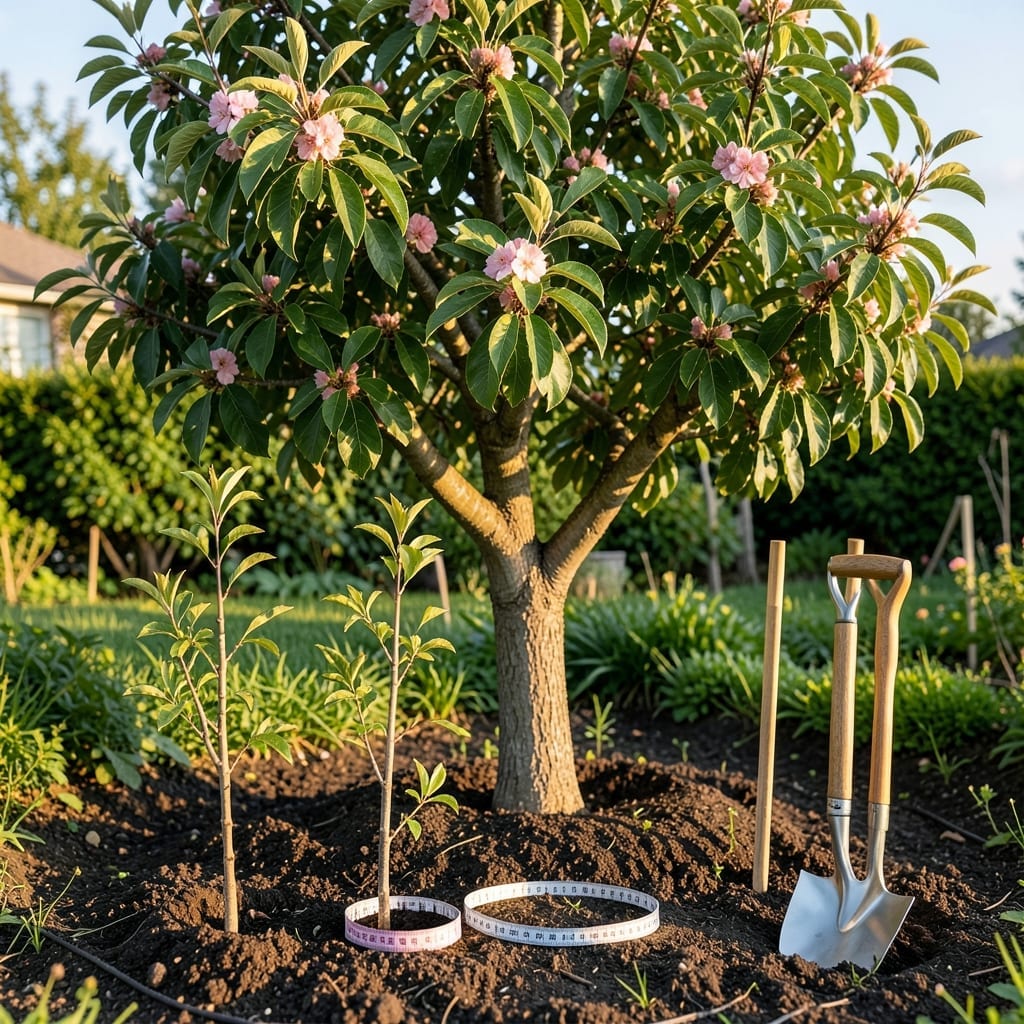
Planting peach trees with the right spacing is the key to healthy growth and abundant harvests. Get it wrong, and you risk stunted trees, disease, and poor fruit yields.
I’ve seen firsthand how proper spacing transforms a struggling orchard into a thriving one. Whether you’re planting a single 🍑 Peach Tree or an entire grove, distance matters more than you think.
Discover the simple but crucial guidelines that will set your trees up for success from day one. Your future self will thank you.


Proper spacing starts with knowing your peach tree type. Dwarf, semi-dwarf, and standard varieties each have unique root spread and canopy requirements that dictate how far apart they should be planted.
I always recommend checking the mature size of your specific variety first. Standard peach trees typically need 15-20 feet between them, while dwarf varieties can thrive with just 8-10 feet of space.
| Variety | Mature Height | Spacing |
|---|---|---|
| Dwarf | 8-10 ft | 8-10 ft apart |
| Semi-Dwarf | 12-15 ft | 12-15 ft apart |
| Standard | 15-25 ft | 15-20 ft apart |
🌱 Note: Adjust spacing for orchard rows to 20-25 ft between rows
For orchard planting, I suggest adding 5 extra feet between rows to accommodate equipment. This also improves air circulation, which is vital for preventing fungal diseases like brown rot.
Rootstock matters too. Trees grafted onto dwarfing rootstocks will naturally stay smaller, allowing closer spacing. Meanwhile, vigorous rootstocks need more room to prevent competition.
In poor soil conditions, you might need to increase spacing by 2-3 feet. This gives roots more room to spread in search of nutrients and water, which I’ve found makes a noticeable difference in tree vitality.
Don’t forget about sunlight exposure. Each tree needs full sun for at least 6-8 hours daily. Crowding trees too closely creates shade that can reduce fruit quality and quantity.
For home gardeners with limited space, consider espalier training. This method allows you to grow peach trees flat against a wall or fence, reducing the footprint while still getting good yields.
Remember that initial spacing might seem excessive when planting young trees. But trust me, those small saplings will fill their allotted space faster than you expect, especially with proper care.
Finally, always mark your planting spots before digging. I use stakes and string to visualize the layout, which helps avoid the common mistake of gradually decreasing spacing as you plant each successive tree.
🌳Getting the spacing right isn’t just about fitting trees into your space. It’s about ensuring each peach tree gets the sunlight, air, and nutrients it needs to thrive for decades.
I’ve learned that crowded trees compete for resources, leading to stunted growth and poor fruit production. But proper spacing transforms your orchard into a productive, healthy ecosystem.
Air circulation is one of the most overlooked benefits. When trees are too close, humidity builds up between them, creating perfect conditions for fungal diseases to take hold.
I’ve seen brown rot wipe out entire crops in densely planted orchards. But with proper spacing, the breeze can dry foliage quickly after rain, keeping your trees healthy.
Sunlight exposure directly impacts fruit quality. Each peach tree needs 6-8 hours of direct sunlight daily. Crowded trees cast shade on each other, resulting in smaller, less flavorful fruit.
Proper spacing also makes maintenance easier. You’ll have room to maneuver with pruning tools and harvest equipment. Plus, you won’t accidentally damage neighboring trees when caring for each one.
Remember that prevention is easier than correction. It’s much harder to thin out mature trees than to plant them at the right distance from the start. 🌳