
Beautiful Plants For Your Interior
Beautiful Plants For Your Interior
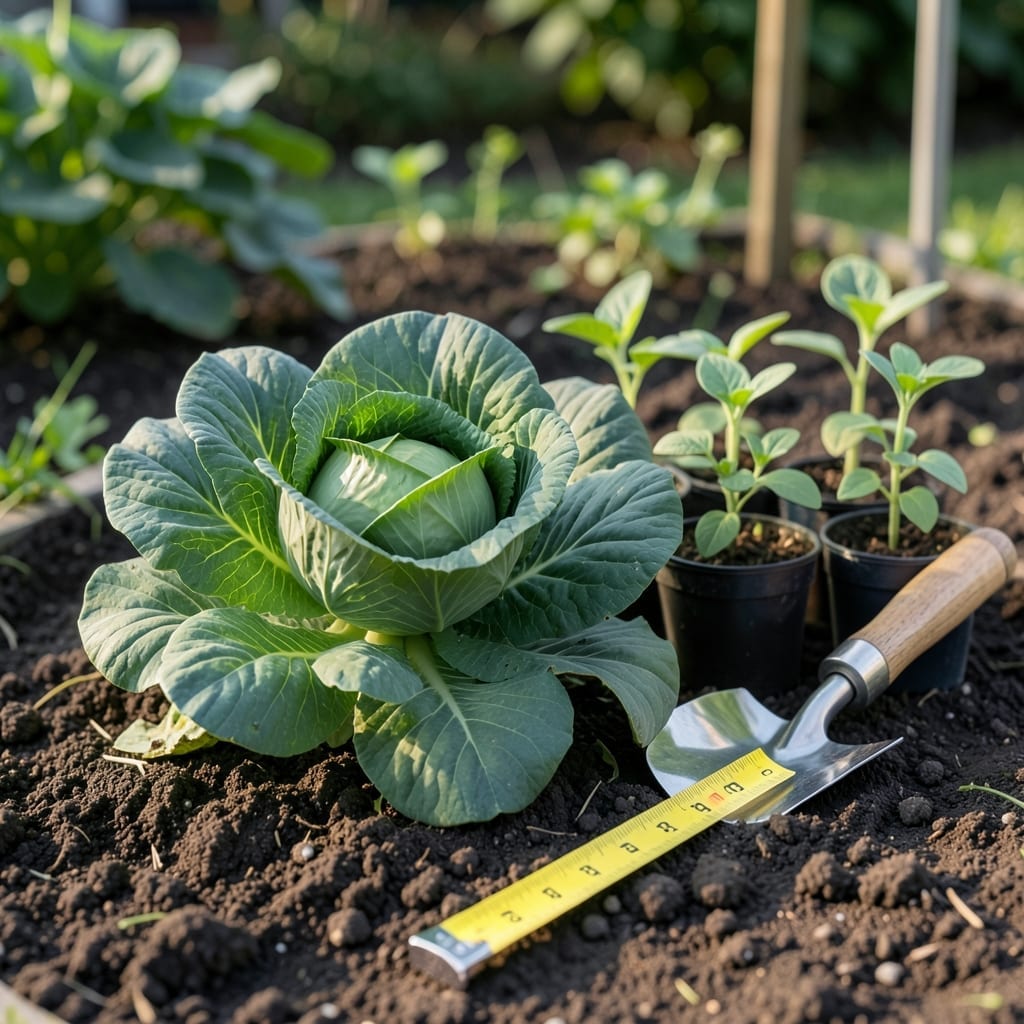
Proper spacing is the key to growing those perfect, tight cabbage heads we all dream about. Get it wrong, and you’ll watch your 🥬 cabbage plants fight for sunlight and nutrients.
I’ve seen gardens where crowded cabbage barely grows beyond golf ball size. The good news? With the right approach, you can avoid this entirely. Let me show you how to give your plants the room they need.
We’ll cover everything from row spacing to companion planting tricks that maximize your garden’s potential. Your healthiest cabbage crop starts here.
Getting your cabbage spacing right is the first step toward a bumper crop. I’ve learned that plant size varies drastically between varieties, so spacing must be tailored accordingly.
For small-head cabbages, like mini or early varieties, I recommend 12-inch spacing between plants. This gives them room to expand without wasting precious garden space.
Cabbage Spacing Guidelines
| Variety | Plant Spacing | Row Spacing |
|---|---|---|
| Small-Head | 12 inches | 18-24 inches |
| Medium-Head | 18-24 inches | 24-30 inches |
| Large-Head | 24-30 inches | 30-36 inches |
Medium-head cabbages need more room. I space these 18-24 inches apart to accommodate their broader leaves and denser heads. This spacing also improves air circulation, reducing disease risk.
For large-head varieties, like storage cabbages, I give them 24-30 inches between plants. These monsters can grow over 2 feet wide, so don’t skimp on space.
Row spacing is just as important as plant spacing. I maintain 18-24 inches for small varieties, 24-30 inches for medium, and 30-36 inches for large-head cabbages.
In raised beds, I often use a staggered pattern. This lets me fit more plants while maintaining good spacing. Just ensure each plant still gets its minimum required distance.
Remember, overcrowding leads to small heads and disease. When in doubt, give your cabbages more space rather than less. Your plants will thank you with bigger, healthier heads.
I’ve found that companion planting can help maximize space. Try interplanting cabbage with shallow-rooted crops like lettuce or radishes. They won’t compete for nutrients.
Finally, always consider your garden layout. If space is tight, opt for smaller varieties. There are excellent mini cabbages that produce well in containers or small beds.
With these guidelines, you’ll be well on your way to a productive cabbage patch that would make any gardener proud ✂️
I’ve seen firsthand how poor spacing can ruin a cabbage crop. When plants are too close, they compete for sunlight and nutrients, leading to stunted growth and weak heads.
Proper spacing ensures each plant gets the resources it needs. This means bigger heads, healthier leaves, and a more productive garden overall.
Key Benefits of Correct Spacing
Disease prevention is another major benefit. Crowded plants trap moisture, creating the perfect environment for fungal diseases like powdery mildew.
With proper spacing, air flows freely around each plant, keeping leaves dry and healthy. I’ve found this simple step can dramatically reduce disease issues in my garden.
Root development also suffers in crowded conditions. Cabbage needs room to spread its roots and anchor properly. Tight spacing leads to shallow root systems.
Finally, harvest quality improves with good spacing. Well-spaced cabbages produce denser, firmer heads that store better and taste sweeter.
Remember, that extra few inches between plants can make all the difference in your cabbage harvest ☀️