
Beautiful Plants For Your Interior
Beautiful Plants For Your Interior
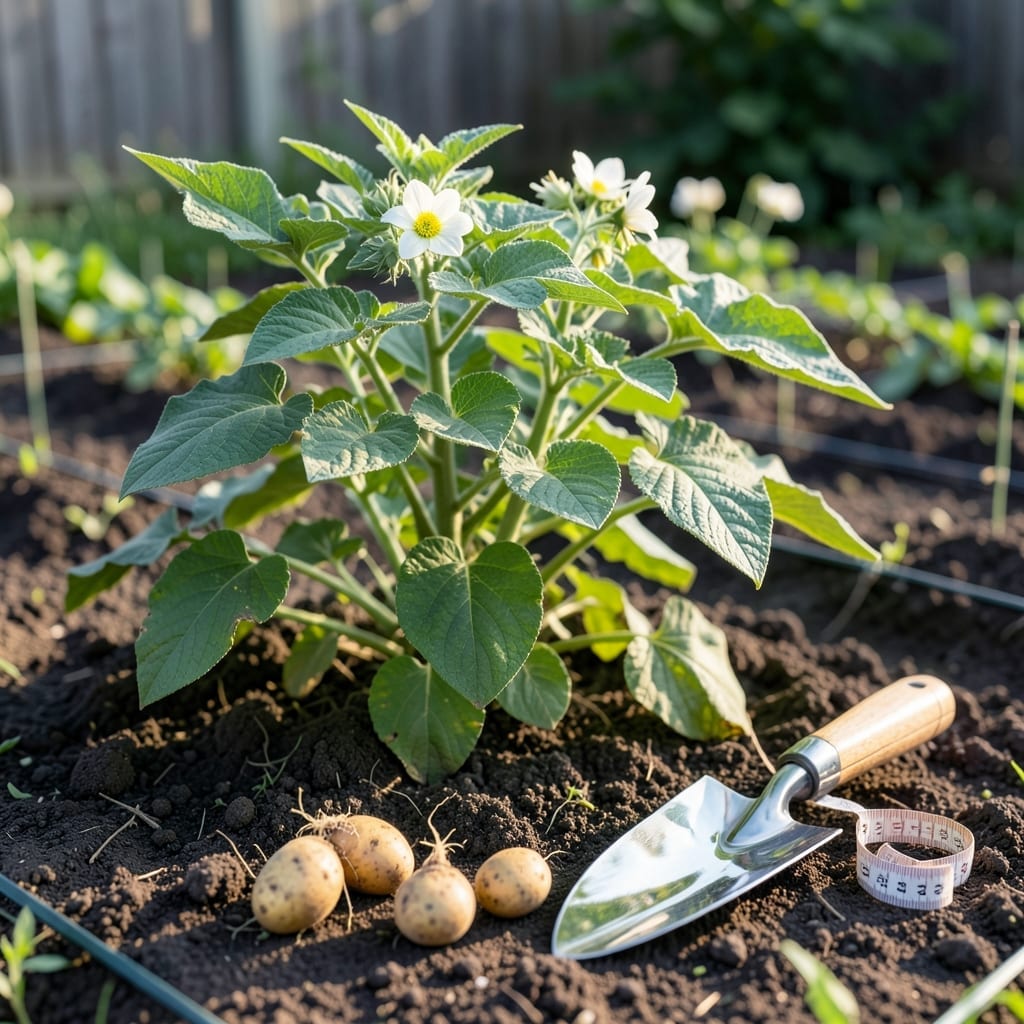
Proper spacing is the key to growing healthy 🥔 potatoes that thrive. Get it wrong, and you risk stunted growth or disease spreading through your crop.
I’ve seen gardeners struggle with overcrowded plants, but with the right approach, you can avoid these common pitfalls. Whether you’re planting in rows or containers, spacing plays a crucial role in your harvest.
Discover how to give each Potato plant the room it needs for maximum yield. Let’s dig into the details.
Getting potato spacing right ensures each plant has enough room to develop healthy tubers without competing for nutrients. I’ve found that early varieties need slightly less space than maincrop potatoes.☀️
Whether you’re planting in rows, hills, or containers, the spacing will vary. Let me break down the specifics for each method so you can plan your garden layout effectively.
| Variety | In-Row Spacing | Row Spacing | Planting Depth |
|---|---|---|---|
| Early Potatoes | 10-12 inches | 24-30 inches | 4-6 inches deep |
| Maincrop Potatoes | 12-15 inches | 30-36 inches | 6-8 inches deep |
| Hilled Rows | 12 inches | 36 inches | 4-6 inches deep |
| Containers | 6-8 inches | N/A | 8-10 inches deep |
For early varieties like Red Pontiac, I recommend 10-12 inches between plants and 24-30 inches between rows. This gives them enough room to mature quickly.
Maincrop potatoes, such as Russet or Yukon Gold, need more space. I plant them 12-15 inches apart in rows spaced 30-36 inches apart to accommodate their larger size.
If you’re using the hilling method, space your seed potatoes about 12 inches apart in rows 36 inches apart. This allows for easy hilling as the plants grow.
For container gardening, spacing is tighter. I place seed potatoes 6-8 inches apart in a container that’s at least 10 inches deep. This works well for small spaces or patios.
Remember, soil type and climate can affect spacing needs. In loamy soil, you can lean toward the closer end of the range. In heavy clay, give them a bit more room.
I always mark my rows with string lines to keep spacing consistent. It’s a simple trick that saves time and ensures even growth across your garden.🌱
Finally, don’t forget to rotate your crops. Planting potatoes in the same spot year after year can lead to disease buildup. I recommend a 3-year rotation for the best results.
Proper potato spacing directly impacts your harvest quality and plant health. I’ve learned that crowded plants compete for nutrients, water, and sunlight, leading to smaller tubers.☀️
Good spacing also improves air circulation, which reduces the risk of fungal diseases like blight. In my experience, well-spaced plants are more resilient and less prone to pests.
In my garden, I noticed that properly spaced potatoes produced 20% larger tubers compared to crowded plants. The difference was immediately visible at harvest time.
Another benefit is disease prevention. When plants are too close, moisture builds up between leaves, creating the perfect environment for fungal growth. Proper spacing keeps foliage dry and healthy.
I always remind fellow gardeners that spacing affects yield. Each plant needs its own root zone to access water and nutrients efficiently. Without this, you’ll see stunted growth and poor harvests.
Finally, think about long-term soil health. Well-spaced plants allow you to practice crop rotation more effectively, which keeps your garden soil fertile and disease-free for years to come.🌱