
Beautiful Plants For Your Interior
Beautiful Plants For Your Interior
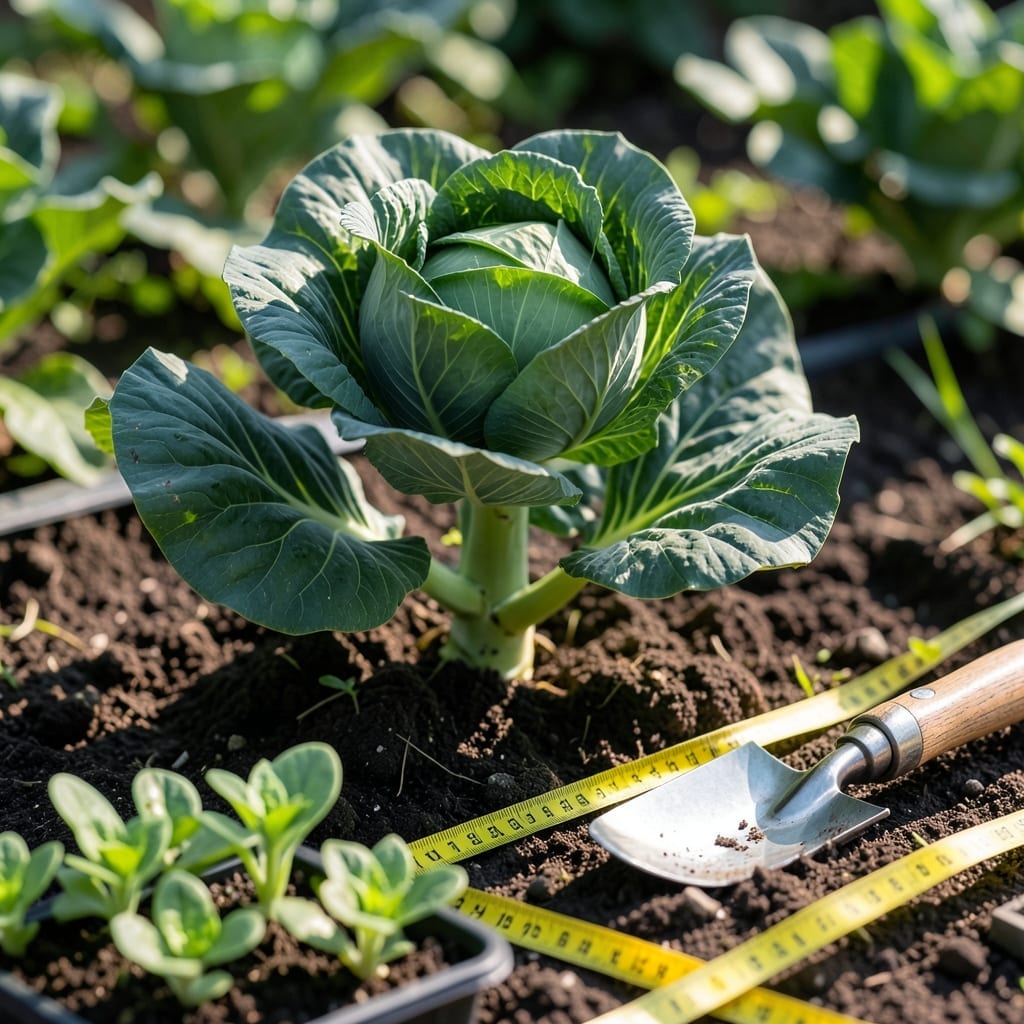
Proper spacing is the key to growing large, healthy 🥬 cabbage heads without competition for nutrients or sunlight.
Plant them too close, and you’ll end up with stunted, disease-prone plants. Too far apart, and you’re wasting valuable garden space.
I’ve learned through trial and error that getting this right makes all the difference. Whether you’re a beginner or seasoned gardener, nailing the distance between plants sets you up for success.
Discover the simple spacing rules that will transform your cabbage harvest this season.
Getting cabbage spacing right ensures each plant has enough room to develop large heads without competing for resources. I’ve found that proper spacing varies by cabbage type and growth stage, so let’s break it down.
For seedlings, I recommend starting with 12-18 inches apart in rows 24-36 inches apart. This gives them space to establish strong roots before they bulk up. 🌱
| Variety | Seedling Spacing | Mature Spacing | Row Spacing |
|---|---|---|---|
| Green Cabbage | 12-18 inches | 18-24 inches | 24-36 inches |
| Red Cabbage | 12-18 inches | 20-24 inches | 30-36 inches |
| Savoy Cabbage | 18 inches | 24 inches | 36 inches |
| Mini Varieties | 8-10 inches | 12 inches | 18-24 inches |
As plants mature, I adjust spacing to 18-24 inches apart for most standard varieties. This extra room allows heads to form without touching, which reduces disease risk and improves air flow.
For square-foot gardening, I plant 1 cabbage per square foot for mini varieties and 1 per 2 square feet for larger types. This method maximizes space while maintaining healthy growth. 🌿
If you’re growing Savoy cabbage, which has looser heads, I’ve found they need 24 inches between plants and 36 inches between rows. Their ruffled leaves require more space to prevent tangling.
I always measure twice before planting. Using a tape measure or planting grid helps me keep consistent spacing. This small step prevents overcrowding issues later in the season.
Remember, soil quality affects spacing too. In rich, fertile soil, cabbages can be planted at the closer end of the range. In poorer soil, give them extra room to compensate.
For successive plantings, I stagger rows 2-3 weeks apart with 36-inch spacing between them. This ensures continuous harvests without overlapping root systems. ✂️
Finally, I mark my planting spots with small stakes before setting out seedlings. This visual guide helps me maintain straight rows and even spacing, which makes future care much easier.
I’ve learned that proper cabbage spacing directly impacts air circulation and disease prevention. Crowded plants trap moisture, creating ideal conditions for fungal issues like powdery mildew or black rot. 🌱
Good spacing also ensures each cabbage gets enough sunlight and nutrients to develop large, firm heads. Without it, plants compete, leading to stunted growth and smaller harvests. ☀️
In my experience, overcrowded cabbage often develops yellowing leaves and weak stems. These plants struggle to form tight, healthy heads, making them more susceptible to pests. ✂️
Conversely, well-spaced cabbage thrives with vibrant green leaves and solid heads. I’ve seen 12-18 inch spacing work wonders for standard varieties, giving them room to flourish. 🌿
For square-foot gardening, I adjust spacing to 1 plant per square foot for compact varieties. This method maximizes space while still providing adequate room for growth.
Remember, row spacing matters too. I keep 18-24 inches between rows to allow for easy access during watering and harvesting. Proper spacing is a game-changer for healthy cabbage. 🪴