
Beautiful Plants For Your Interior
Beautiful Plants For Your Interior
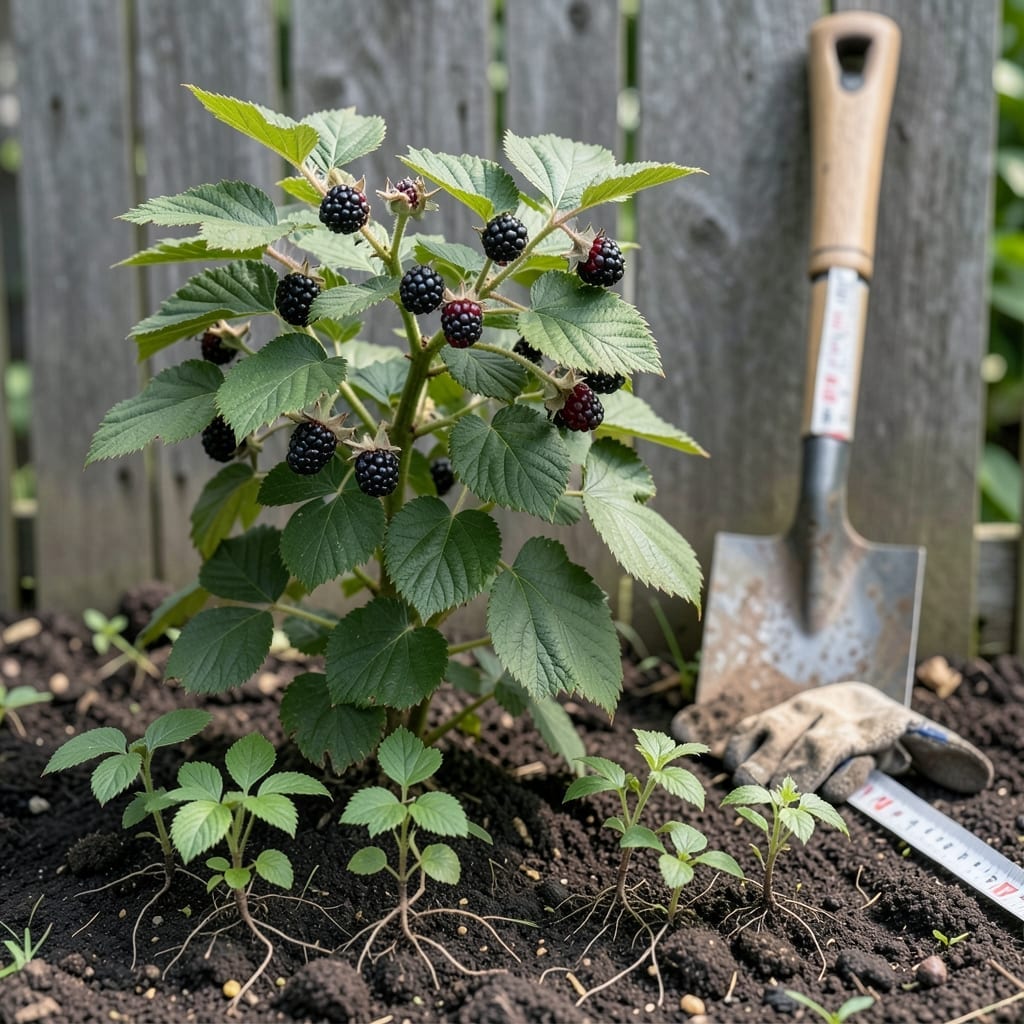
Proper spacing is the key to healthy 🫐 Blackberry plants that produce abundant fruit year after year. Plant them too close, and you risk disease and poor yields.
Too far apart, and you waste valuable garden space. Getting this right from the start saves you time, effort, and frustration down the road.
I’ve seen firsthand how the right spacing transforms a struggling Blackberry patch into a thriving one. It’s all about giving each plant room to grow while maximizing your harvest.
Discover the simple spacing rules that will set your Blackberry plants up for success from day one. Let’s dig in.

Getting the spacing right for blackberry plants can make or break your harvest. The type of blackberry you choose—erect, semi-erect, or trailing—directly impacts how far apart you should plant them. Each variety has unique growth habits that demand specific spacing for optimal airflow and fruit production. 🌱
For example, erect blackberries like ‘Cheyenne’ or ‘Apache’ grow upright and need 3-4 feet between plants. They form thick canes that can spread if not managed properly. On the other hand, trailing varieties such as ‘Marion’ or ‘Boysenberry’ require 6-8 feet between plants due to their long, sprawling canes. 🌿
| Blackberry Type | Plant Spacing | Row Spacing | Key Notes |
|---|---|---|---|
| Erect | 3-4 feet | 6-8 feet | Self-supporting, upright canes |
| Semi-Erect | 4-5 feet | 8-10 feet | Needs light support, vigorous growth |
| Trailing | 6-8 feet | 10-12 feet | Long canes, requires trellis |
I always recommend measuring twice before planting to avoid overcrowding as your blackberries mature. Erect types can handle slightly tighter spacing if you’re pruning vigorously, but trailing varieties need that extra room to spread out without tangling. ✂️
The row spacing is just as critical as the in-row spacing. For erect blackberries, I keep rows 6-8 feet apart to allow for easy harvesting and air circulation. This prevents fungal diseases that thrive in dense, humid environments. 💧
If you’re planting semi-erect varieties like ‘Triple Crown’, plan for 4-5 feet between plants. These canes can flop over if not supported, so I use a simple trellis to keep them upright. This also makes picking berries much easier come harvest season. 🌳
For trailing blackberries, the 6-8 foot spacing is non-negotiable. These plants can send out canes up to 20 feet long, so without proper space, they’ll become a tangled mess. I train mine on a horizontal trellis to keep the canes organized and fruit accessible. 🌻
Don’t forget to consider the mature size of your plants. While they may look small at planting, blackberries can quickly fill their space within a couple of years. I’ve seen gardeners regret planting too closely, as it leads to constant pruning just to keep plants in check. ☀️
Soil type and sunlight also play a role in spacing decisions. In rich, well-draining soil with full sun, blackberries will grow more vigorously, so I err on the side of more space. In shadier or poorer soil, you might get away with slightly tighter spacing. 🌿
Finally, think about long-term maintenance. Proper spacing makes weeding, pruning, and harvesting much easier. I can’t stress enough how much good airflow reduces the risk of diseases like anthracnose or rust, which can devastate a poorly spaced patch. 🪴
When planning your blackberry patch, spacing differs greatly between commercial farms and home gardens. Commercial growers prioritize mechanical harvesting and airflow, while home gardeners focus on maximizing space and ease of care.
In home settings, I recommend 3-4 feet between plants in rows, with 6-8 feet between rows. This allows for easy access and proper air circulation, reducing disease risk. ☀️
| Aspect | Commercial Gardens | Home Gardens |
|---|---|---|
| Row Width | 10-12 ft | 6-8 ft |
| In-Row Spacing | 4-6 ft | 3-4 ft |
| Trellis Use | Required | Optional |
Commercial operations use wider rows to accommodate tractors and harvesters. Their in-row spacing is also greater to prevent plant competition and ensure consistent berry quality across large fields.
For home gardens, tighter spacing works well if you’re hand-picking and can maintain good airflow. Just remember that trailing varieties need more room than erect types, which can stand closer together.
If you’re using a trellis system, you can reduce in-row spacing slightly, as the vertical growth compensates. This is especially useful in smaller gardens where space is limited.
Always consider your mature plant size and growth habit. Blackberries can spread 6-8 feet wide, so plan accordingly to avoid overcrowding in future years. 🌿