
Beautiful Plants For Your Interior
Beautiful Plants For Your Interior
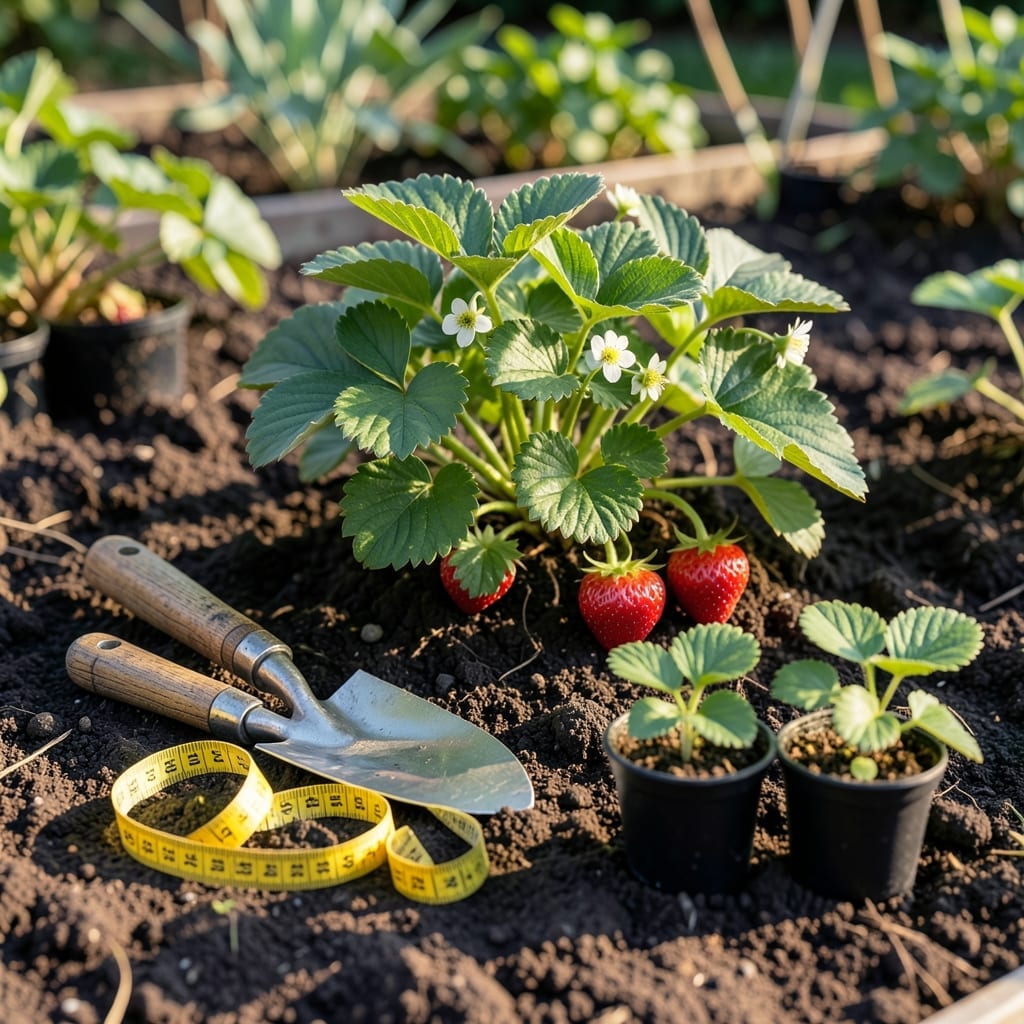
Proper strawberry plant spacing is the key to a thriving patch with bigger berries and fewer diseases. Get it wrong, and you risk stunted growth or a tangled mess of runners.
The 🍓 Strawberry needs room to breathe, especially in General’s climate. I’ve seen firsthand how the right spacing transforms a struggling bed into a productive harvest.
Discover the simple spacing rules that will maximize your yield. Whether you’re planting in rows or raised beds, these tips will set you up for success.

I’ve found that proper strawberry spacing makes all the difference in your harvest. Different types need different room to thrive, from June-bearing to everbearing varieties. 🌱
In my experience, raised beds allow for slightly tighter spacing than in-ground planting. But every variety has its own optimal distance for best results.
| Variety | In-Row Spacing | Row Spacing | Best For |
|---|---|---|---|
| June-bearing | 18-24 inches | 3-4 feet | Large single harvest |
| Everbearing | 12-18 inches | 2-3 feet | Multiple harvests |
| Day-neutral | 12 inches | 2 feet | Continuous fruiting |
| Raised beds | 10-12 inches | N/A | Intensive planting |
For June-bearing strawberries, I always recommend 18-24 inches between plants. These need more space because they produce one large harvest with vigorous growth. 🌿
Everbearing varieties do well with 12-18 inches apart. They produce multiple smaller harvests and can handle slightly tighter spacing.
Day-neutral strawberries are the most space-efficient. I plant them 12 inches apart since they continuously produce berries throughout the season.
When using raised beds, you can push the spacing to 10-12 inches. The improved drainage and soil quality allow for denser planting without sacrificing yield.
Remember that row spacing is just as important as plant spacing. I maintain 3-4 feet between rows for June-bearing and 2-3 feet for other types.
This extra space between rows gives you room to walk and proper airflow, which helps prevent disease spread and makes harvesting easier. ☀️
In my garden, I’ve seen that following these spacing guidelines results in healthier plants and bigger berries. The plants have room to develop strong root systems without competing for nutrients.
I’ve learned that proper strawberry spacing isn’t just about organization—it’s essential for plant health and maximum yield. Each plant needs room to grow without competing for resources. 🌱
When strawberries are too close, they compete for sunlight, water, and nutrients. This leads to smaller berries and weaker plants that are more susceptible to disease.
The most critical benefit of proper spacing is air circulation. Good airflow prevents moisture buildup on leaves, which is the perfect environment for fungal diseases.
I’ve noticed that well-spaced plants develop stronger root systems. With 12-24 inches between plants, roots can spread out and access more nutrients from a larger soil area.
Proper spacing also makes runner management much easier. When plants have room, you can direct runners to fill empty spaces or remove excess without tangling the entire bed. ✂️
Finally, spaced plants are easier to harvest. You can reach each berry without disturbing neighboring plants, and the fruits are less likely to rot from contact with soil or other berries. 🌿