
Beautiful Plants For Your Interior
Beautiful Plants For Your Interior
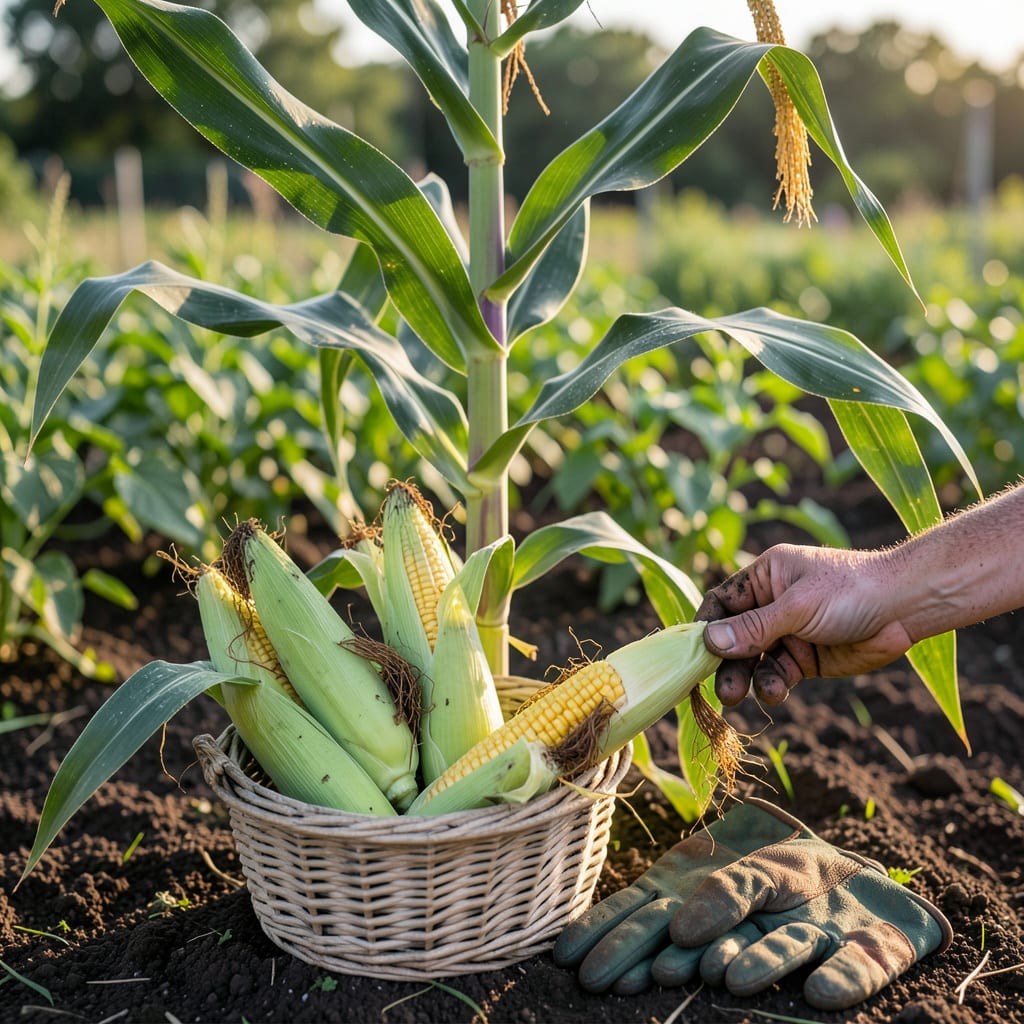
There’s nothing worse than peeling back a husk only to find underripe kernels staring back at you. Timing is everything when it comes to harvesting Sweet Corn—pick too early, and you’ll get starchy disappointment; wait too long, and the sugars turn dull.
I’ve spent seasons perfecting the art of the perfect harvest, and the secret lies in three foolproof signs. Whether you’re a first-time grower or a seasoned gardener, these simple checks will ensure every ear is bursting with sweetness. Let’s get started.


When I first started growing sweet corn, I’d tug back husks hoping for perfection—only to find underwhelming kernels. The trick isn’t luck; it’s knowing what to look for. Three visual cues tell you when it’s time: the silk color, the ear plumpness, and the kernel texture.
Let’s start with the silk. Those wispy strands emerging from the husk aren’t just decorative—they’re your first clue. When they turn dark brown and dry, the ear is nearing readiness. But don’t stop there; you’ll need to confirm with the other two signs to avoid a premature harvest.
| Sign | What to Look For | Why It Matters |
|---|---|---|
| Silk Color | Dark brown and completely dry 🟡 | Indicates pollination is complete and kernels are maturing |
| Ear Plumpness | Husk feels full and rounded ✅ | Kernels have filled out; ear is no longer slim or hollow-feeling |
| Kernel Texture | Milky liquid when pierced with a fingernail ✂️ | Peak sweetness—sugars haven’t yet converted to starch |
Next, give the ear itself a gentle squeeze through the husk. A ready ear feels plump and firm, like a well-inflated balloon. If it still feels slim or hollow, the kernels aren’t fully developed yet. I like to compare a few ears on the same stalk—sometimes they ripen at slightly different rates.
Now for the kernel test, my favorite part. Peel back just enough husk to expose a few rows of kernels (don’t damage the ear!). Press a kernel with your thumbnail. If a milky-white liquid spurts out, you’ve hit the sweet spot. Clear liquid means it’s not ready; thick or doughy liquid means you’ve waited too long.
Here’s a pro tip: Check multiple ears on the same plant. Sweet corn often ripens unevenly, even on the same stalk. I once harvested an entire row only to realize half the ears were a day behind. Now I test 3-4 ears per plant to ensure consistency. It’s worth the extra minute!
If you’re growing different varieties, keep in mind their maturity times vary. Early varieties like ‘Early Sunglow’ might be ready in 60 days, while sweeter types like ‘Peaches and Cream’ can take up to 100 days. Always cross-reference the seed packet with your observations.
Don’t forget the “twist test”—another old gardener’s trick. Grasp the ear and give it a gentle twist. If it resists slightly but still comes away cleanly from the stalk, it’s ready. If it pops off too easily, it’s overripe; if it won’t budge, it needs more time. This method works best on mature stalks with sturdy ears.
Weather plays a role too. A heatwave can speed up maturity, while cool, cloudy days might delay it. I once had a batch of ‘Golden Bantam’ ready a full week early thanks to a July scorcher. Adjust your checks if temperatures swing dramatically—your corn’s internal clock might too.
Finally, trust your instincts. If the husk is dry, the ear feels full, and the kernels pass the thumbnail test, it’s time to pick. Sweet corn loses up to 50% of its sugar within 24 hours of harvest, so plan to eat or preserve it the same day. There’s nothing like the snap of a just-picked ear!
Still unsure? Try the “shadow test” in bright sunlight. Hold the ear up to the light—if the kernels cast a dense shadow through the husk, they’re likely plump and ready. This trick saved me from harvesting a batch of underfilled ears last season.
While visual signs are your best friend for harvesting sweet corn, timing plays an equally crucial role. Most varieties take 60-100 days from planting to harvest, but this window shifts based on your climate and the specific type you’re growing. I’ve learned the hard way that ignoring these timelines can lead to disappointment.
Start by checking your seed packet for the “days to maturity” range. This number counts from the day you planted the seeds, not from germination. For example, ‘Early Sunglow’ might be ready in 60 days, while ‘Ambrosia’ could need up to 90 days. Mark these dates on your calendar as a starting point.
| Variety | Days to Maturity | Seasonal Notes |
|---|---|---|
| Early Sunglow | 60-65 days | Best for short seasons; cold-tolerant |
| Peaches and Cream | 80-85 days | Needs warm soil; extra sweet |
| Golden Bantam | 85-90 days | Classic heirloom; heat-loving |
| Ambrosia | 75-80 days | Longer sweetness retention post-harvest |
Remember that these numbers are just estimates. Your local growing degree days (GDD)—a measure of heat accumulation—play a huge role. Corn thrives on warmth, so a cool spring might delay maturity by a week or more. I use a simple soil thermometer to track progress: when my garden hits consistent 70°F+ days, I know my corn is growing faster.
Seasonal patterns matter too. In my Zone 6 garden, early-planted corn (late April) often matures faster than my June succession planting, even if they’re the same variety. That’s because the longer daylight hours in early summer accelerate growth. Keep a garden journal to track these patterns year to year.
Here’s a trick I swear by: start checking ears 3-5 days before your estimated maturity date. Sweet corn can go from perfect to overripe surprisingly fast, especially in hot weather. Last summer, my ‘Honey & Pearl’ was ready a full week early during a heatwave. When temperatures soar above 90°F, I check daily.
Don’t forget about succession planting if you want a continuous harvest. By staggering plantings every 2-3 weeks, you’ll avoid having all your corn ready at once. I plant my first batch in late April, then another in mid-May, and a final one in early June. This gives me fresh corn from July through September without any gaps.
Finally, watch for regional differences. Gardeners in cooler climates (like the Pacific Northwest) often need to add 10-14 days to maturity estimates, while those in hot southern states might subtract a week. When in doubt, connect with local gardening groups—they’ll know exactly how your microclimate affects corn timing.
🌽Even experienced gardeners can sabotage their sweet corn harvest with a few common missteps. I’ve made my share of errors—like picking too early or waiting too long—and each one taught me valuable lessons. The key is knowing what to watch for before it’s too late.
One of the biggest mistakes is harvesting based on husk color alone. Just because the outer leaves turn brown doesn’t mean the kernels are ready. I once harvested an entire row because the husks looked dry, only to find the kernels were still small and watery. Always confirm with the thumbnail test!
⚠️ Warning: Overwatering in the final weeks can dilute kernel sweetness and lead to watery, bland corn. Reduce watering slightly as harvest nears to concentrate sugars.
⚠️ Warning: Ignoring pests like corn earworms can ruin ears overnight. Check silks for eggs and use organic sprays if needed—damaged kernels won’t ripen properly.
⚠️ Warning: Harvesting in heat (above 85°F) accelerates sugar loss. Pick in early morning when temps are cool to lock in sweetness.
Another critical error is assuming all ears on a stalk ripen simultaneously. I’ve learned that top ears often mature 1-2 days before lower ones on the same plant. Now I check each ear individually rather than harvesting everything at once. A quick squeeze test through the husk reveals which are ready.
Waiting too long is just as bad as picking too early. Once kernels pass the milky stage, they quickly turn starchy and tough. I mark my calendar for 3 days after the first ear tests ready, then harvest the entire plant. This ensures I don’t miss the sweetness window while allowing stragglers to catch up.
Finally, don’t overlook post-harvest handling. Sweet corn loses up to 25% of its sugar within 24 hours if left at room temperature. I immediately refrigerate unshucked ears in plastic bags, which preserves sweetness for up to 5 days. For long-term storage, blanch and freeze within hours of picking.
Here’s my golden rule: When in doubt, pick it. It’s better to harvest a day early than a day late. Underripe corn can still be edible (if not ideal), but overripe kernels become chewy and lose their signature sweetness. Trust your tests, not just the calendar!
🌽The milky liquid when you pierce a kernel shows the sugars are at their peak. This stage means the starch hasn’t fully developed yet, so you’ll get that perfect sweet, juicy bite. Clear liquid means it’s underripe, while thick/doughy liquid signals it’s past prime.
Not ideally. The silk needs to be fully brown and dry to ensure proper pollination. If it’s still white or moist, the kernels likely aren’t mature. However, if most silks are brown but a few strands remain green, test the kernels—they might still be ready.
Top ears typically mature 1-2 days earlier than lower ones because they receive more sunlight and warmth. This uneven ripening is normal. Always check each ear individually rather than harvesting all at once. I compare 3-4 ears per plant for consistency.
Harvest within 24-48 hours of peak ripeness. After that, sugars rapidly convert to starch, making kernels tough and less sweet. In hot weather (above 85°F), pick the same day it tests ready to preserve maximum sweetness.
Pick in the early morning when temperatures are coolest. This preserves sugar content and crispness. Harvesting during midday heat causes sugars to degrade faster. I keep a cooler with ice packs nearby to immediately chill freshly picked ears.
