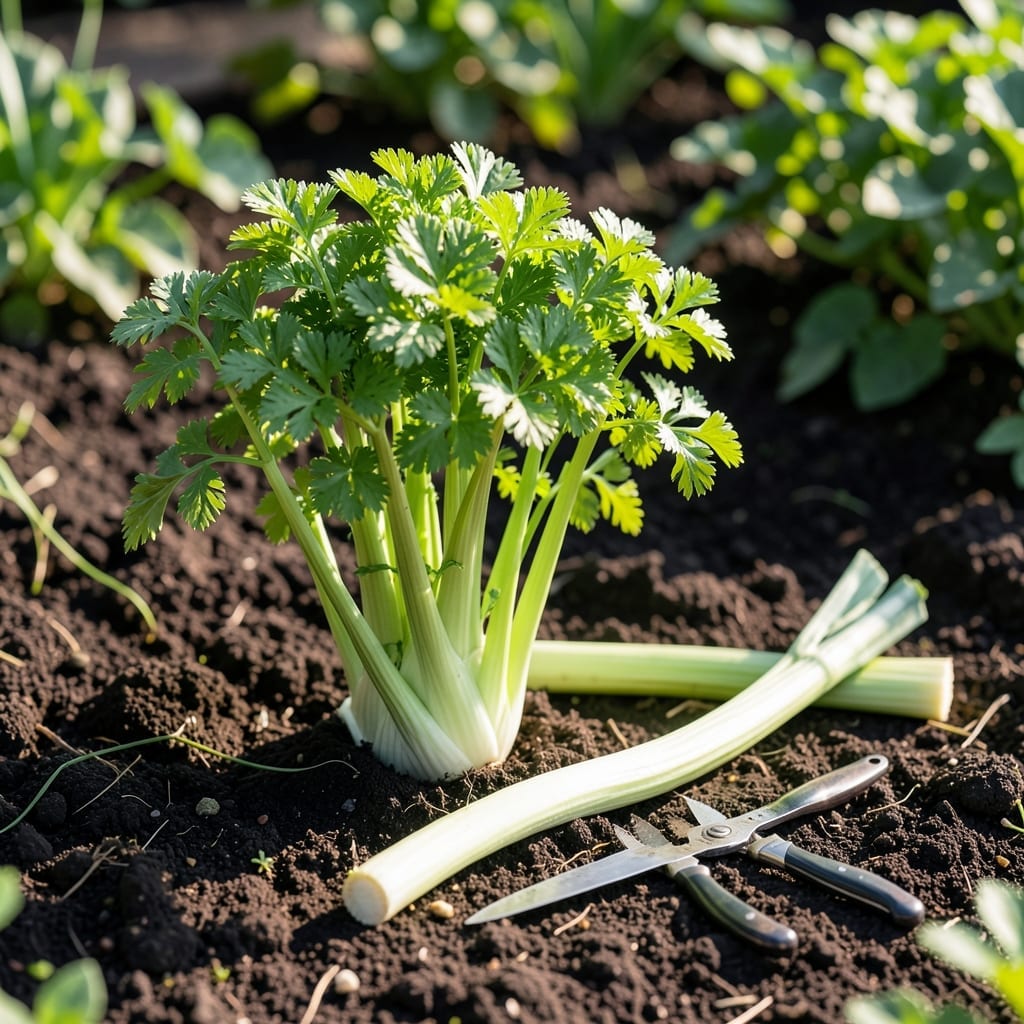
How Do You Know When Celery Is Ready to Pick: Harvest Height and Stem Firmness

How Do You Know When Celery Is Ready to Pick: Harvest Height and Stem Firmness

Harvesting celery at the perfect time ensures crisp, flavorful stalks rather than bitter or stringy disappointment. Knowing the exact signs of readiness can mean the difference between a bountiful harvest and wasted effort.

With 🥬 Celery, timing is everything. The stalks should reach 10-12 inches tall and feel firm to the touch. Anything less, and you risk thin, underdeveloped growth.

I’ve learned the hard way that waiting for the right moment pays off. Look for thick, upright stalks and vibrant green leaves as your cues.

Discover how to spot these signs and avoid common harvesting mistakes that can ruin your crop.

Style 16: Quick Tips – General
🌅
Morning
Pick early for best flavor & crunch
✂️
Clean Cut
Use scissors, don’t pull or twist
🔄
Check Daily
Ripeness can change overnight!

Key Signs Your Celery Is Ready for Harvest

I always check my celery plants for stalk height first, as it’s the most obvious sign. Mature celery typically reaches 10-12 inches tall, though some varieties may be slightly shorter or taller. This height ensures the stalks have developed enough fiber and flavor. 🌱

Next, I look for stalk thickness. Ready-to-harvest celery should have stalks that are 1-1.5 inches in diameter at the base. Thin, spindly stalks mean the plant needs more time to mature and fill out.

Sign Description
Stalk Height 10-12 inches tall
Stalk Thickness 1-1.5 inches diameter
Firmness Crisp and snaps easily
Leaf Color Dark green and healthy
Base Condition Compact and solid

The firmness test is my go-to for confirming readiness. I gently squeeze the celery stalks—if they feel solid and crisp, they’re ready. Soft or bendy stalks indicate the plant isn’t mature enough yet. This test also helps avoid harvesting woody or stringy celery. 🌿

Leaf color is another key indicator. Healthy, dark green leaves signal that the celery is thriving and ready. Pale or yellowing leaves often mean the plant is stressed or immature. I also check the base of the plant—it should be compact and solid, not loose or spreading.

Timing matters too. Celery typically takes 100-140 days from seed to harvest, depending on the variety and growing conditions. I start checking for readiness around day 100, but I don’t rush it. Patience ensures the best flavor and texture.

I avoid harvesting celery that’s less than 6 inches tall or has thin, weak stalks. These plants haven’t developed enough sugar or fiber, leading to a bitter or tough harvest. Waiting a little longer almost always pays off. ✂️

For the best results, I harvest my celery in the cool morning hours. This helps preserve the crispness and freshness of the stalks. I also use sharp pruners or shears to make clean cuts, which reduces damage to the plant and encourages regrowth in some varieties.

If I’m unsure, I’ll test one stalk first. I cut a single stalk and check its texture and taste. If it’s crisp and mild, the rest of the plant is likely ready. If not, I give it another week or two before testing again.

Finally, I pay attention to the weather forecast. Celery doesn’t handle frost well, so I aim to harvest before the first cold snap. If frost is expected, I’ll pick my celery early to avoid damage. This ensures I get the most out of my hard work and patience.

When to Harvest Celery for Optimal Flavor and Storage

Timing your celery harvest right makes all the difference in flavor and texture. I’ve found that early morning picks retain the most crispness, as the stalks are most turgid after a cool night.

For most celery varieties, the sweet spot is 100-120 days after planting. If you’re growing in cooler climates, aim for the earlier end to avoid frost damage. ☀️

Key Harvest Times

  1. Early Harvest (80-90 days): Smaller stalks, milder flavor, great for salads.
  2. Peak Harvest (100-120 days): Full size, crisp texture, best for storage.
  3. Late Harvest (130+ days): Risk of woody texture, use immediately.
  4. Frost Alert: Harvest all celery before the first frost to prevent damage.

To test for readiness, gently squeeze the stalks. If they’re firm and snap easily, they’re ready. Avoid harvesting when the soil is wet, as this can lead to rot.

If you’re growing self-blanching varieties, check that the inner stalks are pale and tender. For green celery, look for uniform thickness and deep green leaves.

After picking, I recommend storing celery in the fridge wrapped in a damp cloth. This keeps it fresh for up to 2 weeks. For longer storage, consider freezing or drying. 🌿

Remember, harvesting too late can result in tough, stringy stalks. If you notice the base splitting, it’s a sign the plant is overmature and should be harvested immediately.

★★★★★4.9(11 reviews)