
Beautiful Plants For Your Interior
Beautiful Plants For Your Interior
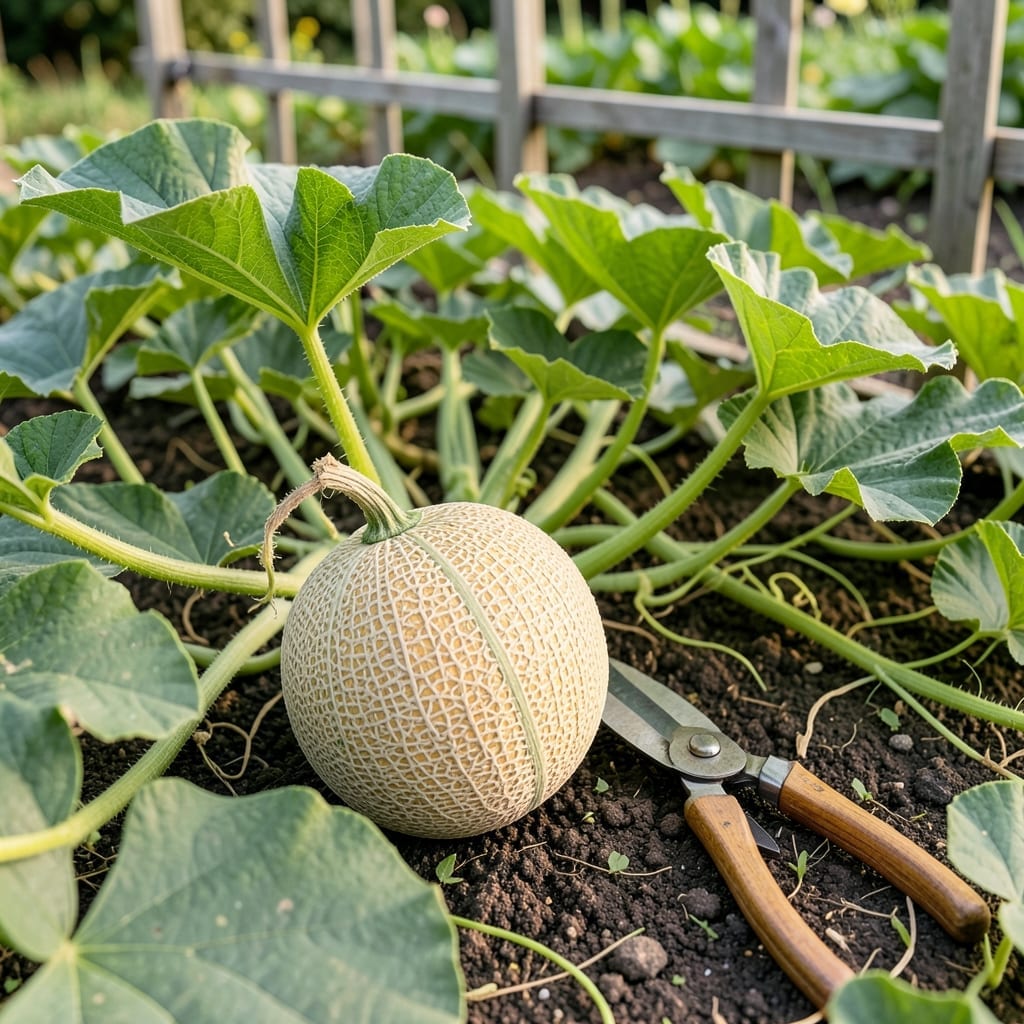
Picking a perfectly ripe 🍈 cantaloupe can be tricky—choose too early and it’s bland, too late and it’s mushy. I’ve been there, standing in the garden wondering if today’s the day.
There’s a simple science to spotting the ideal moment. The right cues will save you from disappointment every time.
Discover the foolproof signs that guarantee sweet, juicy flavor. Let me show you how to get it right.


I’ve learned that color changes are the first clue. Look for the rind under the netting to shift from green to a beige or tan hue. This is a classic sign of maturity in cantaloupes.
The stem end also tells a story. When the stem slips easily from the vine, known as a full slip, it’s a strong indicator the melon is ready. This happens naturally as the fruit ripens. 🌱
| Visual Sign | What to Look For |
|---|---|
| Rind Color | Beige or tan under netting |
| Stem Slip | Separates cleanly from vine |
| Netting Texture | Rough and well-defined |
| Blossom End | Slight softening when pressed |
The netting pattern on the rind should be rough and pronounced. A smooth or faint netting often means the cantaloupe isn’t fully mature yet. This texture helps protect the fruit as it grows.
Another visual cue is the blossom end, opposite the stem. It should show a slight softening when gently pressed, but don’t confuse this with mushiness. The rest of the melon should still feel firm.
I always check the overall appearance too. A ripe cantaloupe will have a uniform shape and a slightly dull finish rather than a shiny one. Shiny rinds can indicate immaturity.
If you notice cracks or splits in the rind, it might be overripe. These often appear when the melon has taken in too much water too quickly. It’s best to harvest before this happens.
The size and weight also matter. A ripe cantaloupe will feel heavy for its size, indicating it’s full of juice. Compare a few melons to get a sense of what feels right.
Don’t forget the leaf and vine cues. The leaves near the melon may start to yellow or dry out as the fruit ripens. This is the plant’s way of redirecting energy to the melon.
Finally, trust your gardening instincts. With practice, you’ll start to recognize the subtle signs that tell you a cantaloupe is ready to be picked. It’s a rewarding feeling to harvest one at its peak! 🌿
Beyond visual cues, I rely on tactile tests to confirm ripeness. The tap test is a classic method: gently tap the melon and listen for a deep, hollow sound. A high-pitched tone usually means it’s not ready.
Another reliable check is gentle pressure at the blossom end. A ripe cantaloupe will yield slightly to pressure, but it shouldn’t feel soft or mushy. Think of it like testing a ripe avocado—just enough give.
The weight test is often overlooked. A ripe cantaloupe will feel heavier than it looks because it’s full of juice. Compare a few melons of similar size to get a sense of the right heft.
I also check the stem end for aroma. A ripe cantaloupe will have a sweet, musky scent that’s most noticeable at the stem. If there’s no smell, it’s likely not ready yet.
Avoid squeezing the melon too hard, as this can bruise the fruit. The pressure should be light, just enough to feel the slight give. Too much force can damage the cantaloupe.
With these methods, I’ve found I can confidently pick cantaloupes at their peak. It’s all about combining sight, sound, and touch to make the right call. Practice makes perfect, and soon you’ll be harvesting the sweetest melons every time! 🌿