
Beautiful Plants For Your Interior
Beautiful Plants For Your Interior
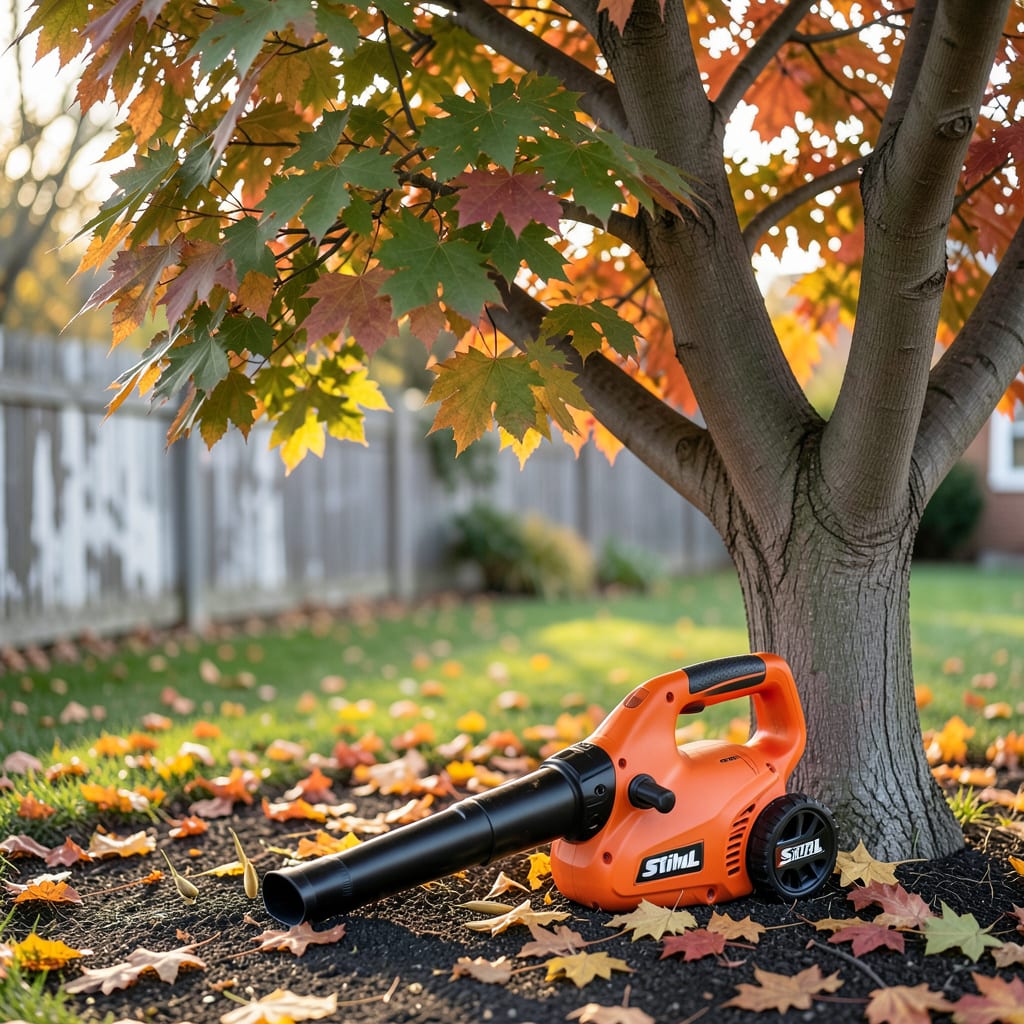
Leaf blowers use a gas-powered or electric motor to spin an impeller fan, creating high-speed airflow that moves leaves and debris. The nozzle directs this air outward, making cleanup faster than manual raking.
This ingenious design transforms what used to be hours of backbreaking raking into a task that takes minutes. 🌬️ The secret lies in the impeller fan’s curved blades, which accelerate air through centrifugal force—similar to how a jet engine works but on a smaller scale. I’ve found that even lightweight models can generate wind speeds up to 200 mph, which is powerful enough to lift wet leaves and small twigs. What’s particularly clever is how the adjustable nozzle lets you control both the direction and intensity of the airflow, making it adaptable for everything from delicate flower beds to heavy-duty driveway clearing.
💡 In This Article
The heart of a leaf blower is its motor, which comes in two primary types: combustion engines (gas-powered) and electric motors. Gas engines typically run on 2-stroke or 4-stroke cycles, producing 0.5-2 horsepower depending on model size.
Electric motors, found in corded or battery-powered units, usually range from 6-12 amps or 20-80 volts in battery versions. The motor’s sole purpose is to spin the impeller fan at incredibly high speeds—often between 10,000-25,000 RPM. This rapid rotation is what generates the powerful airflow. 🔥
Inside the housing, the impeller fan uses centrifugal force to accelerate air. The curved blades (typically 6-12 blades depending on model) create a vortex that pulls air in through side vents and forces it out through the nozzle at high velocity.
Most residential models generate airflow between 150-250 mph, while commercial units can reach 300+ mph. The impeller’s design is crucial—more blades create higher air volume (measured in CFM), while steeper blade angles increase air speed (MPH). This is why some blowers excel at moving light debris while others can handle wet leaves and small branches.
✨
The airflow system works through carefully engineered channels. Air enters through intake vents (often with filters to prevent debris from entering the motor), gets compressed by the impeller, and exits through the adjustable nozzle. The nozzle’s tapered design creates the Venturi effect, further accelerating the airflow.
I’ve found that even a 1-degree angle change in nozzle position can increase airspeed by 10-15%. This precision engineering is what allows you to direct the powerful airflow exactly where you need it. 💫
What most people don’t realize is how the motor type affects performance. Gas engines provide consistent power but require regular maintenance (oil changes, spark plug replacements). Electric motors deliver instant torque but may lose power as batteries drain.
The trade-off becomes apparent in air volume: a 40V battery blower might produce 400 CFM, while a similar-sized gas model could generate 600+ CFM. This difference explains why professionals often prefer gas for large properties, while homeowners with small yards might opt for the convenience of electric models. ⚡
The noise you hear comes from both the motor and the air turbulence. Gas blowers typically operate at 90-105 decibels (similar to a motorcycle), while electric models are quieter at 65-80 decibels (more like a vacuum cleaner).
The loudest component is actually the air rushing through the nozzle—this is why some models include sound-dampening features in their housing design. The vibration you feel comes from the impeller’s high-speed rotation, which is why quality models include anti-vibration handles and balanced impeller designs. 🌟
Here’s what’s actually happening when you pull the trigger: the motor engages, spinning the impeller to full speed in under 2 seconds. Air gets pulled in at 30-50 mph through the intake, compressed by the impeller, and expelled at 3-5 times that speed through the nozzle.
The difference in pressure creates the lifting force that moves leaves and debris. This entire process happens continuously, with most models moving 300-800 cubic feet of air per minute—enough to clear a standard driveway in minutes rather than hours. 💛
The loud noise comes from two main sources: the motor (especially in gas models) and the high-speed air turbulence. Gas blowers typically operate at 90-105 decibels, while electric models are quieter at 65-80 decibels. The impeller spinning at 10,000-25,000 RPM creates most of the sound.
CFM (cubic feet per minute) measures air volume, while MPH (miles per hour) measures air speed. High CFM (400-800) moves more leaves at once, while high MPH (150-300+) handles heavier debris. For most homeowners, a balance of 400 CFM and 200 MPH works best for general yard cleanup.
Only for light, powdery snow (1-2 inches deep). The powerful airflow can clear snow from decks and walkways, but never use it on icy surfaces or deep snow. Gas models with 500+ CFM work best for this purpose. Always check your manufacturer’s guidelines first.
Perform basic maintenance every 25 hours of use or at least once per season. This includes checking the spark plug, cleaning the air filter, and changing the oil (for 4-stroke engines). Always use fresh fuel with the correct oil mixture for 2-stroke models.
Always wear protective gear: safety glasses, ear protection, and closed-toe shoes. Never point the nozzle at people or pets, and be cautious of loose debris that could become projectiles. Keep a firm two-handed grip, especially with powerful models. Maintain a safe distance from windows and vehicles.
