
Beautiful Plants For Your Interior
Beautiful Plants For Your Interior
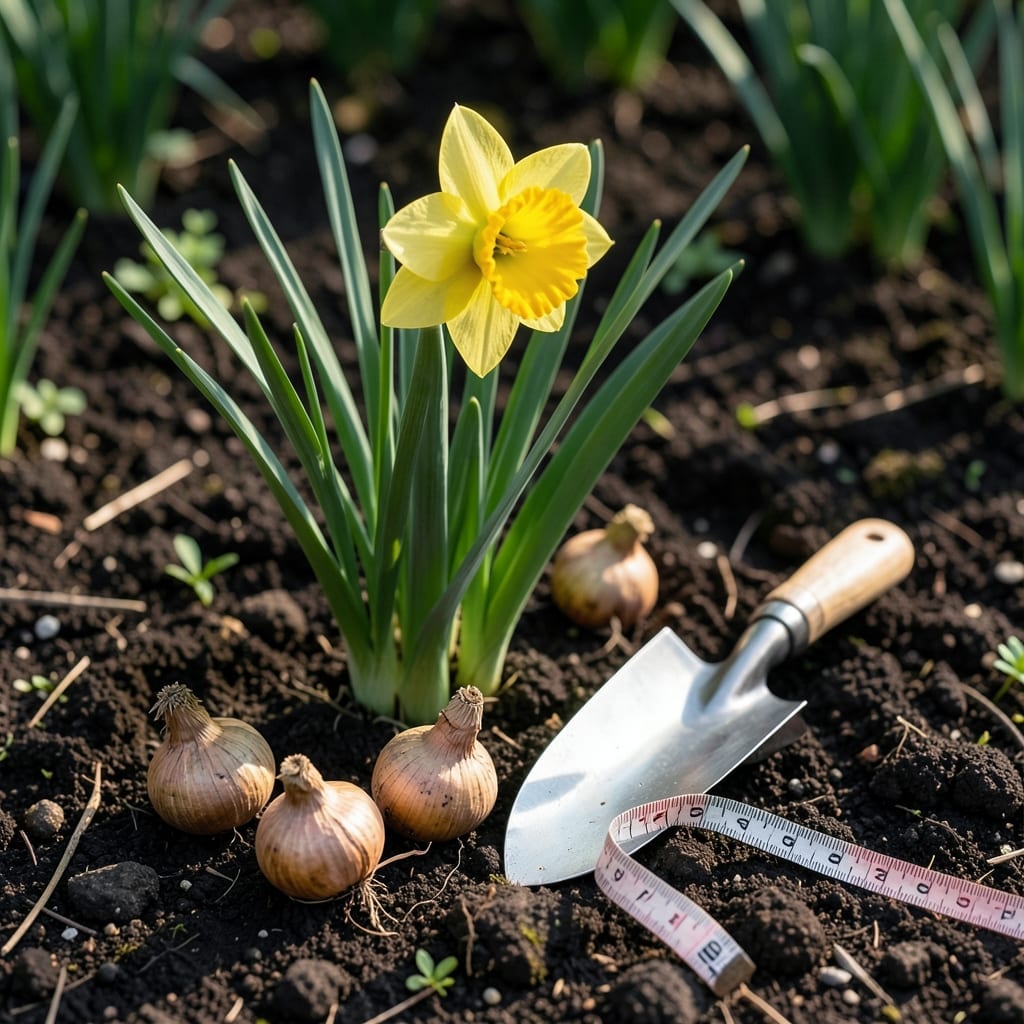
Planting daffodils at the right depth is the secret to vibrant spring blooms year after year. Get it wrong, and you risk weak growth or no flowers at all.
With the 🌷 Daffodil, timing and technique matter just as much as location. I’ve seen firsthand how proper planting depth transforms a garden from lackluster to stunning.
Let me show you exactly how to plant these bulbs for maximum impact, ensuring they thrive in zones 3-8 and return bigger and brighter each season.
Getting the planting depth right is crucial for healthy daffodils. I always recommend planting bulbs 2-3 times deeper than their height. For standard daffodils, that means about 6 inches deep from the base.
This depth protects bulbs from freezing temperatures and ensures proper root development. It also prevents blind stems, where flowers fail to form. I’ve seen this happen when bulbs are planted too shallow.
| Bulb Size | Planting Depth | Spacing |
|---|---|---|
| Standard (2+ inches) | 6 inches | 4-6 inches |
| Miniature (1 inch) | 4-5 inches | 3-4 inches |
| Jonquil (1.5 inches) | 5 inches | 3-6 inches |
I always loosen the soil to 12 inches deep before planting. This improves drainage and helps roots establish quickly. Daffodils thrive in well-draining soil, so avoid heavy clay if possible.
For best results, plant daffodils in full sun to partial shade. They need at least 6 hours of sunlight daily. I’ve found morning sun works best in warmer climates.
After planting, I water thoroughly to settle the soil and eliminate air pockets. This first watering is critical for root development. Then, I add a 2-inch layer of mulch to insulate the bulbs.
Daffodils are low-maintenance once established. I only fertilize in early spring with a balanced bulb fertilizer. This gives them the nutrients they need for vibrant blooms.
In zones 3-8, fall planting between September and November works best. I aim to plant 2-4 weeks before the ground freezes. This gives roots time to establish before winter.
For naturalizing, I plant in drifts of 10-20 bulbs. This creates a stunning display that looks natural and multiplies over time. Just be sure to give them enough space to spread.
I’ve found that consistent depth across the garden bed creates the most uniform blooms. Use a measuring stick or bulb planter for accuracy if you’re planting many bulbs.
Even experienced gardeners can mess up daffodil planting depth. I’ve seen bulbs planted too shallow struggle with winter freeze damage. Others planted too deep may rot or fail to sprout at all.
One clear sign of shallow planting is floppy stems that can’t support the flowers. The bulbs haven’t anchored properly in the soil. On the flip side, deeply buried bulbs often produce weak or no blooms because they exhaust their energy trying to reach the surface.
⚠️ Warning: Planting daffodils less than 4 inches deep risks winterkill in cold climates. Deeper than 8 inches may prevent sprouting entirely.
If you’ve already planted too shallow, I recommend adding a thick mulch layer for insulation. For bulbs planted too deep, gently dig and replant them at the correct depth before they sprouts.
Blind stems—when foliage appears but no flowers—often signal depth issues. This usually means the bulb was planted too shallow the previous year. I’ve fixed this by digging up bulbs after foliage dies back and replanting deeper in fall.
Another common mistake is ignoring soil type. In heavy clay, daffodils may need slightly shallower planting to avoid rot. In sandy soil, I go a bit deeper for stability. Always test drainage before planting.
I’ve learned that consistency matters across your garden bed. Use a measuring tool to ensure uniform depth. This prevents patchy blooming and ensures all bulbs perform their best. 🌷