
Beautiful Plants For Your Interior
Beautiful Plants For Your Interior
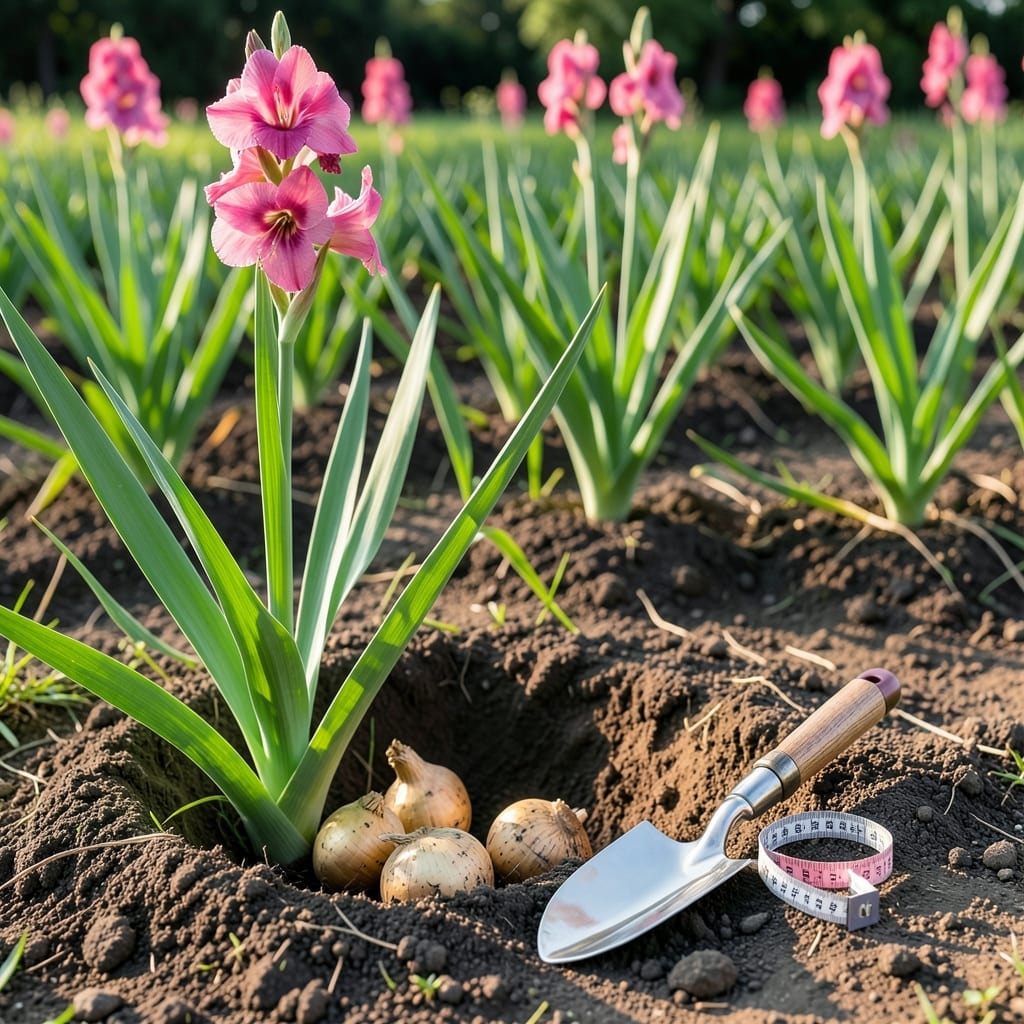
Planting Gladiolus 🌷 bulbs at the right depth can mean the difference between stunning blooms and disappointment. Too shallow, and they may topple over; too deep, and they might not flower at all.
I’ve seen many gardeners struggle with weak stems or no blooms, simply because of incorrect planting depth. The good news? It’s an easier fix than you think.
Discover the simple trick to planting Gladiolus bulbs for the strongest, most vibrant flowers this season. Let’s dig in.
Planting Gladiolus corms at the correct depth ensures strong stems and vibrant blooms. I always recommend starting with a soil test to understand your garden’s composition. Different soil types require slight adjustments to planting depth.
In my experience, loamy soil is ideal for Gladiolus, but sandy and clay soils need special attention. The right depth helps prevent rot and promotes healthy growth.
| Soil Type | Corm Size | Planting Depth | Spacing |
| Sandy | Small (1-2″) | 5-6 inches | 4-6 inches |
| Loamy | Medium (2-3″) | 4-6 inches | 6-8 inches |
| Clay | Large (3″+) | 3-4 inches | 8-10 inches |
For sandy soil, I plant corms slightly deeper to anchor them better. The loose texture drains quickly, so extra depth helps retain moisture around the roots.
In clay soil, I go shallower to avoid waterlogging. The dense texture holds moisture, so planting too deep can cause bulb rot. Always improve drainage first.
Loamy soil is the gold standard for Gladiolus. Here, I stick to the classic 4-6 inch depth for medium corms. This balance ensures stability and proper nutrient access.
For larger corms, I adjust depth to 6 inches in loamy soil. Bigger bulbs need more room to establish strong root systems for those tall, stunning spikes.
Don’t forget spacing! I give each corm 6-8 inches apart in rows. This prevents overcrowding and allows for good air circulation, reducing disease risk.
If you’re planting in containers, use a well-draining mix and plant corms 4 inches deep. Pots dry out faster, so I check moisture levels daily in summer.
I always mark my planting spots with stakes. This helps me track depth consistency and avoids accidental disturbance while gardening. It’s a simple trick that saves time and effort.
🌷Planting Gladiolus corms at the wrong depth leads to frustration. I’ve seen weak stems and no blooms when gardeners misjudge this critical step. The key is consistency and precision.
Whether too shallow or too deep, incorrect planting depth disrupts growth. I always double-check my measurements to avoid these common pitfalls that ruin a season’s work.
I learned the hard way that shallow planting causes stems to flop. One windy day, my entire row collapsed because I’d only buried them 2 inches deep. Now, I always aim for 4-6 inches.
Another lesson: deep planting in clay soil leads to rot. The dense soil holds water, so I plant 3-4 inches deep and amend with compost. This simple fix saved my bulbs from drowning.
For sandy soil, I go deeper to reach moisture. But I also mulch heavily to retain water. This combo prevents stunted growth and keeps my Gladiolus thriving.
I use a ruler or stick to mark my depth before planting. This ensures every corm goes in at the same level. It’s a small step that prevents uneven sprouting and saves time.
🌷