
Beautiful Plants For Your Interior
Beautiful Plants For Your Interior
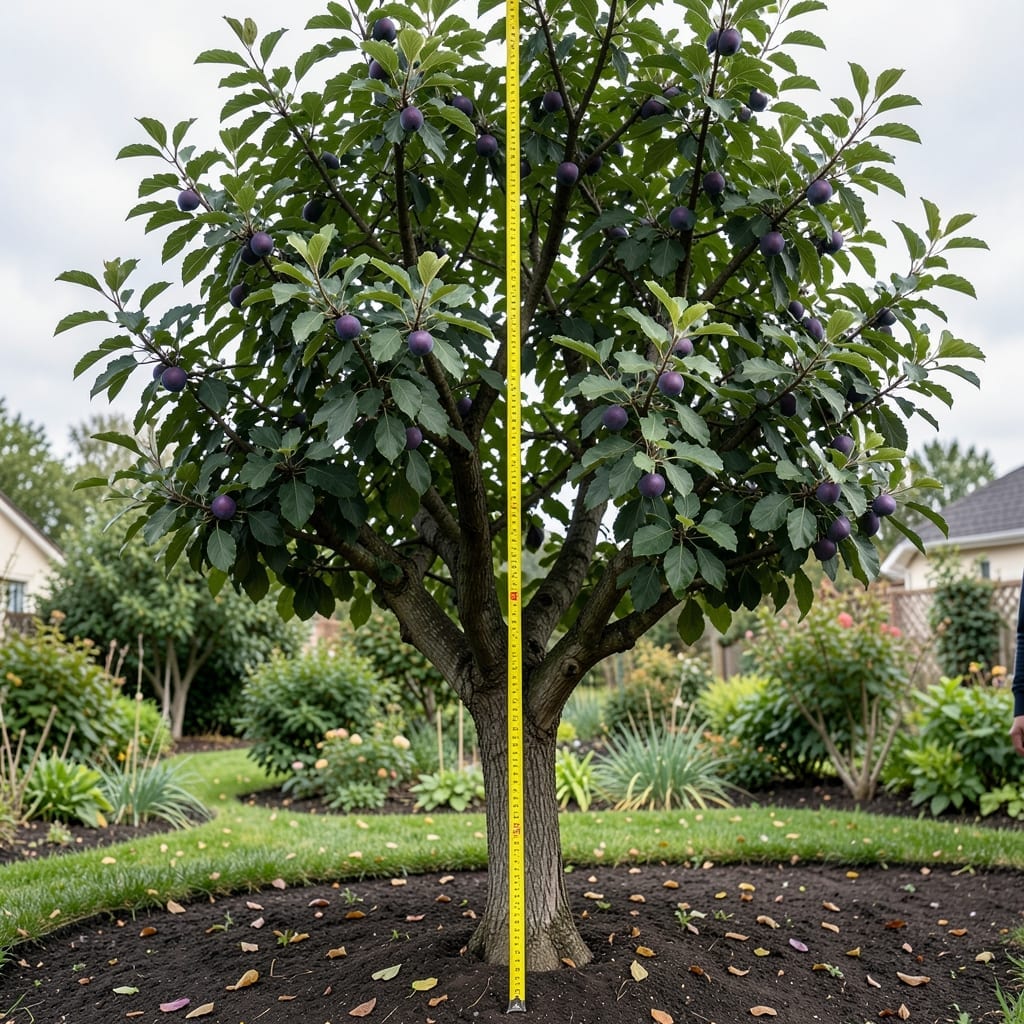
Planning to plant a Plum Tree 🌳 in your garden? Understanding its mature size is crucial for proper spacing and landscape design. The final height and spread can vary dramatically depending on the variety.
Some plum trees stay compact at 8-10 feet, while others soar to 25 feet tall. This difference affects everything from pruning to harvest. Knowing what to expect helps you prepare.
Let me walk you through the typical sizes for different types and how to manage their growth. You’ll learn exactly what to expect from your Plum Tree.

When I first planted my plum trees, I was amazed by how much their size varied. The standard varieties can reach 20-25 feet tall with a spread of 15-20 feet, perfect for large landscapes.
For smaller gardens, semi-dwarf plum trees typically grow 12-15 feet tall with a 10-12 foot spread. These are great for backyard orchards where space is limited but you still want substantial yield.
| Plum Tree Type | Mature Height | Mature Spread | Spacing Needs |
|---|---|---|---|
| Standard | 20-25 ft | 15-20 ft | 25-30 ft apart |
| Semi-Dwarf | 12-15 ft | 10-12 ft | 15-20 ft apart |
| Dwarf | 8-10 ft | 6-8 ft | 10-12 ft apart |
The dwarf plum trees are my favorite for container gardening. They stay compact at 8-10 feet tall with a 6-8 foot spread, making them perfect for patios or small yards.
I’ve found that rootstock selection plays a huge role in determining the final size. Dwarfing rootstocks keep trees small, while standard rootstocks allow for maximum growth potential.
For proper tree spacing, I recommend planting standard trees about 25-30 feet apart. This gives their roots plenty of room to spread and ensures good air circulation.
With semi-dwarf varieties, you can plant them closer at 15-20 feet apart. This works well for creating a small orchard in a backyard setting.
Dwarf plums need even less space. I’ve successfully grown them with just 10-12 feet between trees, and they even do well in large containers on my patio.
Remember that these are mature sizes. It typically takes 3-5 years for a plum tree to reach its full height, depending on the variety and growing conditions.
I always tell fellow gardeners that pruning can help control size. Even standard varieties can be kept smaller with regular pruning and proper training techniques.
Choosing the right size for your space is crucial. A 25-foot tree might overwhelm a small garden, while a dwarf variety could get lost in a large landscape. 🌳
In my experience, the growing environment dramatically influences how big a plum tree will grow. Even the same variety can vary by 30% or more based on conditions.
The most critical factor is sunlight exposure. Plum trees need full sun (6+ hours) to reach their maximum potential size. Shade-stunted trees often stay significantly smaller.
| Condition | Impact on Size | Optimal Level |
|---|---|---|
| Sunlight | Maximizes growth | 6-8 hours daily |
| Soil Quality | Boosts height/spread | Well-draining loam |
| Water | Supports full size | 1-2 inches weekly |
Soil quality makes a huge difference. I’ve seen plum trees in poor, compacted soil struggle to reach even 10 feet, while those in rich, loamy soil can exceed expectations.
Water availability is another key factor. Consistent moisture, especially during the first 2-3 years, helps trees establish strong root systems that support maximum growth.
Climate zone affects growth too. In warmer zones (7-9), plum trees often grow taller and faster than in cooler zones (4-6) with shorter growing seasons.
I always recommend testing your soil pH (ideal is 6.0-7.0) before planting. This small step can make a big difference in your tree’s ultimate size and productivity. 🌳