
Beautiful Plants For Your Interior
Beautiful Plants For Your Interior
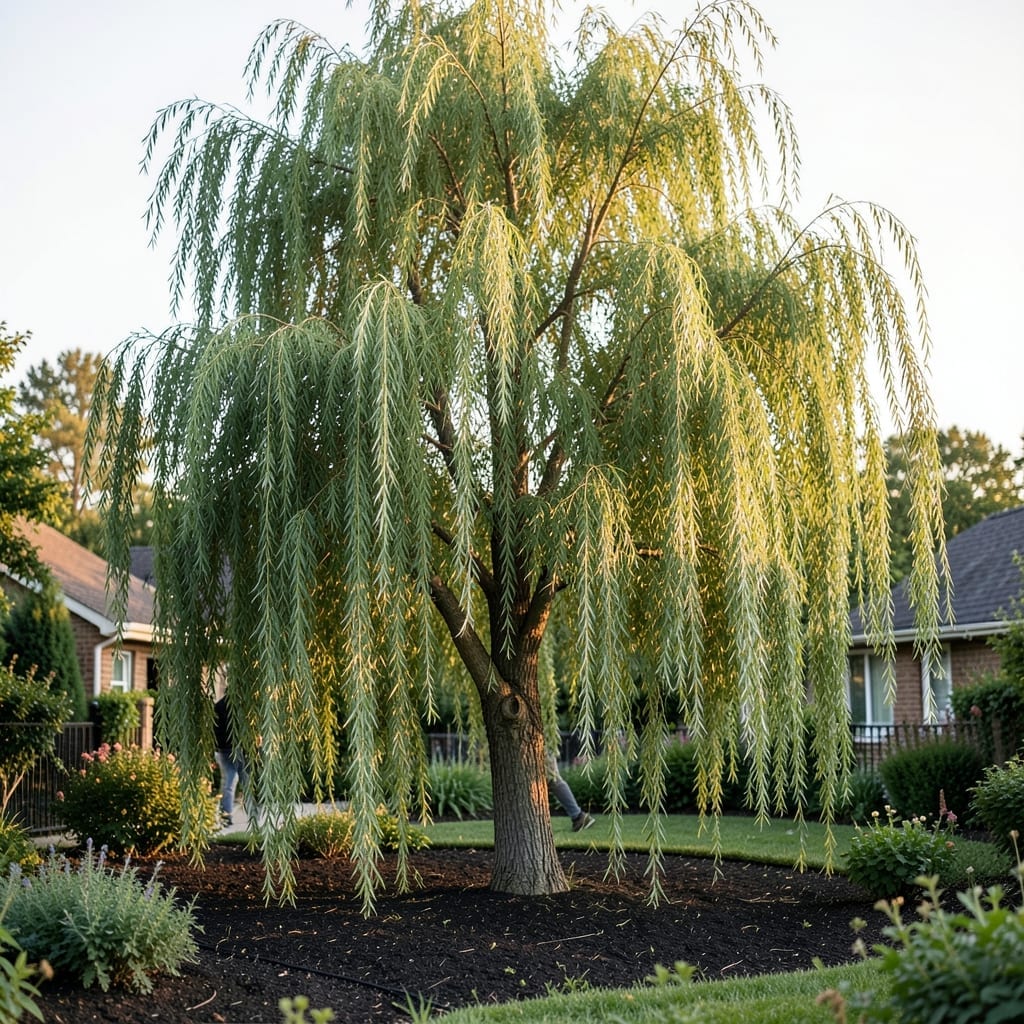
Willow trees are beloved for their graceful, weeping branches and rapid growth, but their mature size often surprises new gardeners. Understanding how big the 🌳 Willow Tree can grow is crucial for proper placement in your landscape.
These majestic trees can reach 40-70 ft tall, with some varieties spreading just as wide. That’s taller than a 4-story building, which means they need plenty of space to thrive.
If you’re considering adding one to your garden, knowing their potential size helps you plan accordingly and avoid future issues. Let me guide you through what to expect.

Willow trees come in various species, each with its own mature size range. The most common types, like weeping willows, can grow 40-70 feet tall with a 30-40 foot spread. That’s a massive footprint in any landscape!
Other varieties, such as white willows and black willows, typically reach 50-80 feet in height. Even pussy willows, though smaller, can still grow 15-25 feet tall and wide. These sizes make proper planning essential.
| Variety | Height Range | Spread Range |
|---|---|---|
| Weeping Willow | 40-70 ft | 30-40 ft |
| White Willow | 50-80 ft | 40-50 ft |
| Black Willow | 30-60 ft | 20-35 ft |
| Pussy Willow | 15-25 ft | 12-20 ft |
Several key factors influence how large your willow will grow. Soil quality plays a huge role—willows thrive in moist, well-draining soil. They’re often found naturally near streams or ponds, which gives you a clue about their water needs.
Climate zone also matters significantly. Most willows do best in USDA zones 4-9, where they can access consistent moisture. In drier climates, you’ll need to supplement watering to help them reach their full potential.
The care you provide directly impacts growth too. Regular watering and fertilizing during the growing season can help your willow reach the upper end of its size range. Pruning can help manage size but won’t significantly limit their mature height.
I always recommend considering the planting location carefully. A willow’s aggressive root system can extend far beyond its canopy, potentially damaging foundations or underground pipes if planted too close to structures.
For the healthiest growth, plant your willow where it has plenty of space to mature. Avoid placing them near septic systems, driveways, or other structures. Their roots seek water aggressively, which can cause problems over time.
If you’re working with limited space, consider dwarf varieties like ‘Kilmarnock’ or ‘Golden Curl’. These stay compact while still offering the beautiful willow form we all love. But for most standard willows, plan for a large area to accommodate their size.
Remember that these size estimates are for mature trees. It can take 10-20 years for a willow to reach its full height, depending on the variety and growing conditions. Patience truly is a virtue with these magnificent trees 🌳
Willow trees are known for their rapid growth rate, often adding 3-8 feet per year under ideal conditions. This means a young willow can quickly become a towering presence in your landscape within just a few seasons.
For proper spacing, I recommend planting standard willows at least 50-60 feet apart from other trees and structures. Their aggressive root systems and wide canopies need ample room to develop without causing damage or competition.
In urban settings, the limited space often requires careful selection of smaller varieties. Even then, I’ve seen willows outgrow their allocated space when not properly managed. Regular pruning and root barriers can help control their expansion.
Their root systems are particularly noteworthy. Willow roots seek out water sources aggressively, which is why they’re often found naturally along riverbanks and streams. This trait can become problematic near septic systems or underground pipes.
For healthy development, ensure your willow has access to consistent moisture. In drier climates, you may need to supplement watering to maintain their rapid growth rate. A deep watering once or twice weekly is usually sufficient.
Remember that while willows grow quickly, they also have a relatively short lifespan compared to other trees, typically 30-50 years. This fast growth and shorter life cycle make them ideal for gardeners who want quick shade or privacy without a long-term commitment 🌳