
Beautiful Plants For Your Interior
Beautiful Plants For Your Interior
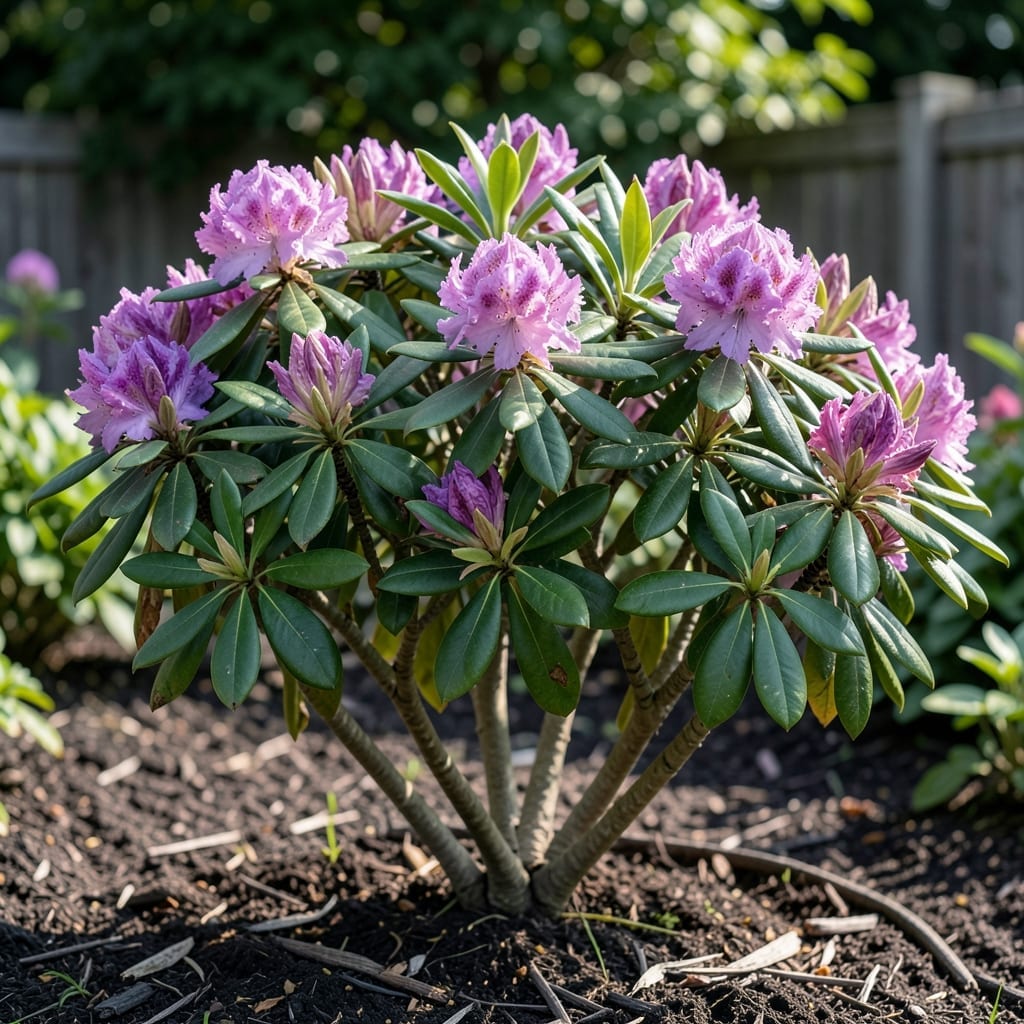
Did you know the 🌸 Rhododendron can grow as small as your knee or as tall as a 2-story house? That’s quite the range for a single plant family.
Choosing the right variety means understanding these size differences. Some stay compact at 2-3 feet, while others reach 20 feet or more.
I’ll help you navigate these options so you can pick the perfect Rhododendron for your space. Let’s explore what makes each type unique.
Rhododendrons offer an incredible size range, from tiny dwarf varieties to towering giant shrubs. This diversity makes them perfect for any garden space, big or small.
Understanding the mature size of each type helps you plan your landscape effectively. I’ll break down the main categories to simplify your selection.
| Variety | Mature Height | Growth Habit |
|---|---|---|
| Dwarf | 2-3 feet | Compact, bushy |
| Semi-Dwarf | 4-6 feet | Rounded, dense |
| Standard | 8-15 feet | Upright, spreading |
| Large | 15-20+ feet | Tree-like, tall |
Note: Sizes can vary based on growing conditions and care.
The dwarf rhododendrons are ideal for small gardens or containers. Varieties like ‘PJM’ or ‘Blue Diamond’ stay under 3 feet tall and wide.
For medium spaces, semi-dwarf types like ‘Nova Zembla’ reach 4-6 feet. They provide beautiful blooms without overwhelming your yard.
Standard varieties such as ‘Catawba’ can grow 8-15 feet tall. These work well as hedges or focal points in larger landscapes.
The largest rhododendrons, like R. arboreum, can soar over 20 feet. These are best for spacious gardens or woodland settings.
Remember, growth rates vary by climate and care. In ideal conditions, some may grow 1-2 feet per year until mature.
Always check the specific cultivar details before planting. This ensures you choose a variety that fits your space and design goals. 🌿
While genetics play the biggest role in a rhododendron’s size, several environmental factors can significantly impact its final dimensions. I’ve seen firsthand how proper care can help these shrubs reach their full potential.
From sunlight exposure to soil conditions, understanding these influences helps you create the ideal growing environment for your specific variety.
The climate zone you’re in makes a big difference. In warmer zones, rhododendrons often grow faster and larger than in cooler areas with shorter growing seasons.
Soil quality is another critical factor. These plants need acidic soil (pH 4.5-6.0) with good drainage. I always recommend testing your soil before planting.
Sunlight exposure directly affects growth. Too much sun can scorch leaves, while too little may result in leggy growth and fewer blooms. The sweet spot is dappled shade.
Watering practices influence size too. Deep, regular watering encourages strong root development, which supports taller growth. Avoid letting the soil dry out completely.
Finally, pruning helps control size and shape. I prune my rhododendrons right after they bloom to maintain their size and encourage bushier growth. ✂️