
Beautiful Plants For Your Interior
Beautiful Plants For Your Interior
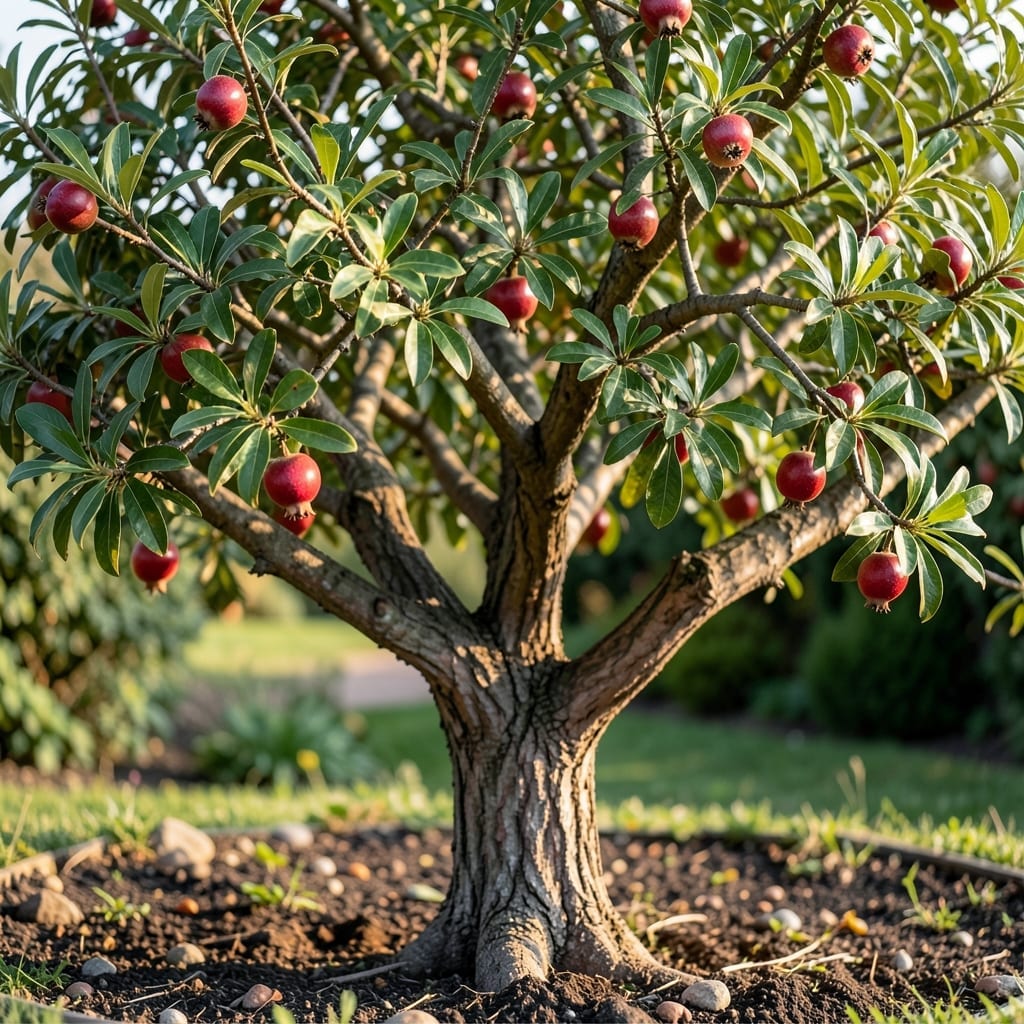
Pomegranate trees can transform your garden with their vibrant blooms and delicious fruit, but their size often surprises new growers. The 🍇 Pomegranate Tree you plant today might not stay small for long.
Understanding their growth potential is key to proper spacing and care. Without this knowledge, you might end up with overcrowded plants or a garden that’s harder to manage than expected.
Let me walk you through what to expect and how to plan for your tree’s mature size. This way, you can enjoy those beautiful pomegranates without the headaches.


When I first planted my pomegranate tree, I was amazed at how quickly it grew. Most standard varieties reach 12-20 feet tall with an 8-12 foot spread at maturity. That’s about the height of a two-story house!
Dwarf varieties stay more manageable at 6-8 feet tall and wide, perfect for smaller gardens or container growing. The size difference comes down to genetics and how you care for them. 🌳
| Variety | Height Range | Spread Range |
|---|---|---|
| Standard | 12-20 ft | 8-12 ft |
| Semi-Dwarf | 8-12 ft | 6-10 ft |
| Dwarf | 5-8 ft | 4-6 ft |
I’ve found that soil quality and sunlight exposure significantly impact growth rates. Pomegranates thrive in well-draining soil with full sun (6+ hours daily). Poor conditions can stunt growth by up to 50%.
Climate plays a huge role too. In warmer zones (7-11), trees grow faster and larger. Cooler areas may see slower growth and smaller mature sizes. I always recommend checking your USDA zone before planting.
Pruning is your secret weapon for size control. Regular pruning can keep even standard varieties at 8-10 feet. I prune mine in late winter to shape it and remove dead wood. ✂️
The rootstock matters more than many realize. Some nurseries sell trees grafted onto dwarfing rootstocks, which naturally limits size. Always ask about rootstock when purchasing your tree.
For fruit production, size affects yield. Larger trees generally produce more fruit, but even dwarf varieties can give you dozens of pomegranates per season with proper care. I get about 20-30 fruits from my semi-dwarf each year.
Remember that first-year growth is just the beginning. My tree grew 2-3 feet its first year, then 4-6 feet the second. By year three, it was already 8-12 feet tall and starting to bear fruit.
If space is limited, consider container growing. Dwarf varieties do well in large pots (20+ gallons) with proper drainage. Just be prepared to water more frequently as potted trees dry out faster. 💧
Even with limited space, you can enjoy pomegranate trees by choosing the right variety. I recommend dwarf cultivars like ‘Nana’ that naturally stay under 6-8 feet tall and wide. These are perfect for patios or small yards.
For standard varieties, container growing works surprisingly well. Use a 20-gallon pot with drainage holes, and you can keep the tree at 8-10 feet with root restriction. Just remember that potted trees need more frequent watering. 🌿
Pruning is my go-to method for size management. I remove about 20-30% of the previous year’s growth each winter. Focus on thinning out crowded branches and shortening long shoots. This keeps the tree compact while improving air circulation.
For espalier training, I use a fan shape against a south-facing wall. This method saves space while maximizing sunlight exposure. Secure branches to a trellis at 45-degree angles for the best results. It takes patience but creates a stunning garden feature.
Remember that spacing matters even for small varieties. I plant dwarf trees 6-8 feet apart and standard types 12-15 feet apart. This prevents overcrowding as they mature and ensures good air flow to prevent diseases.
If you’re growing in containers, choose lightweight pots with good drainage. I use a mix of potting soil and perlite for optimal drainage. In hot climates, consider placing pots where they get afternoon shade to prevent root stress. ✂️