
Beautiful Plants For Your Interior
Beautiful Plants For Your Interior
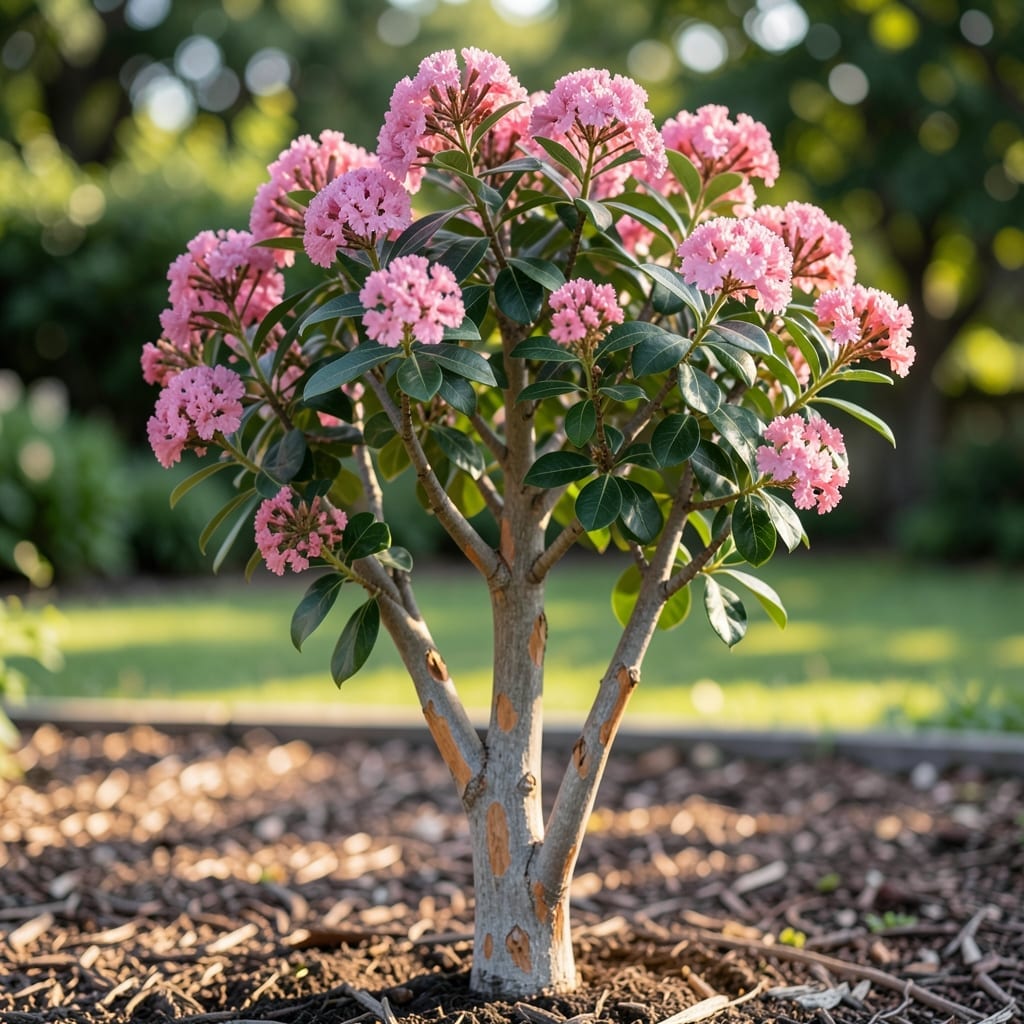
Crepe myrtles 🌳 bring vibrant summer color to any landscape, but their mature size can surprise even experienced gardeners. What starts as a small sapling may grow into a towering presence or stay compact, depending on the variety.
Choosing the right type for your space prevents future headaches. Some cultivars reach just 3 feet tall, while others soar to 25 feet—that’s taller than many two-story homes. The difference is dramatic, and it all comes down to the type you plant.
I’ll help you understand these size variations so you can make the perfect choice for your garden. Let’s explore what to expect from each category.
If you’re planting crepe myrtles, knowing their mature size is key to landscape success. These beautiful plants come in a range of sizes, from tiny dwarf varieties to towering tree-form types, each suited to different spaces.
Dwarf crepe myrtles, like ‘Petite Snow’ or ‘New Orleans’, max out at 3-6 feet tall and wide. They’re perfect for small gardens, containers, or border plantings where space is limited.
| Variety | Mature Height | Mature Spread |
|---|---|---|
| Dwarf | 3-6 feet | 3-6 feet |
| Semi-Dwarf | 6-10 feet | 6-8 feet |
| Standard | 15-20 feet | 10-15 feet |
| Tree-Form | 20-25 feet | 15-20 feet |
Semi-dwarf varieties, such as ‘Catawba’ or ‘Tonto’, typically grow 6-10 feet tall with a slightly narrower spread. These are ideal for mid-sized yards or as focal points in garden beds.
For larger landscapes, standard crepe myrtles like ‘Natchez’ or ‘Muskogee’ can reach 15-20 feet tall. Their canopies spread 10-15 feet wide, providing excellent shade and seasonal color.
The grandest of all are the tree-form crepe myrtles, which can soar to 20-25 feet tall with a 15-20 foot spread. Varieties like ‘Fantasy’ or ‘Sarah’s Favorite’ make stunning specimens for open areas.
Remember, these are mature sizes—it can take 5-10 years for crepe myrtles to reach their full potential. Growth rates vary by climate, soil, and care, but most add 2-4 feet per year under ideal conditions.
When planting, I always recommend spacing crepe myrtles based on their mature spread. For dwarf types, 3-4 feet apart works well. Semi-dwarfs need 6-8 feet, while standards require 10-15 feet of clearance.
Proper spacing prevents overcrowding and reduces the need for heavy pruning. It also ensures good air circulation, which helps prevent fungal diseases like powdery mildew.
If space is tight, consider dwarf or semi-dwarf varieties. They offer the same beautiful blooms and fall color as larger types but fit neatly into smaller landscapes. For urban gardens or patios, some dwarf varieties even thrive in large containers. ☀️
Your crepe myrtle’s size isn’t just about the variety—it’s also shaped by your garden conditions. I’ve seen the same cultivar thrive as a 15-foot tree in one yard and stay stunted at 8 feet in another.
USDA zones play a huge role. In warmer climates (Zones 7-9), crepe myrtles grow faster and larger. In cooler areas (Zone 6), they may stay smaller or grow more slowly.
Soil quality matters more than many realize. Rich, loamy soil with good drainage helps crepe myrtles reach their full size potential. Poor or compacted soil can restrict root development.
Water availability affects growth rate too. While established crepe myrtles are drought-tolerant, consistent moisture during the first 2-3 years encourages stronger, larger growth. I water mine deeply once a week.
Even pruning practices influence final size. Heavy pruning can keep a naturally 20-foot tree at 10 feet, but this requires yearly maintenance. I recommend minimal pruning for natural shape and size.
Finally, planting location impacts growth. A crepe myrtle planted near a building foundation or under a large tree may grow lopsided or smaller than expected. Always consider the mature spread when choosing a spot. 🌳