
Beautiful Plants For Your Interior
Beautiful Plants For Your Interior
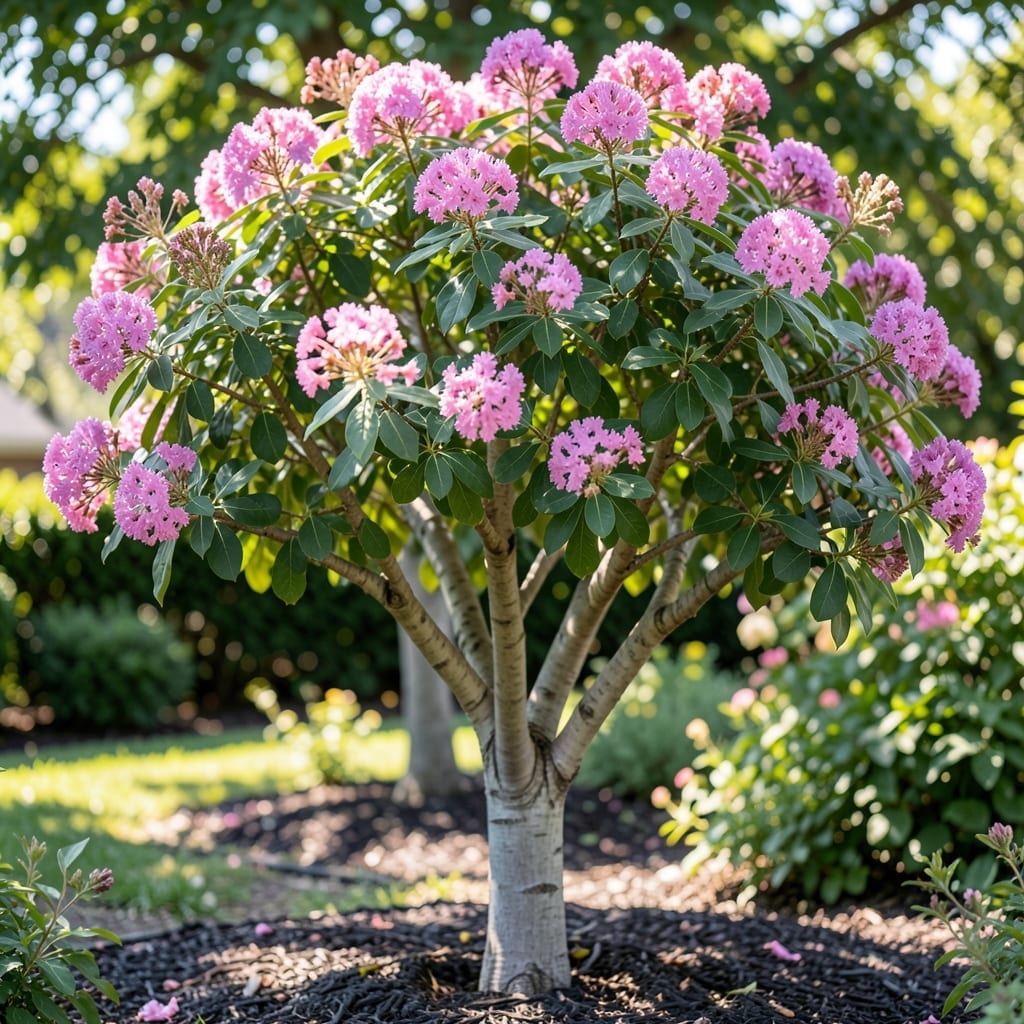
Crepe myrtle trees are a stunning addition to any landscape, but their mature size varies dramatically by variety—from compact shrubs to towering centerpieces.
Knowing how big they get is the key to proper placement and long-term care. The 🌳 Crepe Myrtle Tree can range from 6 to 25 feet tall depending on the type you choose.
Whether you’re working with a small garden or a spacious yard, understanding these growth expectations helps you plan the perfect spot.
Let me walk you through what to expect and how to select the right variety for your space.
If you’re planning to add crepe myrtles to your garden, knowing their mature size is essential. These versatile plants range from dwarf shrubs to towering trees, so there’s a perfect fit for every space.
Dwarf varieties like ‘Pocomoke’ stay compact at 3-5 feet tall, while semi-dwarfs such as ‘Centennial Spirit’ reach 8-10 feet. Standard types like ‘Natchez’ can grow 20-25 feet tall with a 15-foot spread. 🌳
| Variety | Mature Height | Mature Spread |
|---|---|---|
| Pocomoke (Dwarf) | 3-5 ft | 3-4 ft |
| Centennial Spirit (Semi-Dwarf) | 8-10 ft | 6-8 ft |
| Natchez (Standard) | 20-25 ft | 15-20 ft |
| Muskogee (Large) | 20-25 ft | 15-20 ft |
For small gardens or container planting, dwarf varieties are ideal. They fit beautifully in urban landscapes or along walkways without overwhelming the space.
Semi-dwarf crepe myrtles work well as privacy screens or focal points in mid-sized yards. Their moderate height provides structure without blocking views entirely.
Standard and large varieties like ‘Natchez’ or ‘Muskogee’ are perfect for spacious yards. These tall crepe myrtles create stunning canopy layers and offer ample shade.
Remember, the spread of these trees can be nearly as wide as they are tall. Always check the mature dimensions before planting to avoid overcrowding.
Proper spacing is key—plant dwarf varieties 3-4 feet apart, semi-dwarfs 6-8 feet apart, and standards 15-20 feet apart for optimal growth.
With the right variety, you can enjoy vibrant blooms and year-round interest without worrying about outgrowing your garden space. ✂️
I always recommend measuring your space first and choosing a variety that fits long-term. This ensures your crepe myrtle thrives for years to come. 🌿
Understanding what affects crepe myrtle size helps you control their growth. I’ve seen these trees thrive in full sun but struggle in shade, which can stunt their height. Soil quality also plays a huge role—well-draining, fertile soil encourages robust growth.
Pruning practices can significantly impact mature size. Heavy pruning keeps them compact, while minimal trimming allows natural expansion. Watering habits matter too—consistent moisture supports steady growth, but overwatering can lead to weak stems.
In my experience, climate zone is another critical factor. Crepe myrtles in USDA zones 7-9 often grow taller than those in cooler areas. If you’re in a colder region, expect slower growth and potentially smaller mature size.
Spacing at planting also influences long-term size. Crowded plants compete for resources, limiting their potential. I always recommend giving them room to breathe—at least 8-10 feet apart for standard varieties.
Don’t overlook the impact of fertilization. A balanced, slow-release fertilizer applied in early spring can promote vigorous growth. Just be careful not to overdo it, as excessive nitrogen can lead to leafy growth at the expense of flowers.
Finally, remember that genetics set the baseline. Even with perfect care, a dwarf variety like ‘Pocomoke’ won’t reach the heights of a ‘Natchez’. Always check the mature size for your specific cultivar before planting.
☀️