
Beautiful Plants For Your Interior
Beautiful Plants For Your Interior
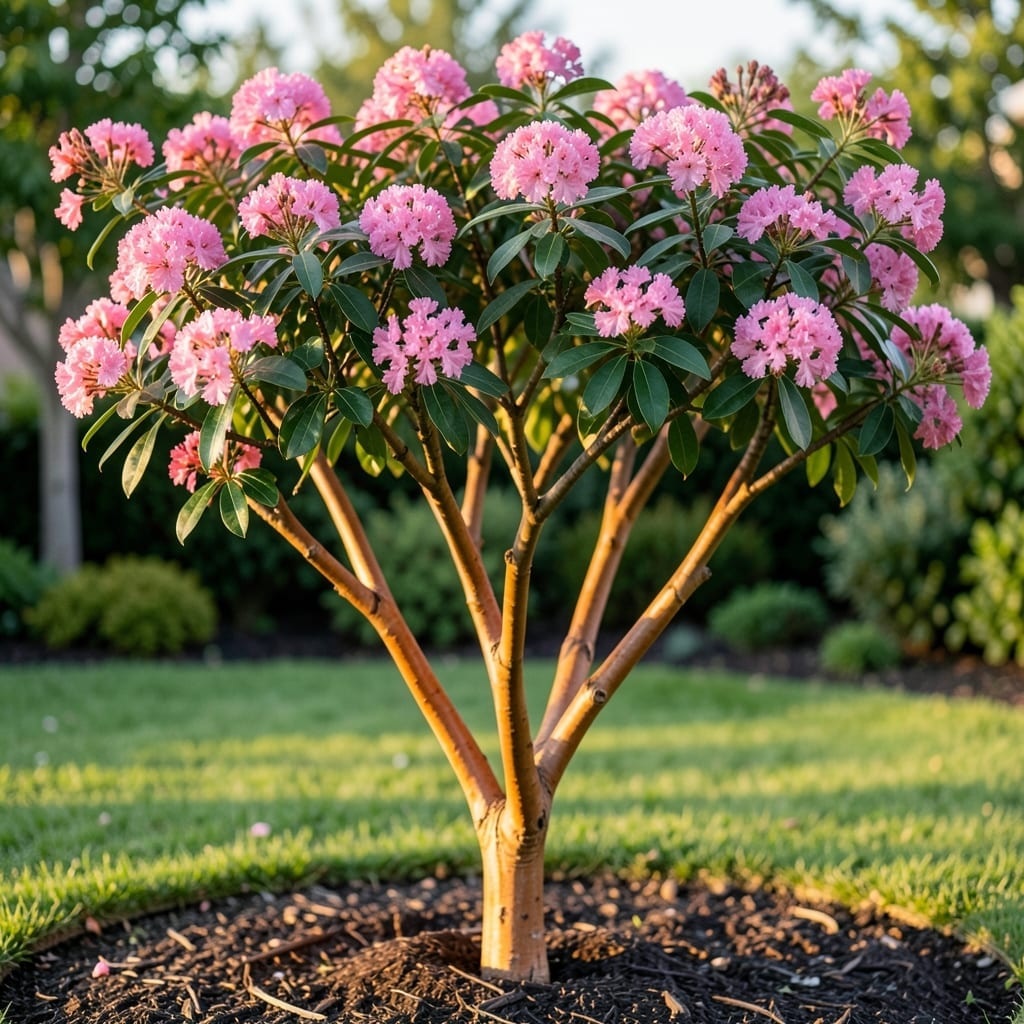
Crape myrtles 🌳 bring vibrant color to any landscape, but their size can surprise you. Some stay small enough for containers while others tower over homes.
I’ve seen gardeners plant them without realizing how big they’ll get. The difference between a dwarf and standard variety is massive.
Discover the mature height and spread ranges for each type. You’ll learn how to pick the perfect fit for your space.
If you’re wondering how big do crape myrtles get, the answer depends entirely on the variety. These beautiful trees come in three main size categories, each suited for different garden spaces and purposes.
I’ve seen gardeners make the mistake of planting a standard crape myrtle in a small yard, only to have it overwhelm the space. Knowing the mature height and spread helps prevent such issues.
| Variety | Mature Height | Mature Spread | Example Cultivars |
|---|---|---|---|
| Dwarf | 3-5 ft | 3-5 ft | ‘Pocomoke’, ‘Chickasaw’ |
| Semi-Dwarf | 6-10 ft | 6-10 ft | ‘Acoma’, ‘Tonto’ |
| Standard | 15-25 ft | 10-15 ft | ‘Natchez’, ‘Muskogee’ |
Dwarf varieties are perfect for small gardens or container growing. They typically reach just 3-5 feet tall with a similar spread, making them ideal for patio spaces or along walkways.
For medium-sized landscapes, consider semi-dwarf crape myrtles. These grow 6-10 feet tall and wide, offering a nice balance between size and impact. They work well as focal points or in grouped plantings.
Standard crape myrtles are the giants of the family, reaching 15-25 feet tall with a 10-15 foot spread. These are best for large yards or as shade trees in open areas.
I always recommend checking the mature size before planting. A Natchez crape myrtle, for example, can grow 25 feet tall if given enough space and ideal conditions.
The spread is just as important as height. Even a dwarf variety like ‘Pocomoke’ needs 3-5 feet of space to grow properly without crowding other plants.
Remember that pruning can influence size to some extent, but it won’t change a tree’s genetic potential. A standard variety pruned heavily will still want to grow tall over time.
For container growing, stick to true dwarf varieties. These can thrive in large pots with proper care, but even they’ll need occasional root pruning to stay manageable.
When planning your landscape, I suggest mapping out the mature sizes first. This helps avoid overcrowding and ensures each plant has enough room to reach its full potential. 🌳
While genetics determine most of a crape myrtle’s size, several factors can influence its final dimensions. As a gardener, I’ve noticed that even the same variety can vary in size based on its growing conditions.
Soil quality plays a major role. Rich, well-draining soil encourages healthy growth, while poor soil may stunt development. I always recommend amending the soil with compost before planting.
Sunlight is perhaps the most critical factor. Crape myrtles thrive in full sun and may grow smaller in shaded areas. I’ve seen standard varieties stay closer to 15 feet in partial shade.
Pruning can control size temporarily, but it won’t permanently alter a tree’s genetic potential. Heavy pruning may encourage bushier growth but can also stress the plant. I suggest light, selective pruning instead.
Climate also affects growth. In warmer climates, crape myrtles often reach their maximum size faster. In cooler zones, they may grow more slowly and stay slightly smaller.
Finally, water and nutrients impact growth rates. Regular watering and feeding with a balanced fertilizer can help your crape myrtle reach its full potential. Just be careful not to overdo it, as this can lead to weak growth. 🌳