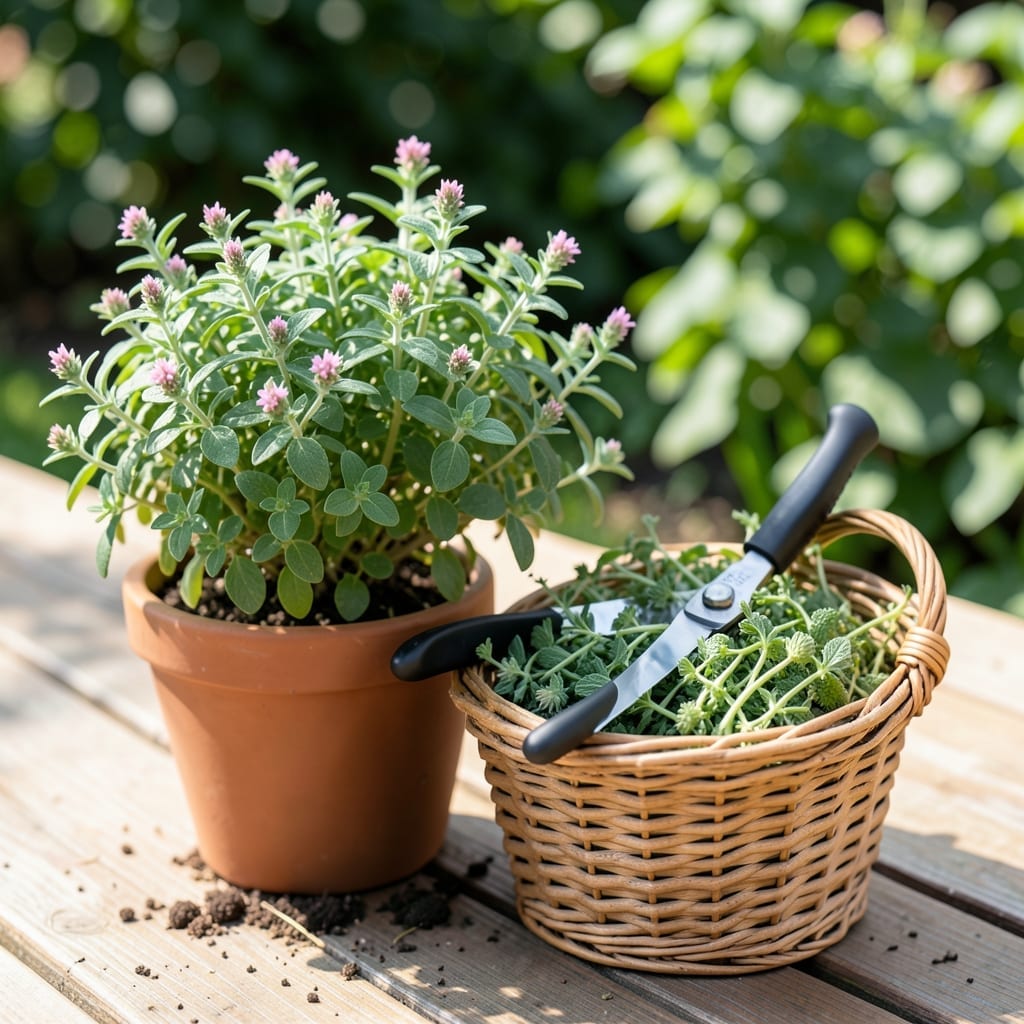
Harvesting Oregano Leaves: Timing and Methods for Maximum Flavor

Harvesting Oregano Leaves: Timing and Methods for Maximum Flavor

Harvesting Oregano at the right time can transform your dishes from ordinary to extraordinary. The difference between a bland herb and one bursting with aromatic flavor often comes down to timing.

I’ve learned that picking those 🌿 leaves at their peak ensures the most concentrated oils and robust taste. Whether you’re growing it in a garden or a windowsill pot, knowing when and how to harvest is the key.

There’s a sweet spot—usually when the plant is lush and vibrant—that guarantees maximum flavor. Miss it, and you might end up with a lackluster result.

Discover the simple yet crucial steps to harvest Oregano like a pro, and enjoy its full potential in every meal.

Style 16: Quick Tips – General
🌅
Morning
Pick early for best flavor & crunch
✂️
Clean Cut
Use scissors, don’t pull or twist
🔄
Check Daily
Ripeness can change overnight!

When to Harvest Oregano Leaves for Peak Flavor

Timing is everything when it comes to harvesting oregano leaves. I always aim for the moment when the essential oils are at their peak, which is typically mid-morning on a sunny day. This is when the leaves are most fragrant and flavorful.

The best stage to harvest is just before the plant flowers. At this point, the leaves contain the highest concentration of oils. If you wait until the flowers bloom, the flavor can become bitter and less potent.

header”>
Stage Signs of Readiness Flavor Impact
Early Growth 6-8 inches tall Mild, developing
Peak Growth Vibrant green leaves, strong aroma Robust, full flavor
Flowering Buds forming Intense, slightly bitter

I’ve found that seasonal timing also plays a role. In most climates, oregano is ready for its first harvest about 60-90 days after planting. If you’re in a warmer zone, you might get multiple harvests in a single growing season.

Another pro tip: check the weather. Harvest on a dry day, as wet leaves can lead to mold during storage. I also avoid harvesting after a heavy rain, as the leaves will be diluted and less flavorful.

If you’re unsure whether your oregano is ready, do a quick test. Crush a leaf between your fingers—if it releases a strong, pleasant aroma, it’s time to harvest. If the scent is weak, give it a little more time.

For the best results, I recommend harvesting in the morning after the dew has dried but before the heat of the day sets in. This ensures the oils are at their peak without the risk of wilting.

Remember, oregno is a perennial in many zones, so you can harvest it multiple times. Just be sure to leave enough foliage for the plant to recover and continue growing.

If you notice the leaves starting to yellow or the stems becoming woody, it might be a sign that the plant is past its prime for harvesting. At this point, it’s best to trim it back and let it regrow.

By paying attention to these signals from your plant, you’ll always harvest at the perfect moment for the most flavorful oregano leaves possible 🌿

Best Methods for Harvesting Oregano Without Damaging the Plant

Harvesting oregano leaves properly ensures your plant stays healthy and productive. I always use clean, sharp pruning shears to make precise cuts without crushing the stems. This helps prevent disease and encourages new growth.

The best approach is to cut just above a leaf node, where new shoots will emerge. This method allows the plant to branch out, giving you more leaves to harvest in the future. Never remove more than one-third of the plant at once.

Key Harvesting Steps
1
Choose healthy stems with plenty of foliage and snip just above a leaf node.
2
Avoid cutting woody stems, as these won’t regrow as easily as green, flexible ones.
3
Harvest regularly to promote bushier growth and prevent flowering.

For a gentler method, you can hand-pick leaves if you only need a small amount. This works well for container-grown oregano or when you want to avoid disturbing the plant too much. Just pinch off the leaves at the stem.

If your oregano is flowering, you can still harvest, but the flavor may be stronger and slightly bitter. I prefer to trim back the flower buds early to keep the focus on leaf production and a milder taste.

After harvesting, give your plant a light watering to help it recover. Oregano is drought-tolerant, but a little extra moisture can boost regrowth after a trim. Avoid overwatering, though, as soggy soil can lead to root rot.

With these methods, your oregano plant will stay thriving and provide you with fresh, aromatic leaves all season long ✂️

★★★★★4.5(2 reviews)