
Beautiful Plants For Your Interior
Beautiful Plants For Your Interior
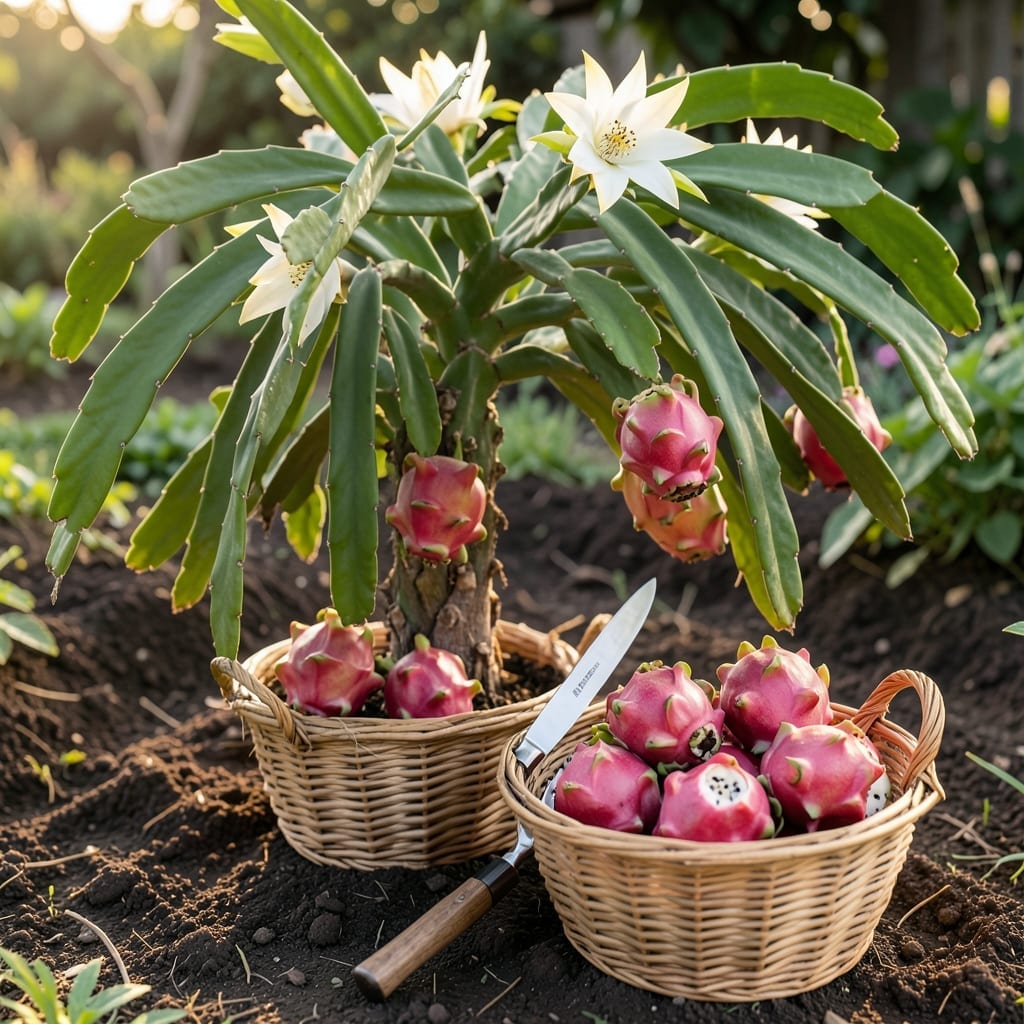
Knowing exactly when and how to harvest 🐉 Dragon Fruit can mean the difference between a sweet, flavorful treat and a bland disappointment. This tropical cactus fruit signals its readiness in subtle ways.
I’ve learned that timing is everything when it comes to picking. The fruit’s color, texture, and even its scent will tell you when it’s at peak ripeness. Miss these signs, and you might end up with underripe or overripe fruit.
What if I told you there’s a simple way to guarantee you pick at the right moment every time? The process is easier than you might think, once you know what to look for.
Let me walk you through the field-tested methods that work for Dragon Fruit in zones 10-11. You’ll be enjoying perfectly ripe fruit from your own garden in no time.
I’ve learned that dragon fruit won’t ripen further once picked, so timing is everything. The first sign I look for is a vibrant color change—most varieties shift from green to bright pink, red, or yellow when ready. This is nature’s way of saying, “I’m at my peak!”
Next, I check the wing-like bracts on the fruit’s surface. When they start to dry out and brown, it’s a clear indicator that the fruit is nearing ripeness. This drying process usually begins at the tips and works its way inward.
| Sign | Ready to Harvest? | What to Look For |
|---|---|---|
| Color Change | ✅ Yes | Bright pink, red, or yellow skin |
| Wing Drying | ✅ Yes | Bracts turn brown and crisp |
| Firmness Test | ✅ Yes | Slight give when pressed |
| Aroma | ✅ Yes | Sweet scent near stem |
| Green Skin | ❌ No | Still immature |
| Hard Texture | ❌ No | Needs more time |
The firmness test is another reliable method. I gently press the fruit with my thumb—if it yields slightly, like a ripe avocado, it’s ready. A rock-hard fruit needs more time on the vine, while a mushy one may be overripe.
I also rely on my sense of smell. A mature dragon fruit emits a subtle, sweet aroma near the stem. If I don’t detect any scent, I leave it for another day or two. This is especially useful for white-fleshed varieties.
Timing matters too. I’ve noticed that dragon fruit in USDA zones 10-11 typically ripens 270-365 days after flowering. In my garden, this usually falls between late summer and fall, depending on the variety.
One mistake I made early on was harvesting too early. The fruit looked ready but tasted bland. Now, I wait for at least two of the four signs (color, drying wings, softness, aroma) before picking. This ensures the best flavor and texture.
Overripe fruit can split or ferment on the vine, so I check my plants every 2-3 days during harvest season. I’ve found that morning is the best time to inspect, as the fruit’s color looks most vibrant in natural light.
For white-fleshed varieties like Hylocereus undatus, I pay extra attention to the wing drying. These fruits often show less color change than red-fleshed types, so the bracts are my primary indicator.
Remember, dragon fruit won’t continue ripening after harvest, so patience is key. I’ve learned to trust the signs and resist the temptation to pick too soon. The reward is a perfectly sweet, juicy fruit every time.
Keep a gardening journal to track your harvest times. This helps me predict future ripening windows with greater accuracy each season ☀️
I always start with the right tools for harvesting. A pair of clean, sharp pruners is my go-to, but I’ve also used gloves and my hands for a gentler approach. The key is to avoid crushing the fruit or damaging the cactus vine.
Before cutting, I inspect the fruit’s connection point. The dragon fruit grows from the vine’s areoles, and I look for the natural joint or stem where it attaches. This is where I’ll make my cut to ensure a clean removal.
I’ve found that early morning is the best time to harvest. The fruit is cooler, which helps preserve its freshness. I also avoid harvesting during rainy conditions to prevent water from entering the cut stem, which can lead to rot.
For varieties with prominent spines, like some Hylocereus types, I use tongs or thick gloves to handle the fruit safely. Even spineless varieties can have small, hair-like prickles that might irritate the skin, so protection is always a good idea.
After cutting, I place the fruit in a shaded, well-ventilated container. Direct sunlight can cause the fruit to overheat, while poor ventilation may lead to moisture buildup and spoilage. I check each fruit for damage or splits and set aside any that need immediate attention.
By following these steps, I ensure my dragon fruit harvest stays fresh and intact from vine to table ✂️