
Beautiful Plants For Your Interior
Beautiful Plants For Your Interior
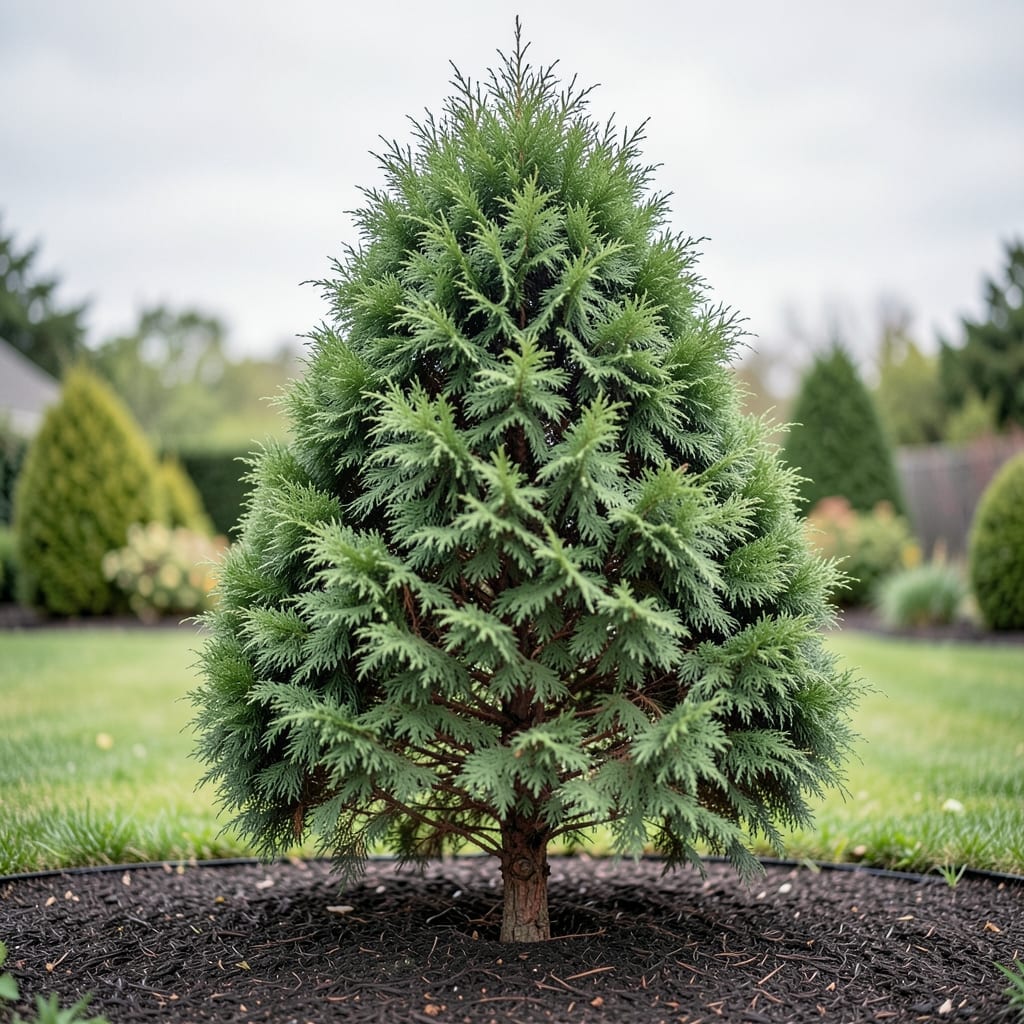
If you’ve ever planted a 🌳 Green Giant Arborvitae and wondered what’s happening beneath the surface, you’re not alone. This evergreen’s root system holds the key to its impressive growth and resilience.
Unlike some trees with deep taproots, the Green Giant develops a fibrous, spreading network that anchors it firmly while efficiently absorbing water and nutrients. Understanding this system is crucial for proper planting and care.
Discover how these roots grow, how far they extend, and what that means for your landscape. I’ll share practical tips to ensure your Green Giant thrives from the ground up.
I’ve found that the Green Giant Arborvitae has a unique fibrous root system rather than a deep taproot. This means it spreads widely just below the soil surface, creating a dense network.
This shallow root system typically extends 2-3 times the width of the tree’s canopy. For mature trees, that can mean roots spreading 15-25 feet outward.
| Characteristic | Specification |
|---|---|
| Root Type | Fibrous, shallow |
| Depth | 12-24 inches deep |
| Spread Radius | 15-25 feet mature |
| Soil Adaptation | Thrives in well-drained soils |
| Water Uptake | Efficient due to wide spread |
The roots are highly adaptable to different soil types, but they prefer well-draining soil. Compacted or waterlogged soils can stunt root growth and lead to poor health.
I always recommend loosening the soil in a wide area before planting. This encourages the roots to spread outward quickly, establishing a strong foundation for your tree.
In urban landscapes, the shallow root system can be an advantage. It reduces the risk of damaging underground utilities while still providing excellent stability.
However, this also means the tree is more susceptible to drought in its early years. I’ve seen young Green Giants struggle if not watered deeply and regularly during dry spells.
One key benefit of this root system is its ability to prevent erosion. The dense network of roots holds soil in place, making it ideal for slopes or areas prone to runoff.
For best results, I suggest mulching around the base to retain moisture and regulate soil temperature. This mimics the natural forest floor conditions these trees love. 🌳
Remember, the first year is critical for root establishment. With proper care, your Green Giant will develop a robust root system that supports its rapid growth above ground. 🌿
When planting your Green Giant Arborvitae, I always recommend digging a hole that’s 2-3 times wider than the root ball. This gives the fibrous roots room to spread outward immediately.
The planting depth is crucial—set the tree so the top of the root ball is 1-2 inches above the surrounding soil. This prevents settling, which can suffocate the shallow root system.
⚠️ Avoid These Root System Mistakes
Never plant too deep—this is the #1 killer of young Green Giants. Also, avoid soil compaction around the roots, as it restricts their ability to absorb water and nutrients.
For spacing between trees, I suggest 10-15 feet apart for a privacy screen. This accounts for both the canopy spread and the root system expansion.
In the first year, water your Green Giant deeply once a week, providing 1-1.5 inches of water each time. This encourages the roots to grow outward in search of moisture.
After establishment, the tree becomes drought-tolerant, but I still recommend supplemental watering during extended dry periods. The shallow roots can’t reach deep water reserves.
Apply a 2-3 inch layer of organic mulch around the base, but keep it 3-4 inches away from the trunk to prevent rot. This helps retain moisture and keeps soil temperatures stable.
Finally, avoid heavy foot traffic or equipment near the base. The shallow root system can be damaged easily, which stresses the tree and slows growth. 🌳