
Beautiful Plants For Your Interior
Beautiful Plants For Your Interior
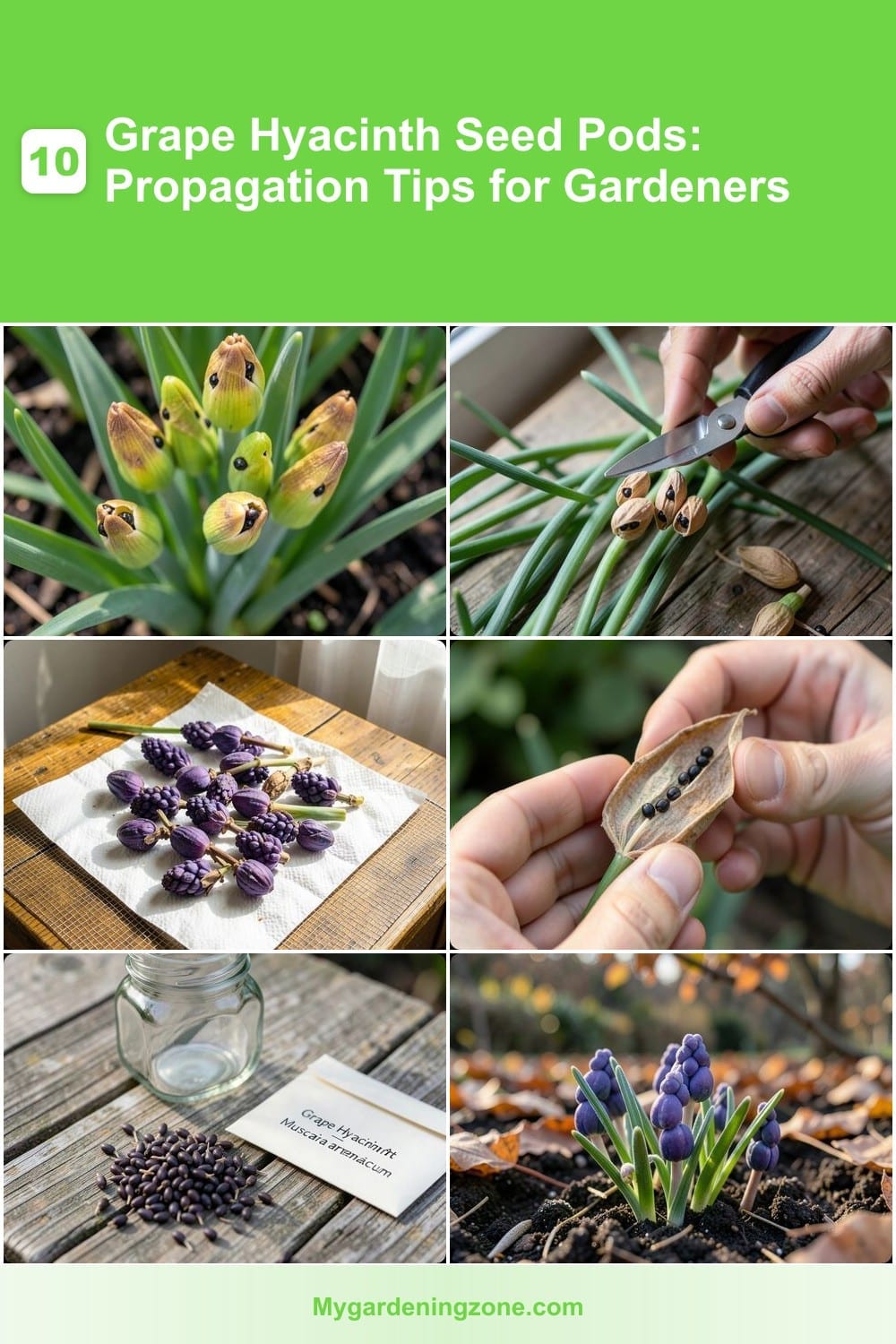
Grape hyacinths bring vibrant spring color, but their seed pods hold the key to multiplying these beauties. Discover 10 essential propagation tips to grow more from seed pods and expand your garden effortlessly.
Timing is everything when collecting grape hyacinth seed pods for successful propagation. Watch for the telltale color shift from vibrant green to a yellow-brown hue, signaling the seeds inside are nearly ready.
The pods will begin to split open naturally along their seams when fully mature, revealing small black seeds. This is nature’s way of telling you it’s harvest time—typically in late spring or early summer after the flowers fade.
Act quickly once you spot these signs, as the pods can release their seeds suddenly. This method ensures you capture the most viable seeds for next season’s planting. 🌱
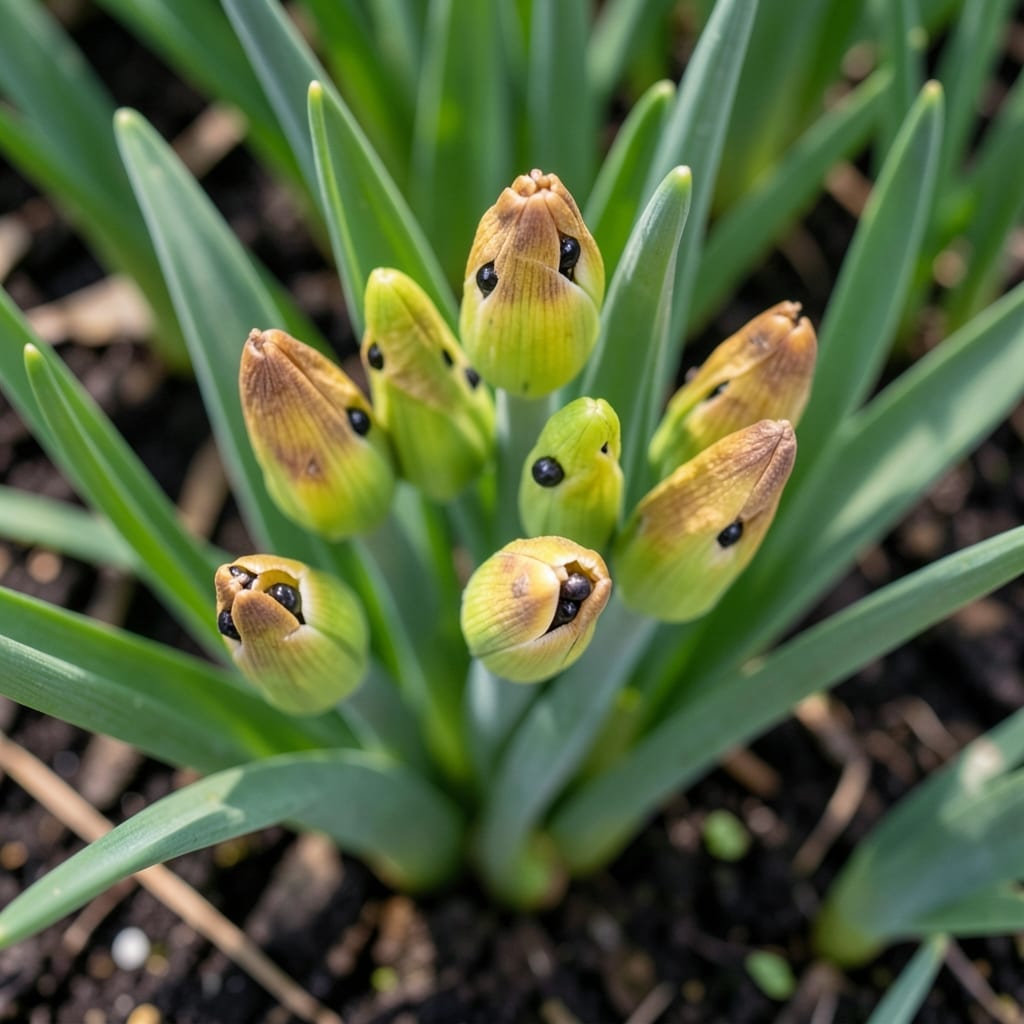
Harvesting grape hyacinth seed pods requires a gentle touch to preserve both seeds and stems. Using the right tools makes all the difference in protecting your plants while collecting valuable seeds for propagation.
Opt for precision snips or sharp scissors to cleanly cut stems without crushing delicate pods. This method ensures you collect ripe pods at their peak without damaging the plant or losing seeds. Always sterilize your tools before and after use to prevent disease spread.
This approach is ideal for gardeners who want to maintain plant health while maximizing seed yield for future growing seasons. 🌿
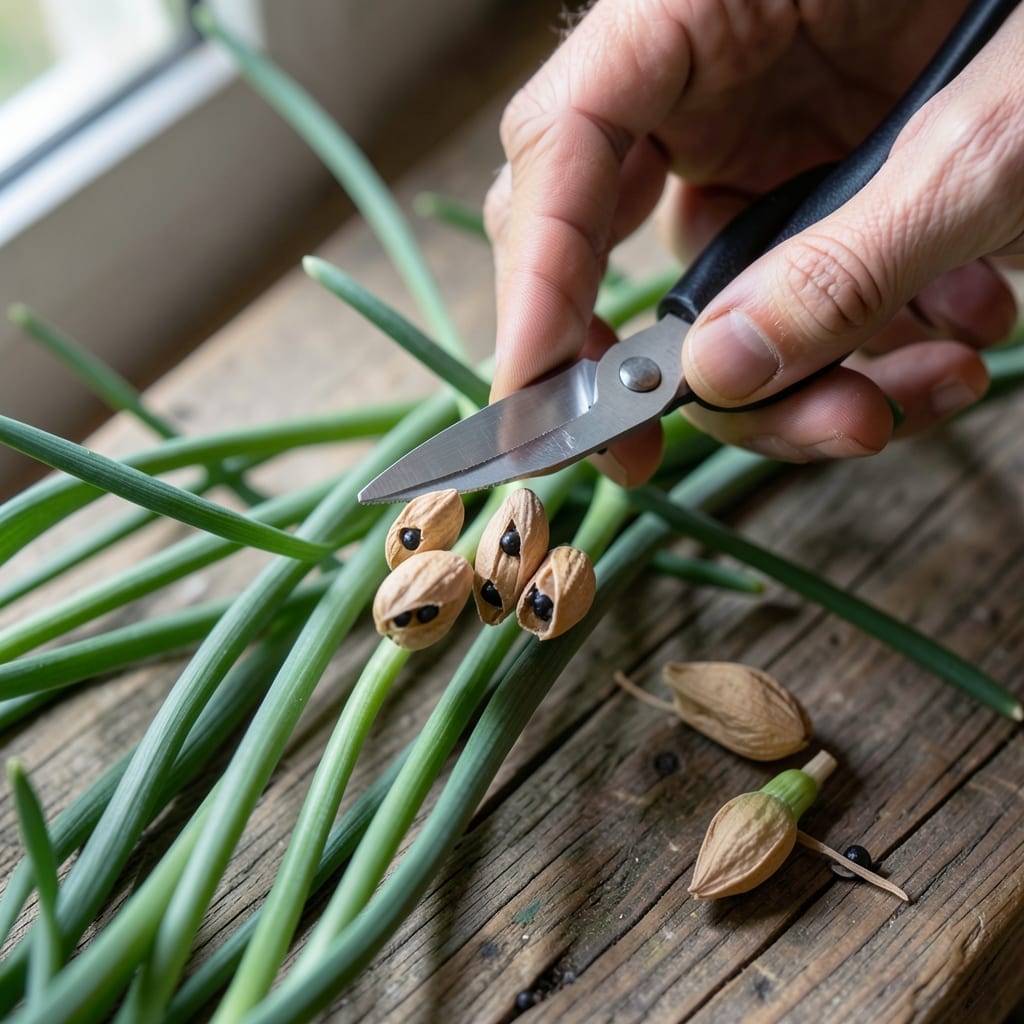
Proper drying is the secret to preserving grape hyacinth seed pods for future planting success. Skip this step, and you risk moldy seeds or poor germination rates next season.
Spread pods in a single layer on a paper towel or mesh screen in a warm, dry location with good airflow. Avoid direct sunlight, which can overheat seeds. After 1-2 weeks, the pods will fully open, releasing dry, viable seeds ready for storage.
This simple method ensures your seeds stay fresh and ready for planting when the time is right. 🌱
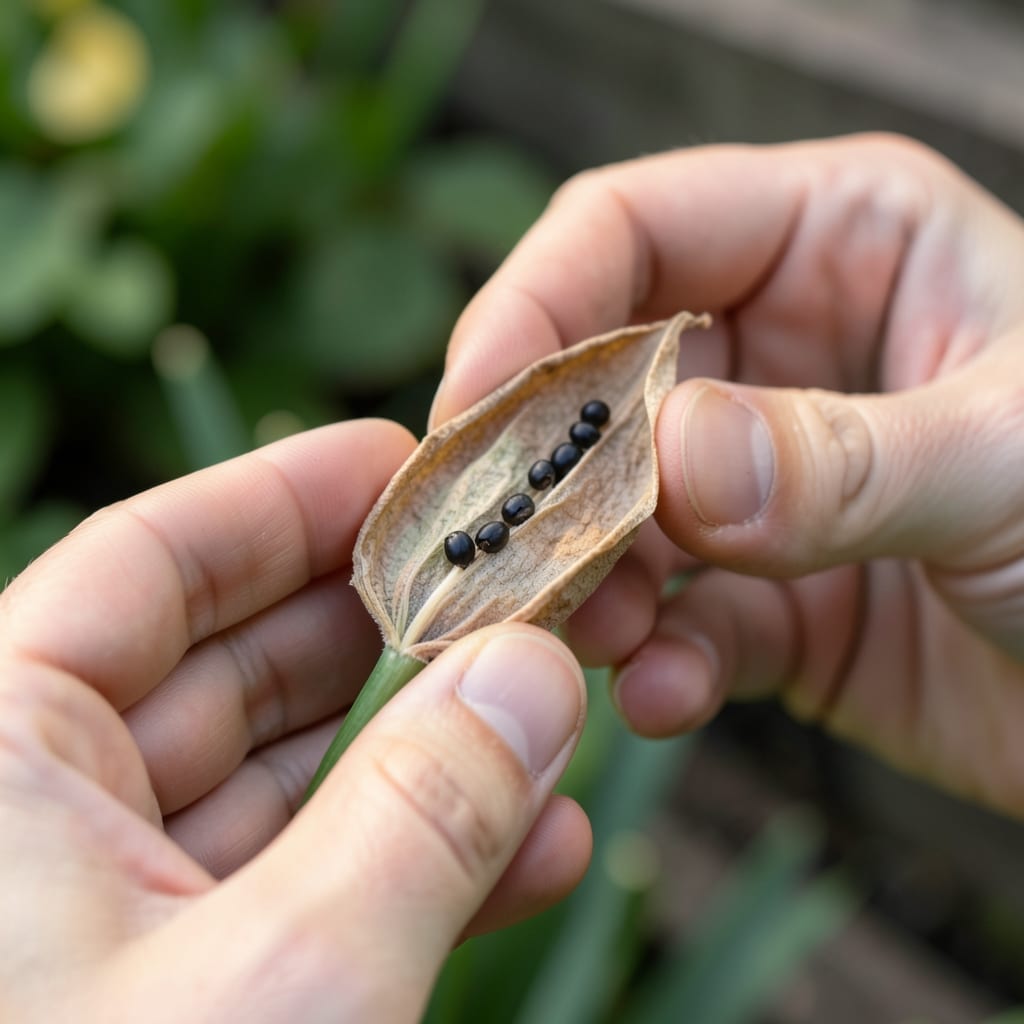
Extracting grape hyacinth seeds from their pods requires a delicate touch to avoid damaging the tiny, precious contents. These seeds are small and easily crushed, so patience and the right technique are key to preserving their viability.
Gently roll the dried pod between your fingers to loosen the seeds, then tip it over a clean dish or envelope. For stubborn pods, use a toothpick to carefully pry them open without applying pressure to the seeds. This method ensures you collect intact seeds ready for storage or planting.
This approach works best for gardeners who want to maximize their seed yield while maintaining the highest germination potential for future seasons. 🌱
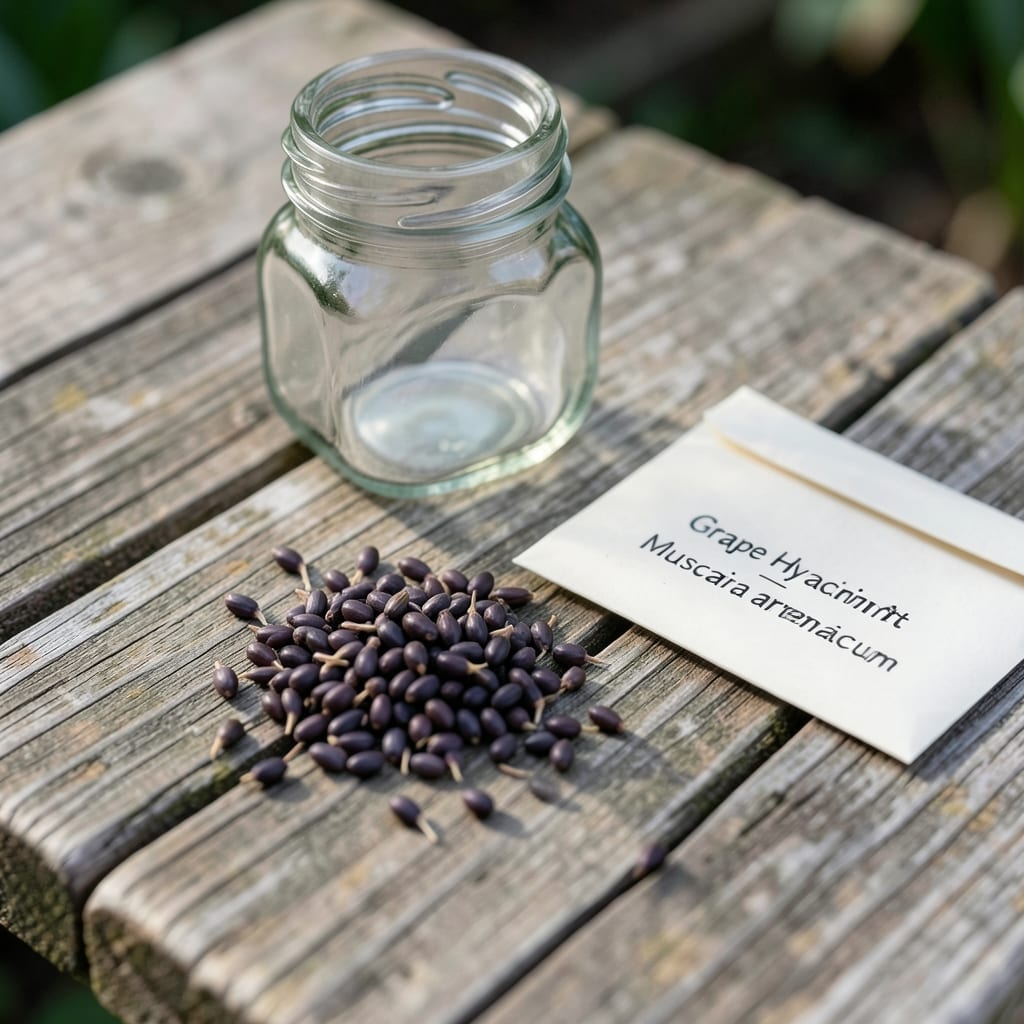
Don’t let your carefully collected grape hyacinth seeds lose viability due to poor storage. Proper containment and environment are key to preserving their planting potential for years to come.
Store seeds in airtight containers like glass jars or sealed envelopes, then place them in a cool, dark location such as a basement or refrigerator. This protects them from humidity, light, and temperature fluctuations that can reduce germination rates.
This method is perfect for gardeners who want to build a seed collection for future seasons without losing viability. 🌱
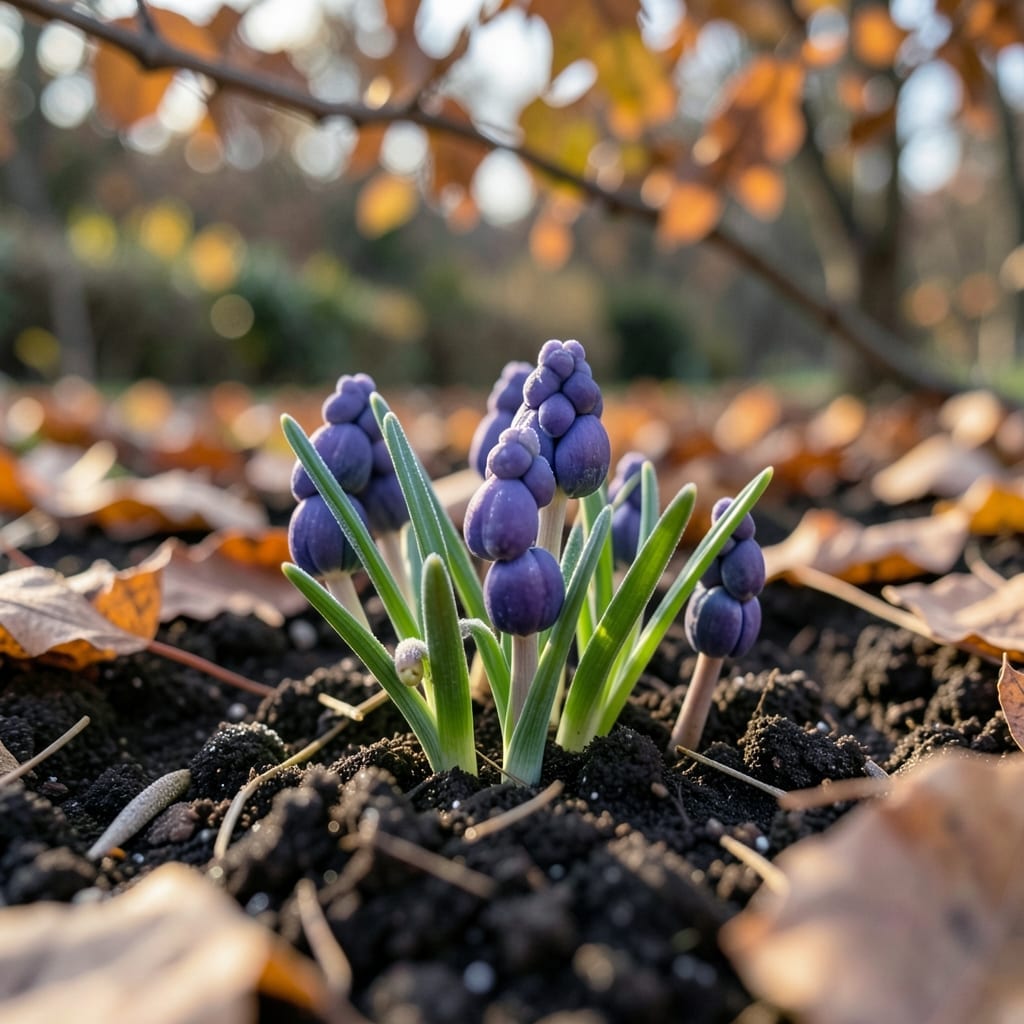
Nature has its own planting schedule, and grape hyacinth seeds thrive when you follow it. Fall planting aligns perfectly with the natural seed drop cycle, giving your seeds a head start for spring blooming.
Sow seeds in early to mid-fall, about 2-3 weeks before the first frost. This timing allows seeds to settle into the soil and undergo natural stratification during winter, which significantly boosts germination rates come spring.
This method is ideal for gardeners who want to mimic nature’s rhythms for the most reliable and vibrant grape hyacinth displays. 🌱
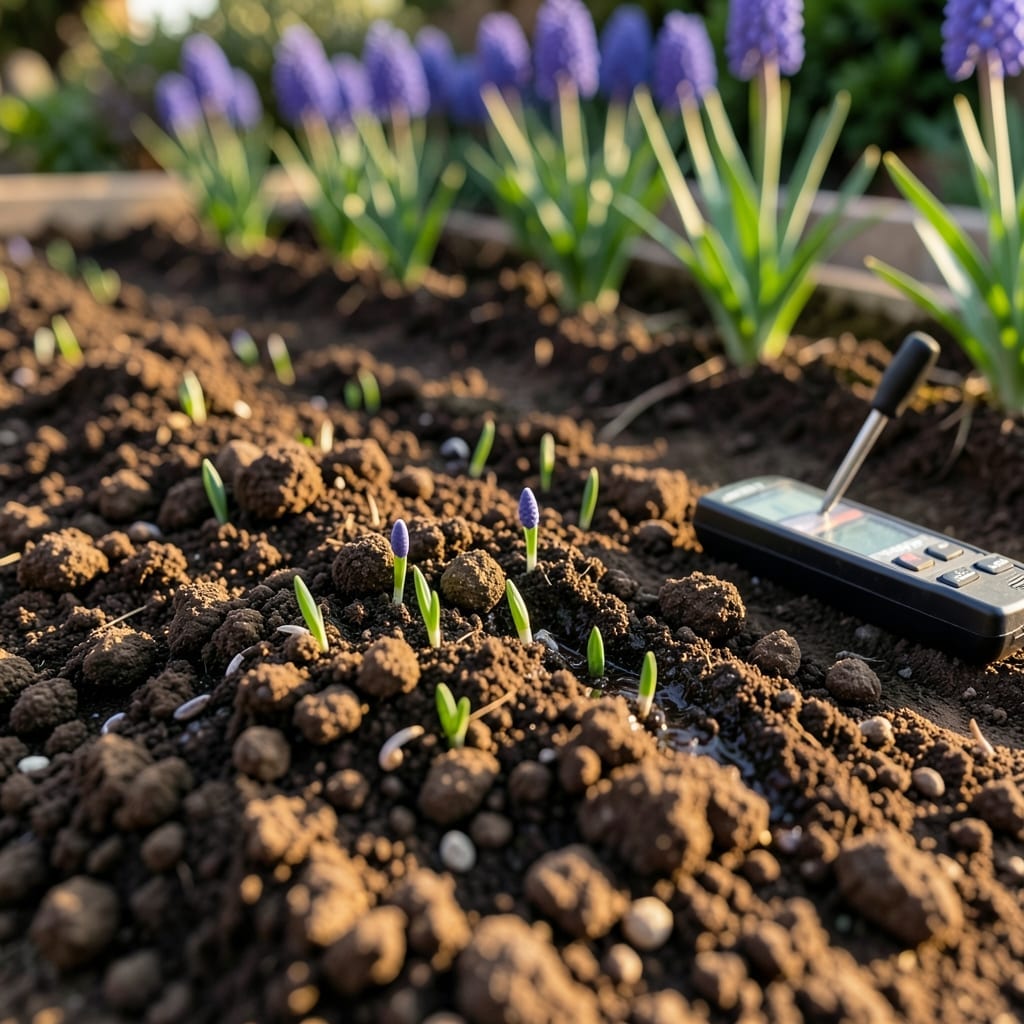
Grape hyacinth seeds demand more than just dirt—they need a carefully crafted home to thrive. The key lies in replicating their native Mediterranean conditions right in your garden bed.
Start by working in plenty of organic compost to improve drainage, then test your soil pH. These seeds prefer a slightly alkaline environment (pH 7.0-7.5), so amend with lime if needed. Avoid heavy clay soils that retain too much moisture.
This preparation ensures strong root development and vibrant blooms. Gardeners in regions with poor soil will see the biggest difference. 🌱
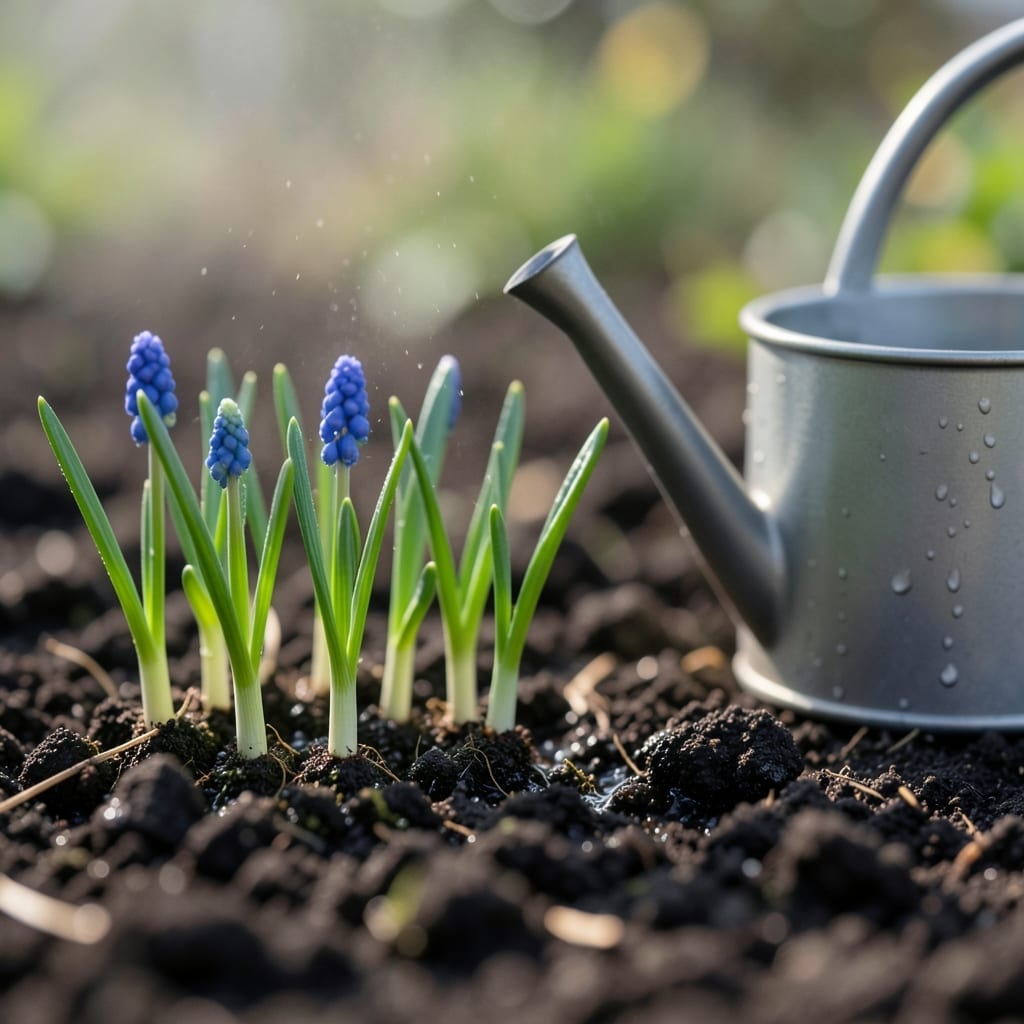
New grape hyacinth seedlings are particularly vulnerable to both drought and oversaturation. The key is maintaining a Goldilocks zone of moisture—not too much, not too little—to encourage strong root growth without risking rot.
Use a fine mist spray or gentle watering can to keep the top inch of soil consistently damp, especially during the first 2-3 weeks after planting. Morning watering allows foliage to dry before evening, reducing disease risk while ensuring roots stay hydrated.
This careful approach is crucial for gardeners propagating from seed, as proper moisture levels directly impact germination success and early growth vigor. 🌱
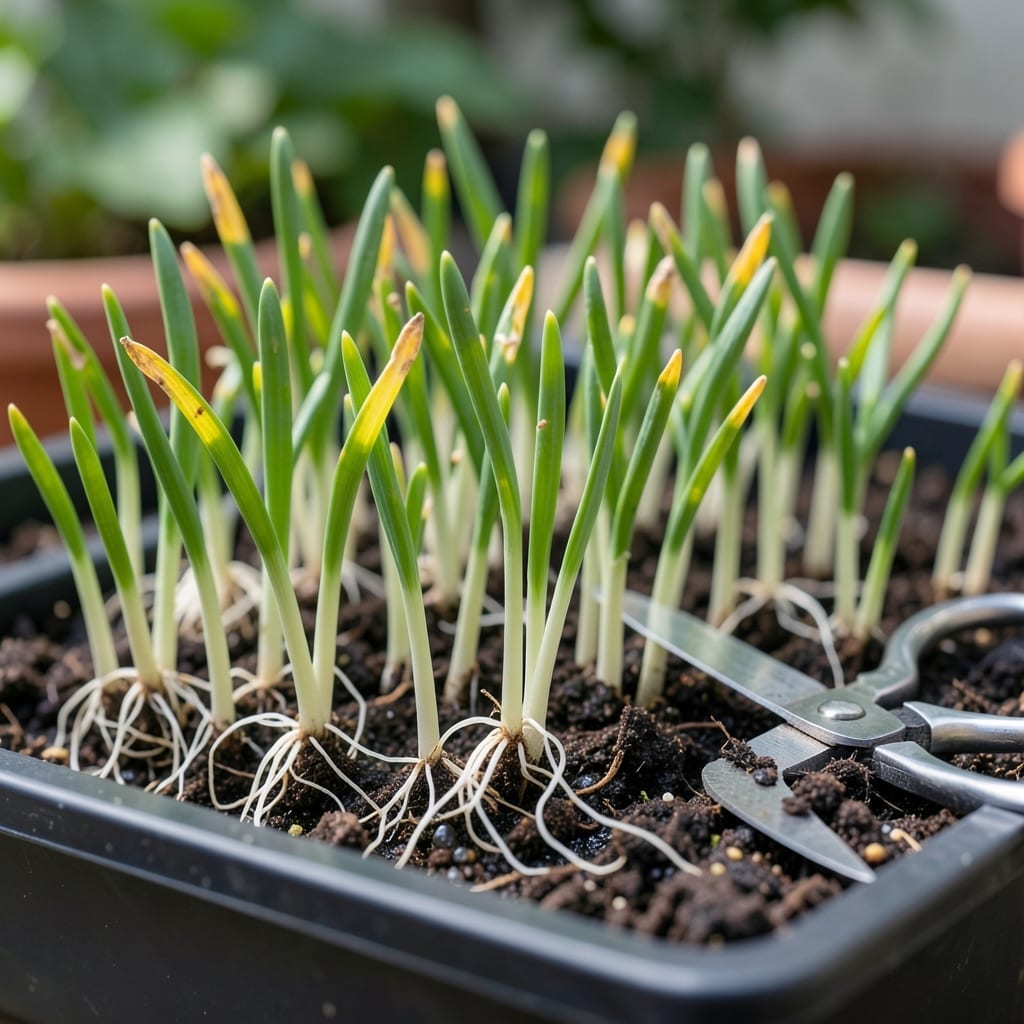
Overcrowded grape hyacinth seedlings compete for nutrients and space, resulting in weak, spindly plants. Thinning is essential to give each seedling room to develop strong roots and vibrant blooms.
Use small scissors or your fingers to gently remove excess seedlings when they’re 2-3 inches tall, leaving the strongest ones spaced 3-4 inches apart. This spacing ensures each plant gets enough light, water, and soil nutrients to thrive.
Gardeners who thin properly will enjoy more robust plants with better flower production in the following seasons. 🌱
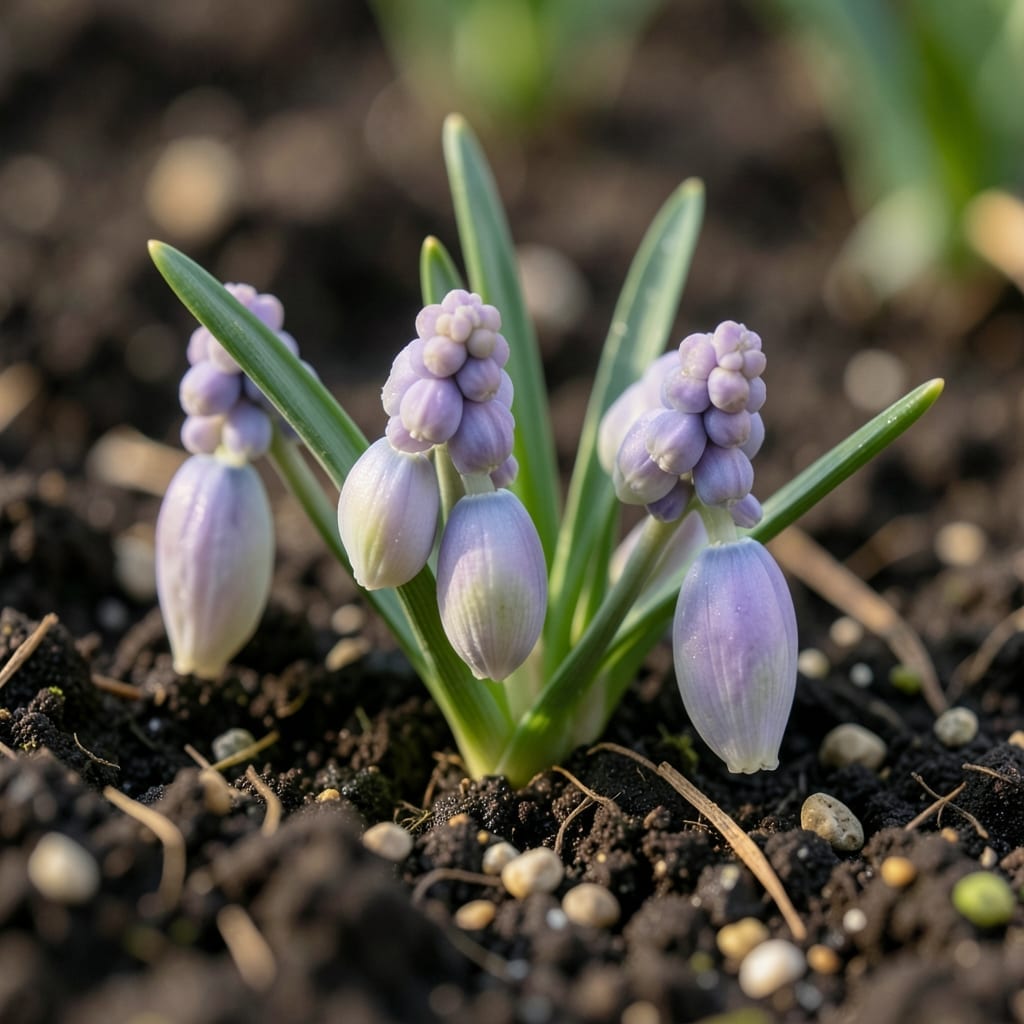
Don’t expect overnight miracles with grape hyacinth seeds—this is a slow-and-steady race, not a sprint. Germination can take several weeks to months, testing even the most patient gardener’s resolve.
Keep the soil consistently moist but not soggy, and maintain steady temperatures around 60-70°F. Resist the urge to dig up seeds to check progress, as disturbing them can halt growth entirely.
Your reward comes in spring when those first purple spikes emerge, proving that good things truly do come to those who wait. 🌱