
Beautiful Plants For Your Interior
Beautiful Plants For Your Interior
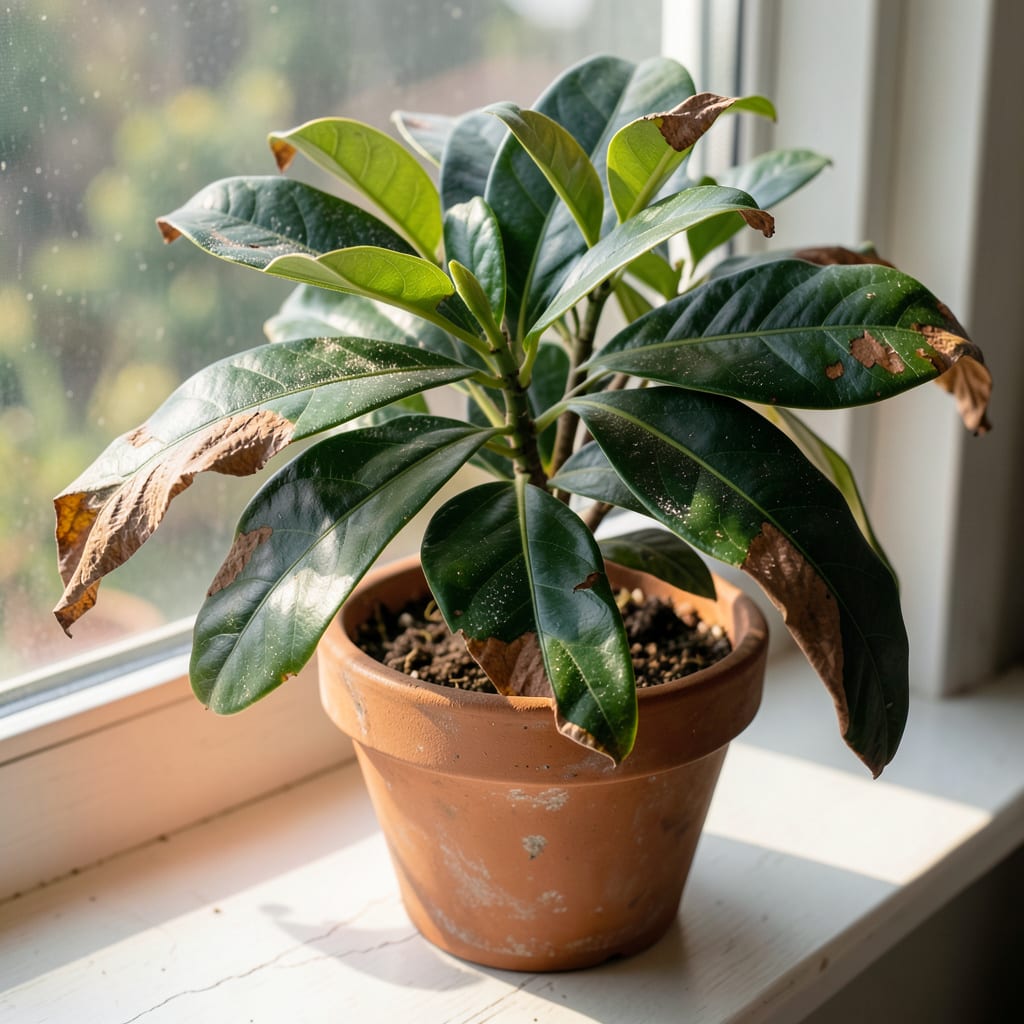
Brown leaves on your gardenia aren’t just unsightly—they’re a cry for help. I’ve nursed my share of sickly gardenias back to health, and the key is catching the early signs before the damage spreads.
Usually, it’s one of three culprits: thirsty roots, hungry soil, or uninvited pests. Each leaves a distinct pattern on the leaves, so once you know what to look for, fixing it becomes straightforward.
With a few adjustments—like consistent watering, the right fertilizer, or a gentle pest treatment—you’ll see fresh green growth within 2-3 weeks. The plant bounces back faster than you’d expect.
Prevention is even simpler: keep an eye on moisture, feed it seasonally, and inspect leaves regularly. That’s all it takes to keep gardenias thriving.
Gardenia leaves turning brown often signal underlying stress or disease. Below are the most common causes, explained with actionable insights.
Gardenia plants thrive in 65–75°F (18–24°C) during the day and a slight drop at night. Exposure to cold drafts (below 60°F/15°C) or heat stress (above 85°F/29°C) disrupts chlorophyll production, leading to brown, crispy edges. Sudden temperature swings—like placing a gardenia near a heater or AC vent—can also trigger leaf scorch.
Overwatering suffocates roots, reducing oxygen uptake and causing root rot. This often appears as yellowing leaves with brown spots. Conversely, underwatering leads to dry, brittle brown leaves, especially at the tips and margins. Gardenias prefer consistently moist but well-draining soil—soggy or bone-dry conditions spell trouble.
Gardenia plants are acid-loving (ideal pH: 5.0–6.0). Alkaline soil (pH > 7.0) locks out essential nutrients like iron and magnesium, causing interveinal chlorosis (yellowing between veins) that progresses to brown necrosis. Test soil pH regularly and amend with sulfur or peat moss if needed.
Leaf spot diseases (e.g., Cercospora or Alternaria) create circular brown patches with yellow halos. High humidity and poor air circulation encourage fungal spores to thrive. Copper-based fungicides can help, but prevention—like spacing plants and avoiding overhead watering—is key.
Sap-sucking pests like spider mites, aphids, or scale drain vital fluids, leaving behind stippled brown spots or curled, discolored leaves. Check the undersides of leaves for webbing (mites) or sticky residue (aphids). Treat with neem oil or insecticidal soap at first signs.
If your gardenia’s leaves are turning brown, don’t panic—there are clear fixes for each cause. Below are practical solutions to nurse your plant back to health, along with tips to keep it thriving.
Check the soil: if it’s dry 1-2 inches down, your gardenia needs water. Water deeply until it drains from the bottom, ensuring the roots absorb moisture. Prevention tip: Water when the top inch of soil feels dry, but avoid soggy conditions. Use a saucer to catch excess water and prevent root rot.
Brown leaves with yellow halos often signal overwatering. Stop watering immediately and let the soil dry out. Repot the plant in well-draining, acidic soil (pH 5.0–6.0) and ensure the pot has drainage holes. Prevention tip: Use a moisture meter to monitor soil dampness before watering.
If leaves are crispy and brown at the edges, your gardenia may be getting too much direct sunlight. Move it to a spot with bright, indirect light, like an east-facing window. Prevention tip: Rotate the plant occasionally for even light distribution.
Gardenia leaves brown when exposed to drafts or sudden temperature changes. Keep the plant in a stable environment (65–75°F during the day, 60°F at night). Avoid placing it near heaters, AC vents, or cold windows. Prevention tip: Use a thermometer to track room temperature consistency.
Inspect the undersides of leaves for pests like spider mites or aphids. Wipe leaves with a damp cloth or spray with neem oil. For severe cases, use insecticidal soap. Prevention tip: Regularly mist the plant to deter pests and keep humidity levels up (40–50%).
Yellowing leaves with brown spots may indicate a lack of iron or magnesium. Use an acid-loving plant fertilizer (rich in iron, magnesium, and zinc) every 2–4 weeks during the growing season. Prevention tip: Test your soil’s pH and adjust with sulfur or aluminum sulfate if it’s too alkaline.
Water when the top 1 inch of soil feels dry, typically every 5-7 days. Always check moisture first—overwatering causes yellowing with brown spots, while underwatering leads to crispy edges.
Once leaves turn brown, they won’t recover. Focus on fixing the underlying issue (water, light, or nutrients) to encourage new healthy growth. Remove damaged leaves to redirect energy.
Use an acid-loving plant fertilizer with iron, magnesium, and zinc. Apply every 2-4 weeks during growing season. Always test soil pH first—ideal range is 5.0–6.0.
Yes, remove brown leaves to prevent disease spread and improve appearance. Use clean shears and cut at the stem base. This helps the plant focus on new growth.
