
Beautiful Plants For Your Interior
Beautiful Plants For Your Interior
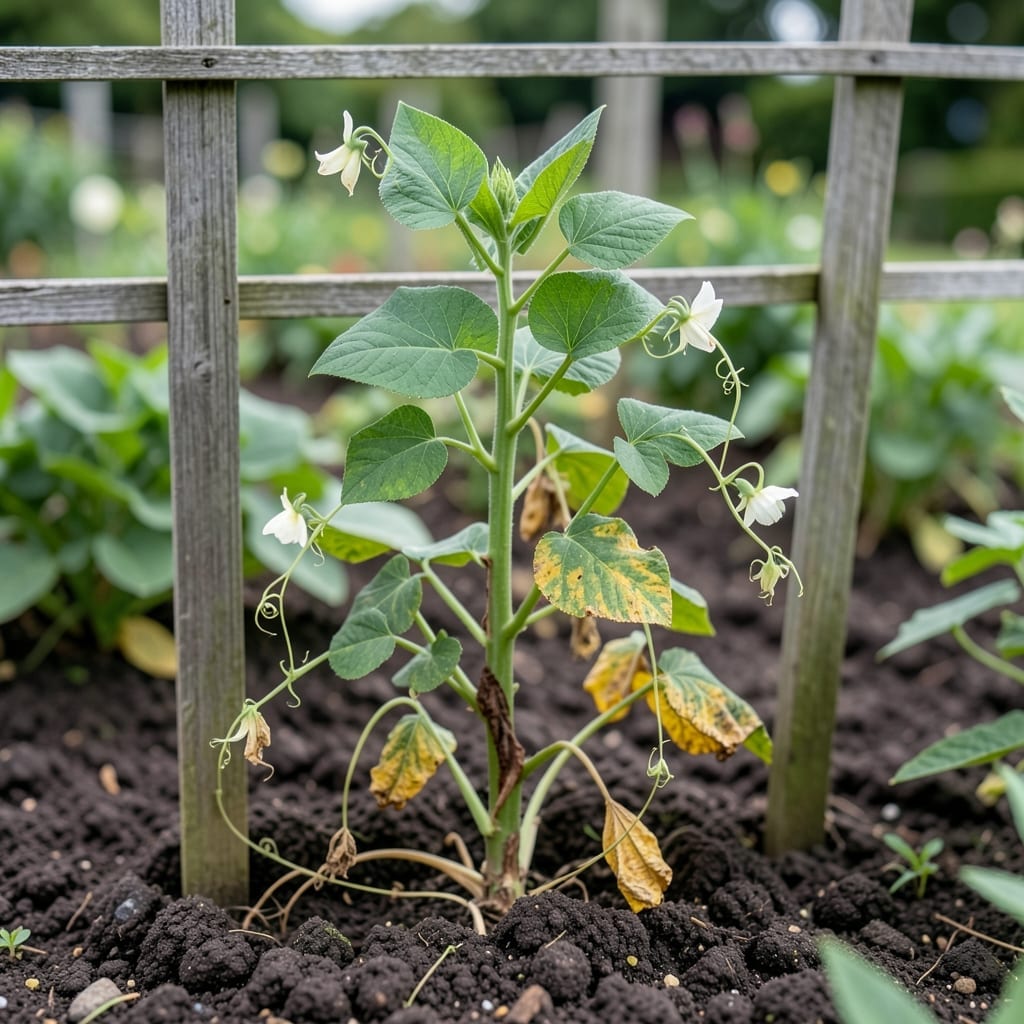
Yellowing leaves and stunted vines ruined my pea crop last spring. Fusarium wilt sneaks into your soil and attacks plants at their roots, turning healthy peas into wilting casualties overnight.
I learned the hard way that prevention beats treatment every time. Crop rotation, clean tools, and resistant varieties are your best defense against this stubborn fungus.
Once it’s in your soil, it’s there for good—but you can manage it. Solarizing soil or planting wilt-resistant varieties like ‘Oregon Sugar Pod’ can save your season.
Don’t let this silent killer take your peas. Here’s how to spot it early and stop it before it spreads.
Fusarium wilt in peas is primarily caused by the soil-borne fungus Fusarium oxysporum f. sp. pisi. This pathogen thrives under specific conditions, infecting plants through their roots and disrupting water and nutrient flow. Below are the key factors that contribute to its development:
The fungus proliferates in temperatures between 75–85°F (24–29°C) and high soil moisture. Poor drainage or overwatering creates an ideal environment for Fusarium spores to germinate and infect pea roots. Dry, well-drained soils are less conducive to disease spread.
Pea seeds contaminated with Fusarium oxysporum or planting in previously infested soil are major sources of infection. The fungus can survive in soil for years, even without a host plant. Using certified disease-free seeds and rotating crops (avoiding legumes for 4–5 years) reduces this risk.
Soils lacking beneficial microbes or with low organic matter are more susceptible to Fusarium dominance. Compacted or nutrient-poor soils weaken pea plants, making them less resistant to infection. Amending soil with compost and maintaining balanced fertility can suppress fungal growth.
Certain pea varieties are genetically susceptible to fusarium wilt. Stress factors like overcrowding, drought, or nutrient deficiencies further compromise plant defenses. Selecting wilt-resistant pea cultivars (e.g., ‘Wando’ or ‘Green Arrow’) is a proactive measure.
Fusarium wilt in peas can be managed with targeted solutions. Below are practical fixes mapped to common causes, along with prevention tips to keep your crop healthy.
Plant pea varieties bred for Fusarium resistance, such as ‘Oregon Sugar Pod’ or ‘Wando’. Rotate crops with non-host plants like corn or beans for at least 3–4 years to break the fungus lifecycle.
Fusarium thrives in soggy soil. Amend heavy clay with compost or sand to boost drainage. Water deeply but only when the top inch of soil is dry to avoid creating a fungal-friendly environment.
Before planting, cover moist soil with clear plastic for 4–6 weeks. Sunlight heats the soil to 120°F+, killing fungus spores. Do this in summer for best results.
Clean pruners, shovels, and stakes with a 10% bleach solution (1 part bleach to 9 parts water) between uses. This prevents spreading spores from infected plants to healthy ones.
It can persist indefinitely without a host. Fusarium oxysporum spores remain viable for years, even decades, in contaminated soil. Crop rotation with non-legumes for 4-5 years is essential.
Yes, if infected plant material was added. Never compost wilted pea plants. Use only disease-free compost and heat it to 140°F to kill spores.
Yellowing lower leaves and wilting during warm weather are early symptoms. Check for brown streaks in stems when cut. Act fast—once vascular damage appears, treatment is difficult.
Most are ineffective against soil-borne Fusarium. Focus on prevention: resistant varieties, solarization, and good drainage. Biological fungicides with Trichoderma may help suppress spores.