
Beautiful Plants For Your Interior
Beautiful Plants For Your Interior
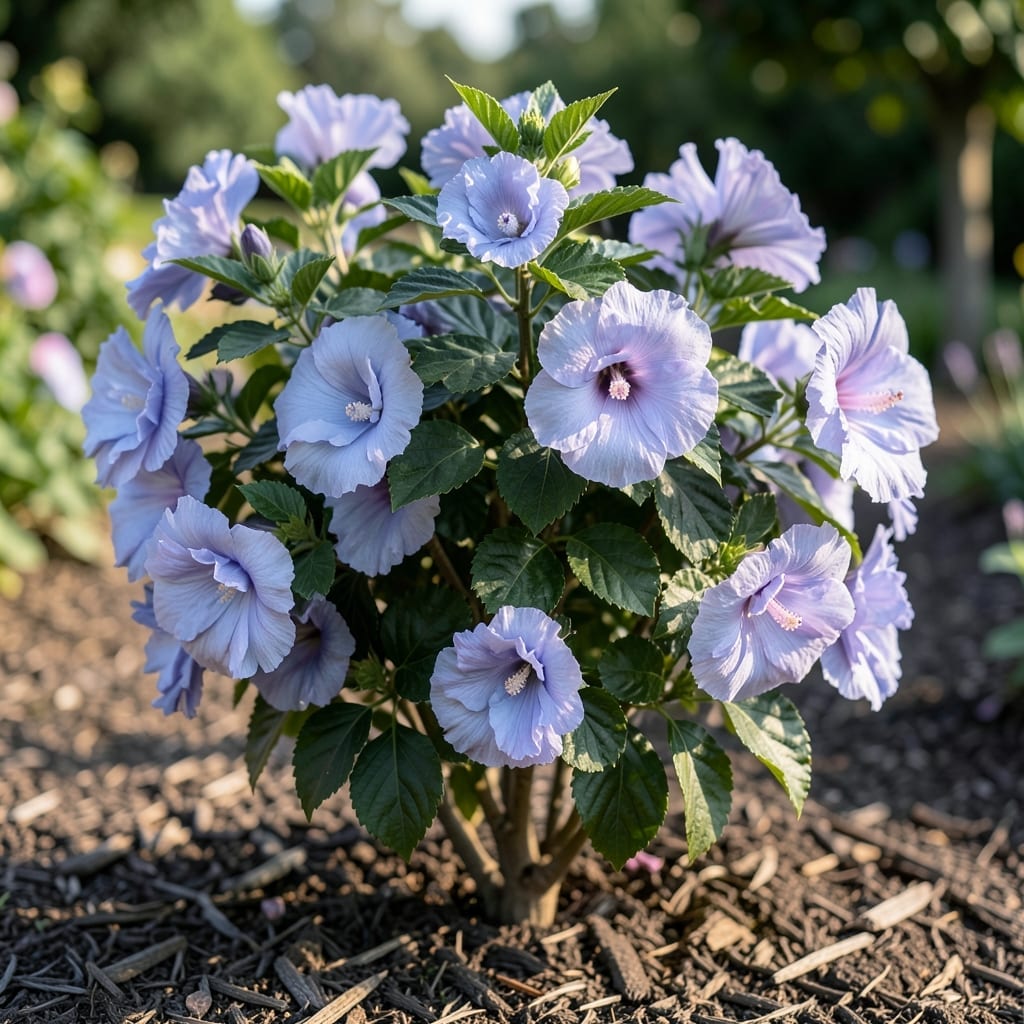
Picture your garden bursting with color from 8-12 ft tall shrubs covered in delicate lavender-blue blooms. That’s the magic of the 🌸 Blue Chiffon Rose Of Sharon at full maturity.
This hardy shrub doesn’t just look stunning—it’s surprisingly low-maintenance once established. With the right care, you’ll enjoy vibrant blooms from July to September that attract pollinators all season long.
I’ll walk you through everything from planting to pruning so you can grow a thriving, full-sized beauty in zones 5-9. Let’s get started.
When I first planted my Blue Chiffon Rose of Sharon, I couldn’t believe how quickly it transformed my garden. At full maturity, this shrub reaches an impressive 8-12 feet tall with a similar spread. Its delicate lavender-blue double blooms are a showstopper all season long.
The mature shrub develops a sturdy, upright habit with multiple stems. Its flowers appear from July to September, creating a stunning floral display that attracts bees and butterflies. The dark green foliage provides a perfect backdrop for those vibrant blooms.
| Characteristic | Specification |
| Mature Height | 8-12 ft |
| Mature Spread | 6-10 ft |
| Bloom Time | July-September |
| Bloom Color | Lavender-blue |
| Foliage | Dark green |
| Growth Rate | Moderate to fast |
| USDA Zones | 5-9 |
What surprises many gardeners is how the Blue Chiffon changes through the seasons. In spring, new growth emerges with a reddish tint before maturing to deep green. By summer, the shrub is covered in buds that burst into those signature double flowers.
The flowers themselves are 2-3 inches wide with ruffled petals that give them a chiffon-like appearance. Unlike single-bloom varieties, these double flowers create a fuller, more luxurious look that really stands out in the landscape.
I’ve noticed that my mature shrub produces more blooms in full sun, though it tolerates partial shade. The more sunlight it gets, the more abundant and vibrant the flowers become. In shadier spots, you might see fewer blooms but lusher foliage.
Another remarkable feature is its long bloom season. While many shrubs flower for just a few weeks, the Blue Chiffon keeps producing new blooms continuously from midsummer until frost. This extended display makes it a garden favorite.
The shrub’s form is naturally rounded, but I’ve found that occasional pruning helps maintain a tidier shape. Without pruning, it can develop a somewhat wild, natural look that some gardeners prefer for a cottage-style garden.
In fall, the leaves turn a subtle yellow before dropping, revealing the shrub’s interesting branching structure. Even in winter, the bare branches have an architectural quality that adds interest to the landscape.
One of the best things about the full grown Blue Chiffon is its resilience. Once established, it handles heat and drought better than many other flowering shrubs, making it a low-maintenance choice for busy gardeners.
This shrub truly earns its place as a garden centerpiece with its year-round interest and stunning summer display 🌸
I’ve found that the Blue Chiffon Rose of Sharon thrives with consistent care. This shrub loves full sun to partial shade, so I always plant it where it gets at least 6 hours of sunlight daily for the best blooms.
For watering, I stick to a weekly deep soak during the growing season, increasing to twice weekly in extreme heat. The key is to water at the base to keep the foliage dry and prevent disease.
✅ Top Care Tips:
When it comes to soil, this shrub isn’t picky but does best in loamy, well-draining soil. I always amend heavy clay with compost to improve drainage. A soil pH between 6.0 and 7.5 is ideal for vibrant blooms.
Pruning is simple but important. I prune my Blue Chiffon in late winter or early spring before new growth starts. This encourages more blooms and maintains a neat shape. Remove any dead or crossing branches first.
Fertilizing helps maintain those stunning lavender-blue blooms. I use a balanced fertilizer every 4-6 weeks during the growing season, but I stop by late summer to avoid stimulating new growth before winter.
One common mistake I see is overwatering. While this shrub likes consistent moisture, soggy soil can lead to root rot. Always check the soil before watering—if the top inch is dry, it’s time to water.
With these care tips, your Blue Chiffon will reward you with abundant blooms all season long ✂️