
Beautiful Plants For Your Interior
Beautiful Plants For Your Interior
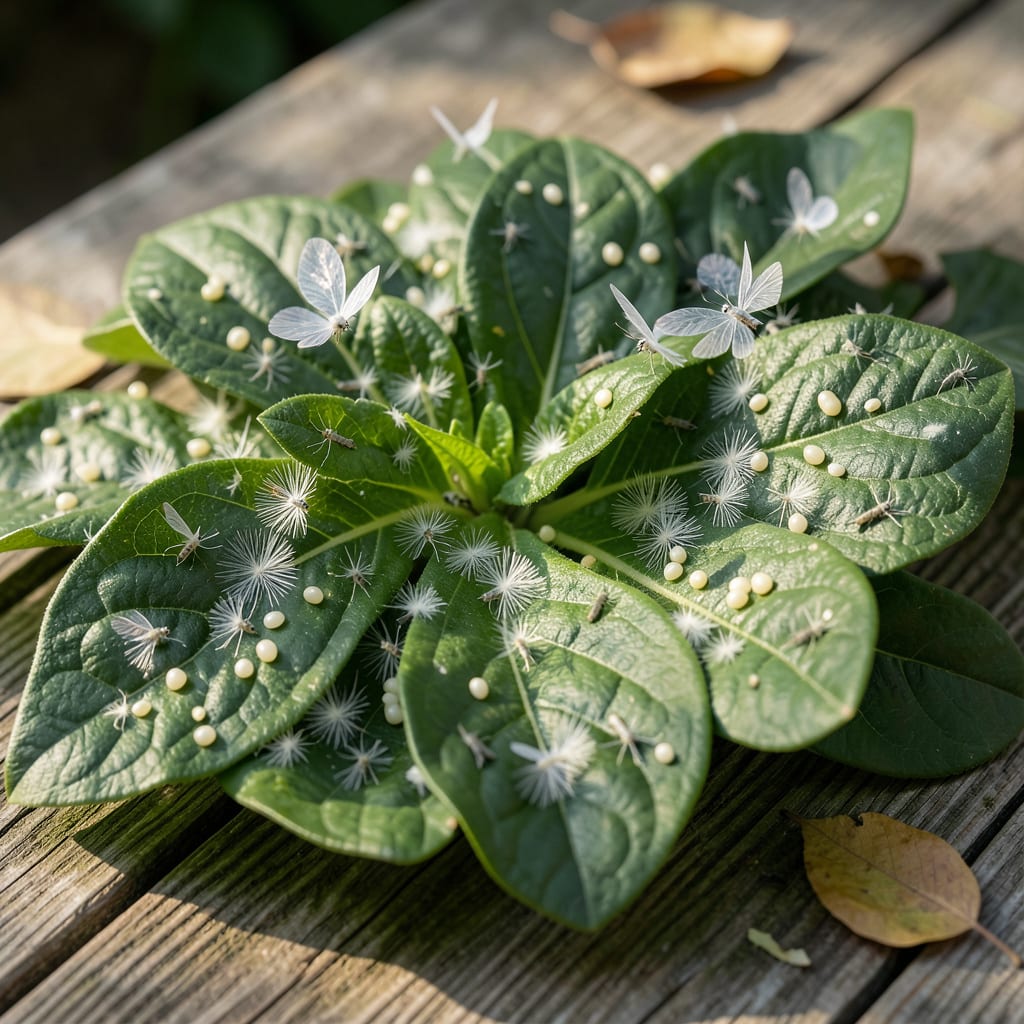
Those tiny white clouds hovering over your plants aren’t fairies. I spent a summer battling what turned out to be whiteflies, and the damage to my tomatoes was brutal.
They’re sneaky—hiding under leaves until the population explodes. The good news? A simple spray of soapy water knocks them down fast, and yellow sticky traps catch the stragglers before they multiply.
📚 In This Guide
Here’s the method I rely on to keep your garden free of these pests and thriving.
Start by confirming the presence of whiteflies—tiny, moth-like insects that cluster on the undersides of leaves. I use a handheld magnifying glass to spot their eggs, which appear as pale, oval specks. Shake a few leaves over a white sheet of paper; if tiny white insects fly up, you’ve got an active infestation.
Check plants weekly, focusing on new growth where whiteflies prefer to lay eggs. Yellow sticky traps placed near affected plants will catch adults and help you gauge the severity. You’ll notice honeydew—a sticky residue on leaves—long before the plants show stress.
Prune heavily infested leaves with sterilized scissors and dispose of them in a sealed bag—never compost them, as whiteflies can survive and reinfest. I always work in the early morning when the insects are less active, which makes removal more effective.
Isolate the affected plants immediately to prevent whiteflies from spreading to healthy ones. A fine mesh netting draped over the plant can trap adults inside, but ensure it doesn’t touch the foliage. This step alone can reduce the population significantly within 3-5 days.
Introduce beneficial insects like ladybugs, lacewings, or parasitic wasps, which feed on whitefly eggs and larvae. I release them at dusk when whiteflies are less mobile, giving the predators a better chance to establish. One ladybug can consume up to 50 whiteflies in a day.
For a quick knockdown, use an insecticidal soap or neem oil spray, applying it to the undersides of leaves where eggs and nymphs hide. Spray in the early morning or late evening to avoid burning the leaves, and reapply every 4-7 days until the infestation subsides.
Whiteflies thrive in dusty, stressed plants, so keep your garden clean and well-maintained. I mulch with reflective silver plastic or aluminum foil around plants, which disorients the insects and deters egg-laying. Companion planting with marigolds or nasturtiums can also repel them naturally.
Avoid over-fertilizing with nitrogen, as it promotes the soft, succulent growth that whiteflies love. Instead, use a balanced, slow-release fertilizer to keep plants healthy and less appealing to pests. Regularly remove weeds, which can harbor whiteflies and other pests.
These practical insights will help you tackle the problem efficiently and prevent future outbreaks.
Monitoring Technique: In Step 1, when checking for whiteflies, focus on the undersides of the youngest leaves first—this is where they prefer to lay eggs. The handheld magnifying glass helps spot the pale, oval eggs before they hatch into nymphs. Early detection means you can act before the infestation spreads.
Removal Timing: For Step 2, working in the early morning is crucial because whiteflies are less active then, making them easier to remove. Always use sterilized scissors to prevent spreading plant diseases while pruning infested foliage. The sealed bag disposal is non-negotiable—composting gives them a chance to return.
The Isolation Advantage: That fine mesh netting in Step 2 isn’t just for trapping adults—it also prevents new whiteflies from reaching your plants. Just remember to secure it properly so it doesn’t touch the foliage, which could damage leaves or give pests a way in.
Application Strategy: When applying insecticidal soap or neem oil in Step 3, thorough coverage of leaf undersides is key since that’s where eggs and nymphs hide. The 4-7 day reapplication window accounts for the whitefly life cycle, ensuring you catch newly hatched pests before they mature.
They’re likely whiteflies or mealybugs, common pests that feed on plant sap. Whiteflies are tiny, moth-like, while mealybugs appear cottony. Both weaken plants and spread disease.
Use neem oil, insecticidal soap, or a strong water spray to dislodge them. Ladybugs and lacewings are natural predators that help control infestations. Avoid harsh chemicals for eco-friendly solutions.
Early morning or late evening is ideal, as insects are less active. Treat at the first sign of infestation—check undersides of leaves weekly. Consistent action prevents outbreaks.
No, they don’t bite or sting humans but can damage plants. However, large infestations may trigger allergies in sensitive individuals. Focus on protecting your garden!
They thrive in warm, humid conditions and reproduce quickly. Remove affected plants, clean debris, and use sticky traps. Regular monitoring breaks their life cycle.
