
Beautiful Plants For Your Interior
Beautiful Plants For Your Interior
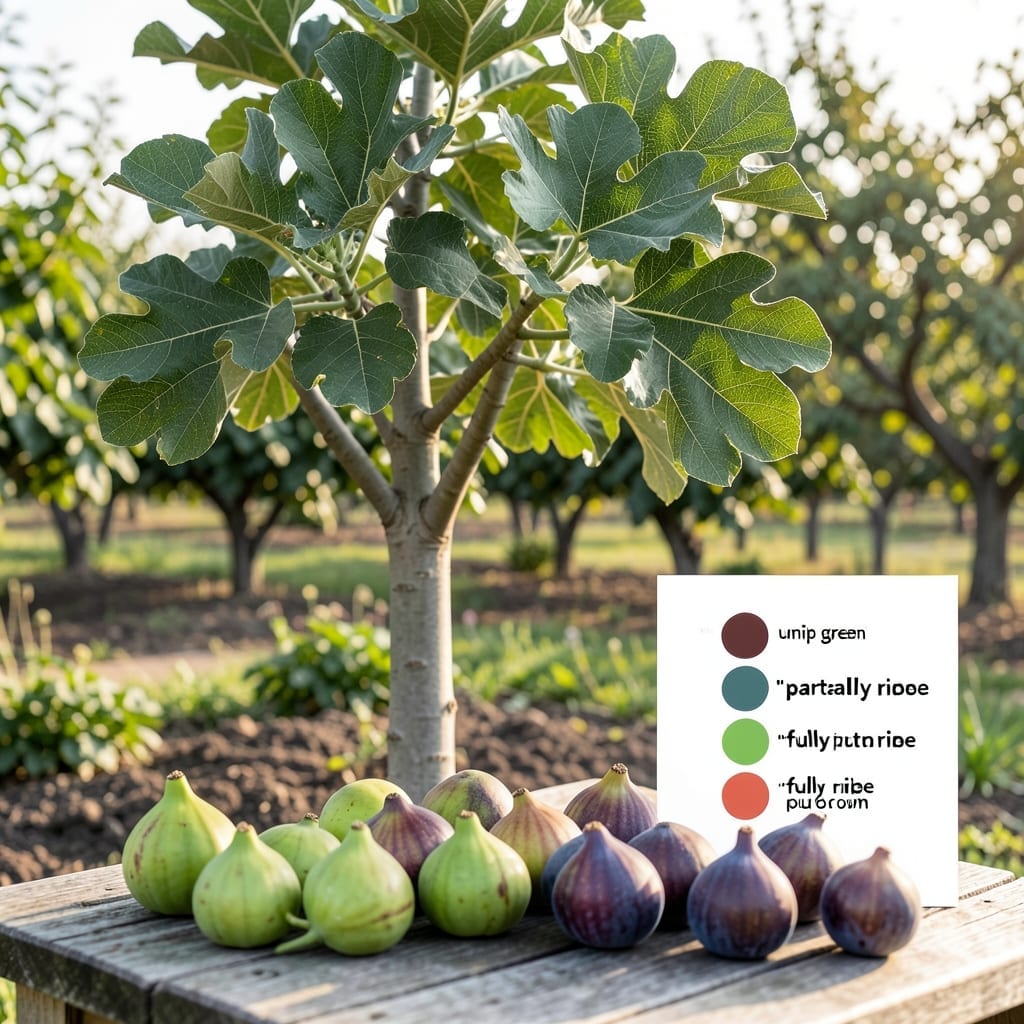
Nothing beats the sweet, honey-like flavor of a perfectly ripe 🍇 Fig—but picking them too early or too late can ruin the experience.
This visual ripeness chart helps you identify the exact moment your figs are ready to harvest. No more guessing games or bitter disappointments.
You’ll learn to spot the subtle color changes, texture shifts, and size variations that signal peak ripeness for your Fig crop.
From the first blush of color to the final droop of the neck, I’ll show you how to time your harvest for the best flavor and texture every time.
Knowing when to harvest your figs can be tricky, but a fig ripeness chart simplifies the process. Each variety has unique color shifts, texture changes, and size indicators that signal perfect ripeness. I’ll walk you through the key signs for popular types like Black Mission, Brown Turkey, and Celeste so you never miss the ideal moment. ☀️
For example, Black Mission figs transition from green to deep purple, while Brown Turkey figs turn brownish-purple when ready. Celeste figs, on the other hand, ripen to a light violet or golden hue. Texture also plays a role—ripe figs should feel slightly soft and may even droop slightly on the branch. 🌳
| Variety | Ripe Color | Texture | Size (Inches) |
|---|---|---|---|
| Black Mission | Deep purple-black | Soft, slightly wrinkled | 1.5–2.5 |
| Brown Turkey | Brownish-purple | Tender, juicy | 1.5–2 |
| Celeste | Light violet or golden | Firm but yielding | 1–1.5 |
| Adriatic | Light green-yellow | Very soft, sweet | 1.5–2 |
The size of your figs also matters. Most varieties reach 1 to 2.5 inches in diameter when fully ripe. If they’re smaller than expected, they may need more time on the tree. I’ve found that Celeste figs are often ready a bit earlier than others, so keep an eye on them as the season progresses. 🌱
Another key indicator is the stem end. When figs are ripe, the stem may bend or even drip syrup. This is a sure sign that the fruit is at its sweetest and juiciest. If the stem is still rigid and upright, the fig isn’t ready yet. I always check this before harvesting my own crop. ✂️
For Black Mission figs, the skin will darken to a near-black hue, and the flesh inside will be a deep red. Brown Turkey figs develop a rich, earthy tone and a sweet aroma when ripe. If you’re growing Adriatic figs, look for a pale green or yellow color and a very soft texture. 🌿
If you notice small cracks near the stem, don’t worry—this is normal for ripe figs. However, large splits or fermented smells can indicate overripeness. I recommend harvesting figs as soon as they meet the color and texture criteria to avoid losing them to birds or spoilage. 💧
Remember, figs do not ripen after being picked, so timing is everything. I’ve made the mistake of harvesting too early and ending up with hard, tasteless fruit. Trust the visual cues and texture tests to ensure you’re picking at the right stage. The chart above is my go-to reference every season. ☀️
Finally, taste-testing is the best way to confirm ripeness. Sample one or two figs from different parts of the tree to check for consistent sweetness. If they’re perfect, it’s time to harvest the rest. I’ve found that morning harvesting yields the juiciest figs, as they’ve had all night to absorb moisture. 🪴
I always use a few simple tests to confirm my figs are ready for harvest. The gentle squeeze test is my go-to first check—ripe figs yield slightly under light pressure.
Next, I examine the stem end. A ripe fig often has a drooping neck and may show a tiny drop of syrupy liquid, which is a clear sign of sweetness.
I also rely on the smell test. Ripe figs emit a sweet, fruity aroma near the stem. If there’s no scent, they’re likely underripe.
For absolute certainty, I’ll sample one fig from the batch. If it’s sweet and juicy, the rest are probably ready too. This method prevents harvesting an entire crop too early.
Remember, color alone isn’t always reliable. Some varieties stay green even when ripe, so always combine multiple tests for accuracy.
Finally, avoid picking figs that are hard or upright. These are underripe and won’t develop their full flavor. Patience pays off with figs!
With these tests, I’ve never had a disappointing harvest. Try them next time you’re checking your fig tree and enjoy the rewards of perfectly timed picking 🌳