
Beautiful Plants For Your Interior
Beautiful Plants For Your Interior
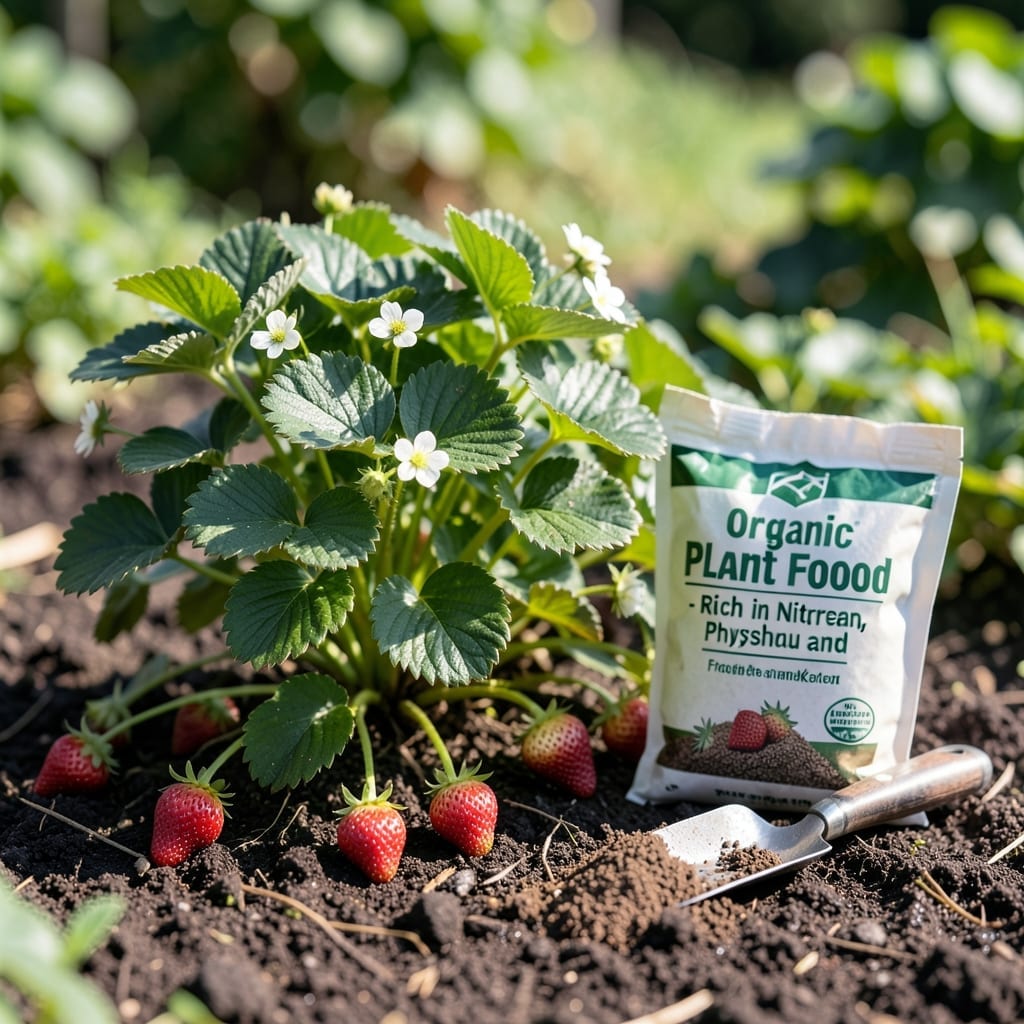
Growing strawberries 🍓 in pots gives you the joy of homegrown fruit even in limited space. But without the right nutrients, your container plants may fall short of their full potential.
I’ve learned that organic fertilizers can make all the difference for potted strawberries. They feed the soil naturally, ensuring your plants thrive without harsh chemicals.
Discover how to choose the best organic options and apply them effectively. Your plants will reward you with bigger, sweeter harvests.
Let me walk you through the simple steps to fertilize your potted strawberries the right way. It’s easier than you think and well worth the effort.
When growing strawberries in pots, choosing the right organic fertilizer is key to healthy growth and abundant harvests. Container plants rely entirely on you for nutrients, so I always opt for natural options that won’t burn delicate roots.
I’ve tested several organic fertilizers for potted strawberries, and the best ones provide a balanced nutrient profile while improving soil structure. Here’s how they compare:
| Fertilizer | N-P-K Ratio | Best For | Application |
|---|---|---|---|
| Compost | 1-1-1 | Soil health | Mix into potting soil at planting |
| Worm Castings | 2-1-1 | Root growth | Top-dress every 4 weeks |
| Fish Emulsion | 5-1-1 | Leafy growth | Liquid feed every 2 weeks |
| Bone Meal | 3-15-0 | Flowering & fruiting | Work into soil before planting |
Compost is my go-to for improving soil structure in pots. It slowly releases nutrients and helps retain moisture, which is crucial for container-grown strawberries. I mix it in at planting and top-dress lightly during the growing season.
Worm castings are another favorite because they’re gentle yet packed with beneficial microbes. I sprinkle a handful per pot every month to keep my plants thriving. They also help prevent diseases and pests naturally.
Fish emulsion provides a quick nitrogen boost for lush foliage. I dilute it with water and apply it as a liquid feed every other week during the growing season. It’s smelly but incredibly effective for potted strawberries.
Bone meal is my secret weapon for bigger yields. High in phosphorus, it encourages flowering and fruiting. I work a tablespoon into the soil at planting and again when I see the first blooms forming.
For best results, I rotate fertilizers to provide a balanced diet for my strawberries. Start with compost in the soil, add worm castings monthly, and use fish emulsion for a quick pick-me-up when needed.
Always water your plants before and after applying fertilizers to prevent root burn. This is especially important in pots, where nutrients can concentrate and become too strong for delicate strawberry roots.
With the right organic fertilizers, your potted strawberries will reward you with sweet, juicy berries all season long 🌱
I’ve found that potted strawberries need a consistent feeding schedule to thrive. The best time to start is early spring when new growth appears, using a balanced organic fertilizer to support root development.
During the fruiting season, I switch to a light feeding every 4-6 weeks to maintain growth without overwhelming the plants. Always water your strawberries before and after applying fertilizer to prevent root burn.
I always use early morning for fertilizing, as it gives the plants time to absorb nutrients before the heat of the day. This timing also reduces the risk of fertilizer burn on the foliage.
After the harvest season, I stop fertilizing to let the plants prepare for dormancy. Resume feeding in early spring when new growth starts again. This cycle keeps my strawberries healthy year after year.
For container-grown strawberries, I recommend using a liquid fertilizer for easier absorption. It’s also important to flush the soil with water every few months to prevent salt buildup from fertilizers.
Finally, remember that over-fertilizing can do more harm than good. Stick to the recommended amounts and always observe your plants for signs of stress, like yellowing leaves or stunted growth.
🌱