
Beautiful Plants For Your Interior
Beautiful Plants For Your Interior
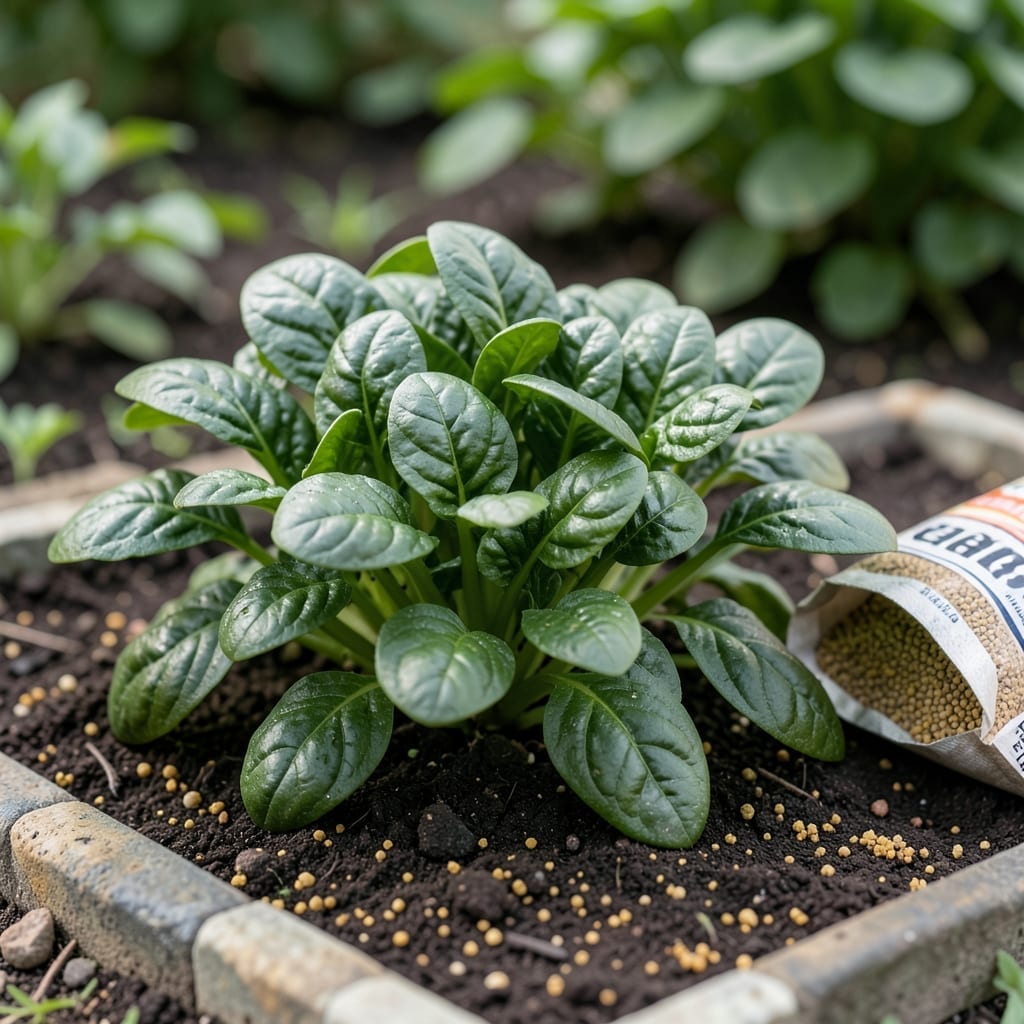
Nothing beats the satisfaction of harvesting fresh 🥬 Spinach from your own garden, but weak growth or bitter leaves can ruin the experience. The right nutrients make all the difference for this cool-season crop.
I’ve learned that choosing the wrong fertilizer can actually do more harm than good. Spinach thrives when given the proper balance of organic nutrients at the right time.
Discover which organic options will give your Spinach the boost it needs for rapid, healthy leaf production without the guesswork.
Spinach needs nutrient-rich soil to produce those tender, dark green leaves we all love. Organic fertilizers work best because they release nutrients slowly and improve soil health long-term. I always start with a soil test to check existing nutrient levels.
This helps me choose the right amendment. Spinach particularly loves nitrogen-rich fertilizers for leafy growth, but balance is key to avoid nutrient burn or imbalanced soil. 🌱
| Fertilizer Type | NPK Ratio | Application Method | Frequency |
|---|---|---|---|
| Compost | 2-1-1 | Mix into soil | Pre-planting |
| Well-rotted Manure | 3-2-2 | Side-dressing | Every 4 weeks |
| Fish Emulsion | 5-1-1 | Foliar spray | Every 2 weeks |
| Seaweed Extract | 1-0-2 | Soil drench | Monthly |
Compost is my go-to for spinach because it improves soil structure while providing gentle nutrition. I work in 2-3 inches of well-aged compost before planting. This gives spinach a strong start with minimal risk of over-fertilizing.
Well-rotted manure offers a stronger nitrogen boost, perfect for rapid leaf growth. I apply it as a side dressing when plants are 4-6 inches tall, being careful not to touch the stems directly. This prevents burning while delivering nutrients where they’re needed most. 🌿
Fish emulsion works wonders as a quick pick-me-up. I dilute it to half strength and use as a foliar spray every 2 weeks during the growing season. The nitrogen in fish emulsion promotes lush, green leaves without the harshness of synthetic fertilizers.
Seaweed extract might seem unconventional, but I swear by its micronutrients. It contains growth hormones that help spinach resist stress and produce more leaves. I use it as a monthly soil drench for a noticeable difference in plant vigor.
Remember, spinach has a shallow root system, so I always apply fertilizers near the surface where roots can access them easily. Over-application is a common mistake – more isn’t always better with these leafy greens.
I’ve found that alternating between these organic options gives the best results. For example, I might start with compost, then use fish emulsion mid-season, and finish with a seaweed drench. This approach ensures a steady supply of different nutrients throughout the growing cycle. ✂️
Always water your spinach after applying any fertilizer. This helps prevent root burn and ensures nutrients move into the soil where they’re needed. I water deeply after fertilizing, making sure the soil is moist but not waterlogged.
Timing your fertilizer application is just as important as choosing the right type. I always fertilize spinach in early morning when the soil is cool and plants can absorb nutrients efficiently before the heat of the day. 🌱
For best results, I apply a balanced fertilizer at planting and then every 4-6 weeks throughout the growing season. This schedule prevents nutrient deficiencies while avoiding over-fertilization which can lead to bitter leaves.
Steps to Fertilize Spinach Properly:
I’ve found that pre-planting fertilization gives spinach the strongest start. Before sowing seeds, I work in 1-2 inches of compost or well-rotted manure into the top 6 inches of soil. This ensures nutrients are available as soon as roots begin to develop.
For established plants, I use a gentle approach. Side-dressing with compost tea or diluted fish emulsion works wonders. I pour it in a 4-inch ring around each plant, avoiding direct contact with stems to prevent burning.
Foliar feeding is my secret weapon for quick results. Using a spray bottle, I apply liquid seaweed extract directly to leaves in the early morning. The leaves absorb nutrients faster this way, and I see noticeable improvements within days.
Remember that spinach is a light feeder. Over-fertilizing, especially with nitrogen, can cause rapid but weak growth that’s more susceptible to pests and diseases. I always err on the side of caution, using half the recommended dose of any fertilizer. 🌿