
Beautiful Plants For Your Interior
Beautiful Plants For Your Interior
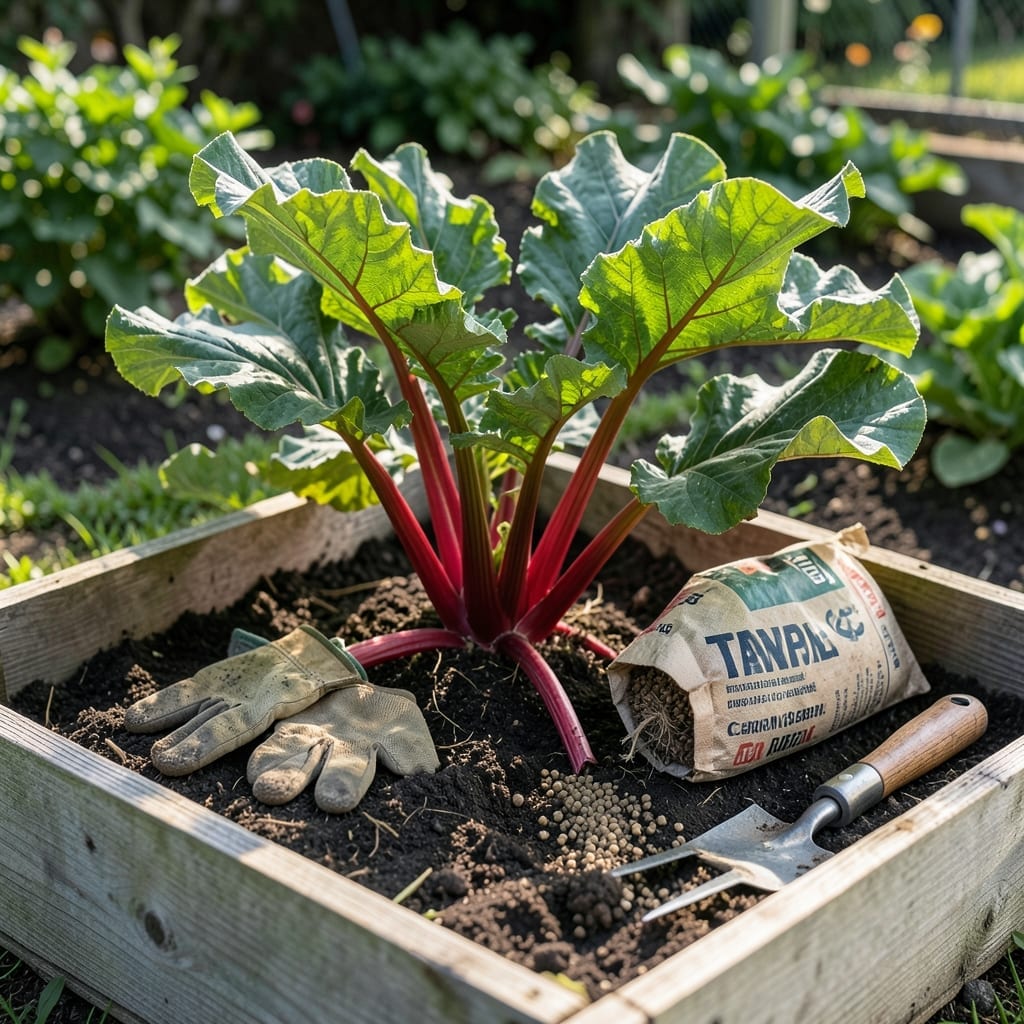
There’s nothing more disappointing than weak, spindly rhubarb stalks when you were expecting a bountiful harvest. The difference often comes down to what you’re feeding your 🌿 Rhubarb.
I’ve seen firsthand how the right organic fertilizer can transform a struggling patch into a thriving one. It’s not just about growth – it’s about producing those thick, vibrant stalks we all love.
What most gardeners don’t realize is that Rhubarb has specific nutrient needs that change throughout its growing cycle. Getting this right means the difference between mediocre and amazing yields.
Discover how to give your Rhubarb exactly what it craves, when it needs it most. Your future harvests will thank you.
I’ve found that organic fertilizers work best for rhubarb, feeding both the plant and the soil. These natural options improve soil structure while providing the essential nutrients your rhubarb craves for strong stalk development and vibrant growth.
Rhubarb is a heavy feeder that benefits from regular applications of organic matter. Unlike synthetic fertilizers, organic options release nutrients slowly, preventing the risk of burning your plants while building long-term soil health.
| Fertilizer Type | Key Nutrients | Best For |
|---|---|---|
| Compost | Balanced NPK | Soil health |
| Well-aged Manure | High nitrogen | Leaf growth |
| Bone Meal | High phosphorus | Root development |
| Fish Emulsion | Balanced + micronutrients | Quick boost |
Compost is my top recommendation for rhubarb as it improves soil structure while providing a balanced nutrient profile. Work in 2-3 inches around plants each spring and fall for best results.
Well-aged manure from cows or horses offers excellent nitrogen for lush leaf growth. Always use completely composted manure to avoid burning plants, applying about 1 inch around the base annually.
Bone meal is particularly valuable for rhubarb as it’s high in phosphorus, which promotes strong root systems and stalk development. I mix in 1/2 cup per plant at planting time and again in early spring.
Fish emulsion provides a quick nutrient boost, especially useful when plants show signs of deficiency. It’s rich in nitrogen and micronutrients, perfect for reviving tired rhubarb patches between harvests.
I’ve had great success with a combination approach, using compost as a base and supplementing with bone meal for phosphorus needs. This mimics the natural nutrient cycling rhubarb would experience in the wild.
Remember that rhubarb prefers slightly acidic soil (pH 6.0-6.8). If your soil is too alkaline, consider amending with elemental sulfur or additional organic matter before fertilizing.
For established plants, I recommend top-dressing with compost or manure in early spring and again after harvest. This timing ensures your rhubarb has the nutrients it needs when it needs them most.
🌿
Timing your rhubarb fertilization is just as important as choosing the right type. I’ve learned that feeding at the right moments ensures strong stalk development and consistent growth throughout the season.
Rhubarb thrives on a seasonal feeding schedule, with its heaviest nutrient needs in early spring and after harvest. This keeps the plant fueled for both current growth and next year’s production.
For best results, apply fertilizer in the early morning when the soil is moist. This helps the nutrients penetrate deeper into the root zone where rhubarb can access them most effectively.
I recommend using about 1 cup of fertilizer per mature plant or 2 lbs per 100 sqft. Always water thoroughly after application to prevent root burn and help distribute the nutrients evenly.
Remember that over-fertilizing can be just as harmful as under-feeding. Stick to the recommended amounts and monitor your plants for signs of stress, like yellowing leaves or stunted growth.
By following this schedule, you’ll give your rhubarb the steady nutrient supply it needs to produce those thick, flavorful stalks year after year. 🌿