
Beautiful Plants For Your Interior
Beautiful Plants For Your Interior
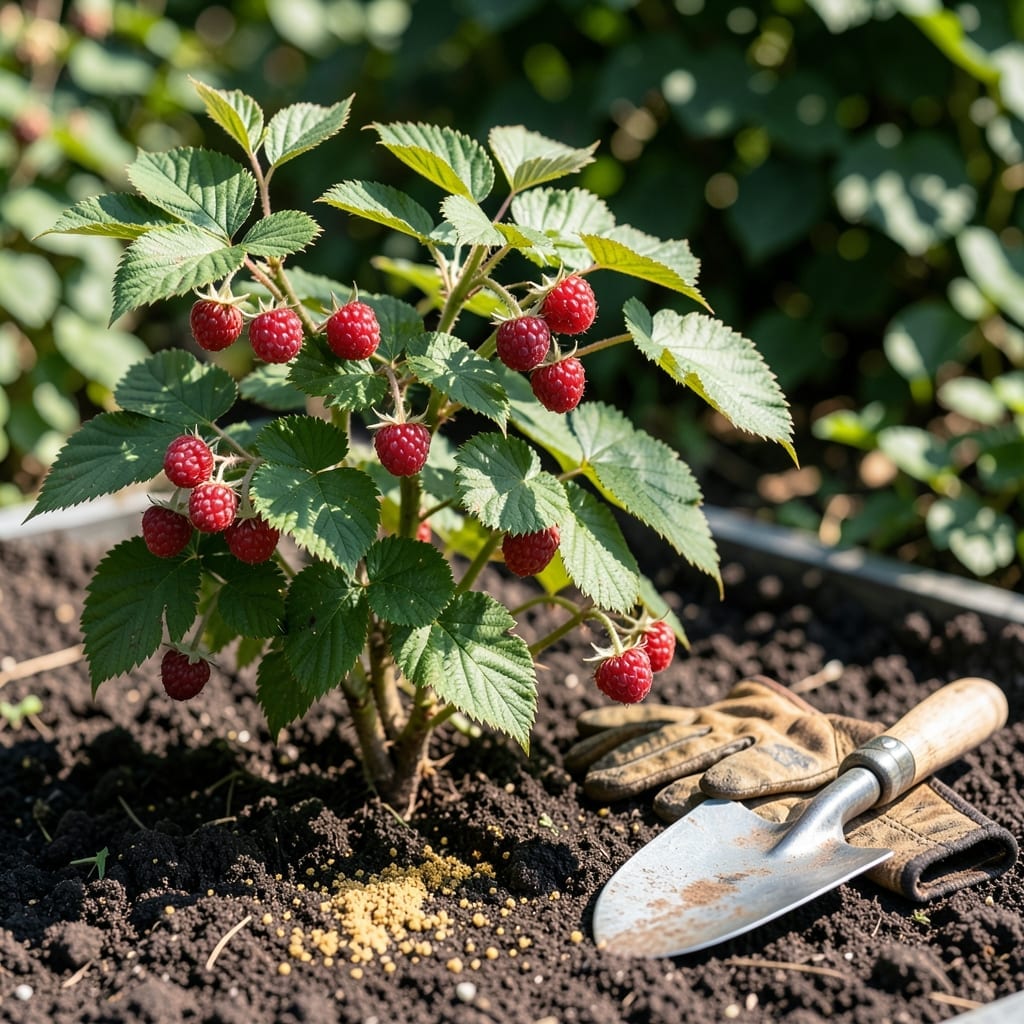
Nothing beats the taste of fresh raspberries picked right from your garden. But to get that perfect harvest, your 🫐 Raspberry bushes need the right food at the right time.
Choosing the wrong fertilizer can leave you with weak plants and a disappointing yield. I’ve seen firsthand how the proper nutrients transform raspberry canes from struggling to thriving.
Discover the simple feeding strategy that will give you bigger, juicier berries season after season. Your taste buds will thank you.
I’ve found that organic fertilizers work wonders for raspberry bushes, offering steady nutrients without harsh chemicals. The key is matching the fertilizer type to the season for optimal growth and berry production. 🌿
Each organic option, from compost to fish emulsion, has unique benefits. I’ll break down the best choices and when to use them for healthier canes and a bigger harvest. 🌱
| header-cell” style=”background-color:#6fd544;color:#fff;padding:12px;text-align:left;font-weight:bold”>NPK Ratio | header-cell” style=”background-color:#6fd544;color:#fff;padding:12px;text-align:left;font-weight:bold”>Key Benefit | row”>cell” style=”padding:10px;border-bottom:1px solid #ddd”>Varies (2-1-1) | cell” style=”padding:10px;border-bottom:1px solid #ddd”>Improves soil structure |
|---|---|---|---|
| cell” style=”padding:10px;border-bottom:1px solid #ddd”>Spring to Summer | row”> | cell” style=”padding:10px;border-bottom:1px solid #ddd”>3-15-0 | cell” style=”padding:10px;border-bottom:1px solid #ddd”>Promotes root development |
| cell” style=”padding:10px;border-bottom:1px solid #ddd”>All Season | Enhances nutrient uptake |
Compost is my go-to for spring feeding. It slowly releases nutrients while improving soil texture for better root growth. I always mix it into the top inch of soil around the base.
Fish emulsion provides a quick nitrogen boost during active growth. I use it as a foliar spray or soil drench every 4-6 weeks in spring and early summer for vibrant canes.
Bone meal is perfect for early spring to strengthen roots. I work it into the soil at planting or sprinkle around established bushes. Its high phosphorus content supports fruiting.
Worm castings are a year-round superstar. They won’t burn plants and improve soil microbiome. I top-dress with them monthly for consistent nutrition.
For best results, I rotate fertilizers through the season. Start with bone meal and compost in spring, switch to fish emulsion for summer, and finish with worm castings in fall. 🌿
Lastly, I avoid high-nitrogen fertilizers late in the season. They can promote leafy growth at the expense of fruit production, leaving you with lush canes but fewer berries. ✂️
Timing your raspberry fertilization is just as important as choosing the right product. I follow a seasonal schedule to keep my bushes productive without overfeeding. Early spring is when I start my feeding routine.
I’ve learned that raspberry plants need consistent but not excessive nutrients. The key is to match fertilization with their growth stages for optimal yield and healthy canes. 🌿
Apply balanced fertilizer (10-10-10) as new growth appears to support cane development
Use light applications of nitrogen every 4-6 weeks to sustain fruiting canes
Apply low-nitrogen fertilizer in late summer to prepare for next year’s growth
I always side-dress my raspberries by sprinkling fertilizer in a 6-inch ring around each plant. This keeps nutrients where the root zone can access them without direct contact with canes.
For foliar feeding, I use diluted fish emulsion as a spray. It provides a quick nutrient boost during active growth periods. I apply it in the early morning to allow for maximum absorption.
I watch for signs of over-fertilization like excessive leafy growth or yellowing leaves. If I notice these, I reduce feeding and flush the soil with water to prevent damage to my plants. ☀️
Remember, less is often more with raspberries. I aim for moderate fertility rather than pushing for rapid growth, which can lead to weak canes and reduced fruit quality. ✂️