
Beautiful Plants For Your Interior
Beautiful Plants For Your Interior
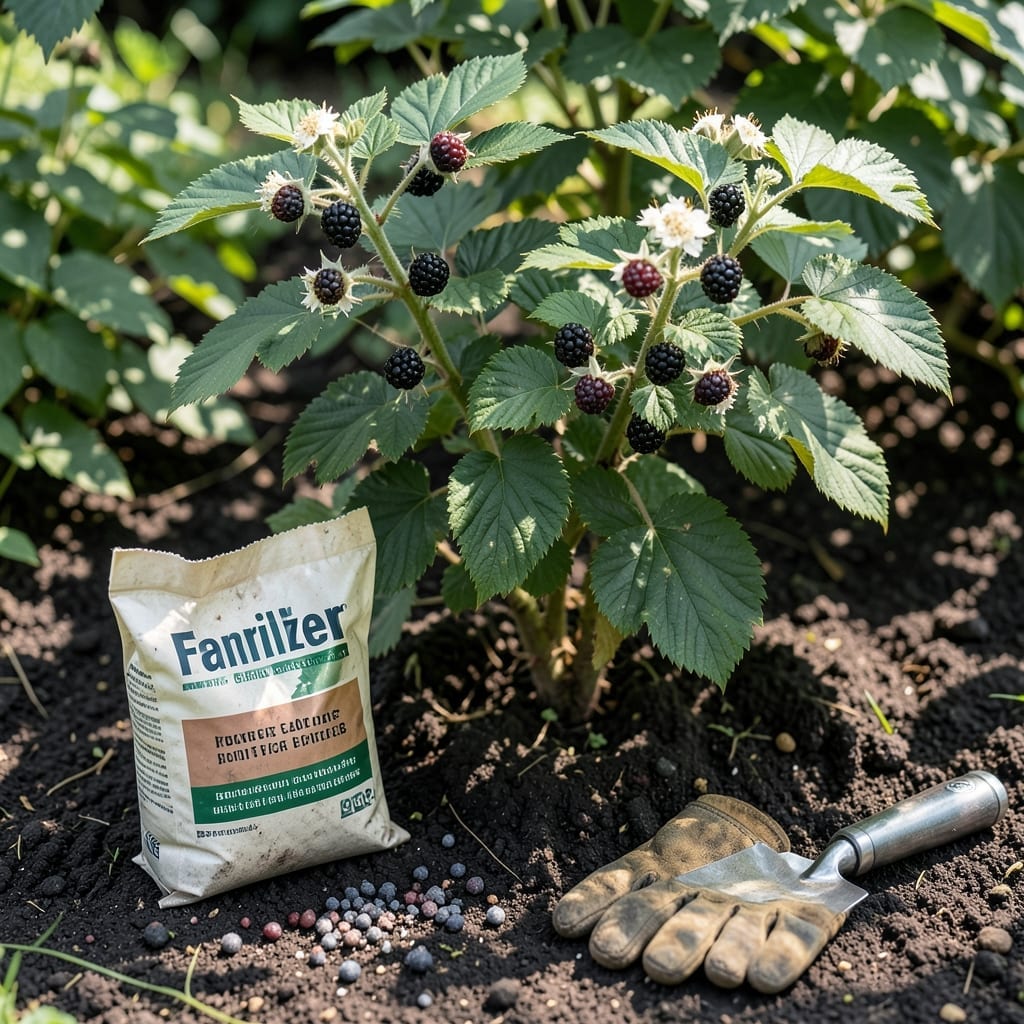
Your Blackberry bushes could be producing bigger, sweeter harvests with one simple change. Many gardeners don’t realize their plants are starving for the right nutrients.
I’ve seen firsthand how the right feeding approach transforms struggling 🫐 canes into thriving, fruit-loaded bushes. The difference between mediocre and exceptional berries often comes down to what you’re putting in the soil.
Discover how organic feeding can boost your plant’s health and your harvest size. Let’s dig into what your blackberries really need to flourish.
Choosing the right organic fertilizer at each growth stage can make or break your blackberry harvest. New plants need different nutrients than established bushes in fruiting stages.
I’ve tested various organic options and found that matching NPK ratios to growth phases dramatically improves plant vigor and berry quality. Timing is just as crucial as the fertilizer type.
| Growth Stage | Best Fertilizer | NPK Ratio | Application Time |
| Establishing | Compost + Bone Meal | 3-4-4 | Early Spring |
| Active Growth | Fish Emulsion | 5-1-1 | Late Spring |
| Fruiting | Kelp Meal | 1-0-2 | Early Summer |
| Maintenance | Worm Castings | 2-2-2 | Mid Summer |
For new blackberry plants, I always start with a 50/50 mix of compost and bone meal. This provides phosphorus for root development and nitrogen for early leaf growth.
Once the canes start elongating, I switch to fish emulsion every 3-4 weeks. Its quick-release nitrogen fuels the rapid vegetative growth blackberries need in spring.
When flower buds appear, I apply kelp meal to supply potassium and micronutrients. This boosts fruit set and improves berry size significantly.
Throughout summer, I maintain soil fertility with worm castings. They release nutrients slowly and improve soil structure without burning roots.
Remember that organic fertilizers feed the soil microbiome first, which then feeds your plants. This creates a more sustainable and resilient growing system.
For best results, always water deeply after applying any fertilizer. This helps nutrients reach the root zone where they’re needed most. 🌱
I’ve found that morning applications allow plants to absorb nutrients before the heat of day. Avoid fertilizing during drought conditions or extreme heat.
Proper fertilizer application can double your blackberry yield. The key is timing and technique—too much or too little can harm your plants.
I’ve refined my approach over years of growing thorny and thornless varieties. The best results come from consistent, strategic feeding that matches the plant’s growth cycle.
For new plantings, I work 1-2 inches of compost into the soil before setting the blackberry canes. This gives roots immediate access to nutrients.
Established bushes benefit from side-dressing. I create a 6-inch trench around the drip line and fill it with compost or worm castings, then water thoroughly.
Foliar feeding with diluted fish emulsion can give plants a quick boost during stress periods. I spray early in the morning to prevent leaf burn.
Always water deeply after fertilizing to help nutrients reach the root zone. Mulching afterward conserves moisture and prevents nutrient runoff.
I avoid fertilizing during drought or extreme heat, as this can stress the plants. Instead, I wait for cooler, damper conditions for best absorption. 🌿