
Beautiful Plants For Your Interior
Beautiful Plants For Your Interior
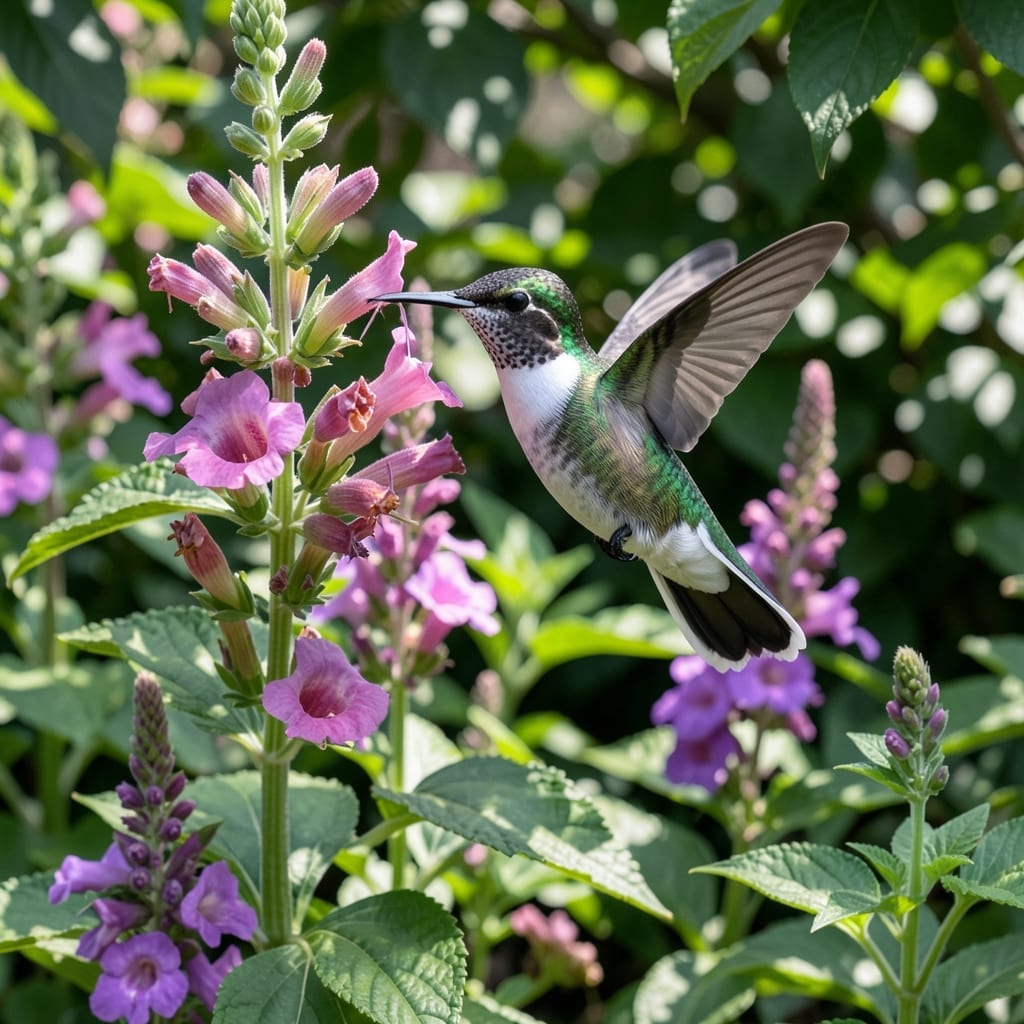
Female black-chinned hummingbirds have duller greenish-brown plumage with pale throats, white-tipped tail feathers, and lack the male’s iridescent purple band. They are slightly larger than males.
I’ve noticed these subtle color differences make females harder to spot in the wild, as their muted tones blend into foliage better than the males’ vibrant throat patches. Their larger size often helps with nesting duties, and the white tail tips create a distinctive pattern during flight that birdwatchers can train their eyes to recognize. 🔥
💡 In This Article
The female’s plumage serves as natural camouflage during nesting. Her greenish-brown back and pale underparts blend into shaded branches where she builds her walnut-sized nest of plant down and spider silk. This coloration differs from the male’s iridescent green crown and violet-black throat gorget that shimmers in sunlight.
Size differences are measurable: females average 3.7-4.3 inches long with wingspans of 4.7-5.1 inches, about 10-15% larger than males. The extra bulk helps maintain body heat during egg incubation, which lasts 12-16 days. Their rounded tail feathers with white tips create a fan shape distinct from the male’s forked tail. ✨
Juvenile females resemble adults but with buffy edges on wing feathers. Their beaks, at 0.6-0.8 inches long, are slightly longer than males’, adapted for reaching nectar in tubular flowers like penstemons. This subtle beak length difference helps them access food sources that males might overlook. 🔥
Unlike the male’s dramatic courtship dives, females use their subdued coloring to avoid predators while feeding. They visit 1,000-2,000 flowers daily, consuming half their body weight in nectar. Their white-tipped tail becomes visible only when they fan their tail during hover-feeding, a key identification mark.
Their plumage also changes seasonally. In winter, females may appear slightly duller as feather wear reduces iridescence. This adaptation helps them conserve energy during migration, when they travel 1,000+ miles to Mexico. Their ability to blend in becomes crucial during these long journeys. ⚡
Females lack the male’s iridescent purple throat band and have white-tipped tail feathers. Their plumage is duller greenish-brown for camouflage, while males display vibrant, shimmering colors. Size is another clue—females are about 10-15% larger.
They primarily consume nectar from tubular flowers like penstemons and salvias, visiting 1,000-2,000 flowers daily. They also eat small insects for protein, especially during nesting season to support egg development.
They’re most active during migration seasons—spring and fall. In warmer areas, they may stay year-round. Early morning is ideal for spotting them feeding, as they consume half their body weight in nectar daily.
Females construct walnut-sized nests using plant down, spider silk, and moss. They prefer sheltered spots like dense shrubs or tree branches, often near reliable food sources. The process takes about 5-7 days.