
Beautiful Plants For Your Interior
Beautiful Plants For Your Interior
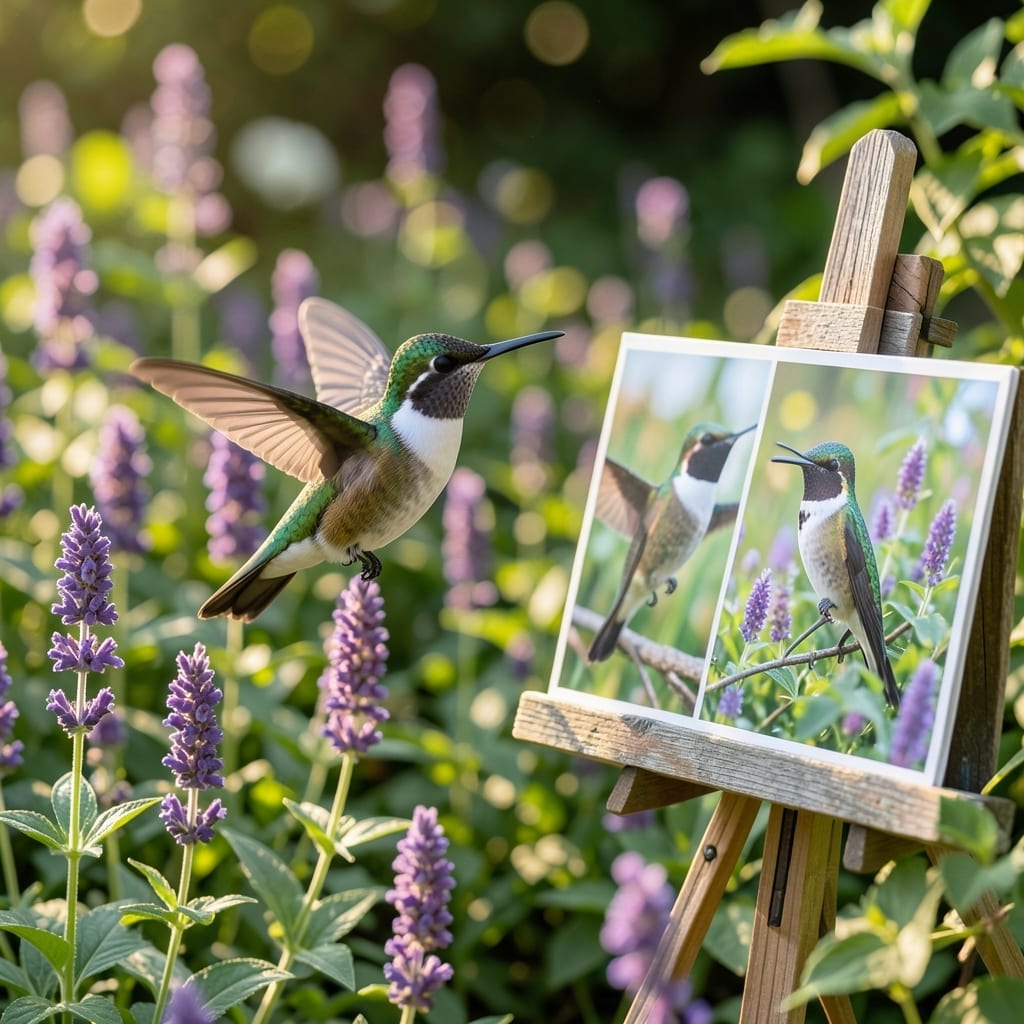
Female black-chinned hummingbirds have pale throats, white-tipped tail feathers, and duller greenish-brown plumage compared to males. Their subtle markings help with camouflage while nesting.
I’ve noticed their muted colors make them harder to spot in gardens, which is actually a survival advantage. Their pale throats lack the iridescent purple band males display, and the white-tipped tails create a soft contrast against their earthy tones. This design helps them blend into nests and foliage while protecting their young. ✨
💡 In This Article
The female’s plumage is a masterclass in subtle adaptation. Their greenish-brown upperparts appear more muted than the male’s vibrant iridescent green, with individual feathers showing less light reflection. This happens because female feathers have fewer iridophores—microscopic structures that create shimmering colors in males.
The difference is especially noticeable in direct sunlight, where males sparkle like jewels while females maintain their understated appearance. ✨
Size offers another clue: females measure about 3.5-4 inches long, slightly larger than males, with a wingspan of 4.5-5 inches. Their tails feature distinctive white tips on the outer three feathers, creating a subtle pattern visible during flight. This white edging breaks up their silhouette against green leaves, making them harder for predators to track.
The pale throat lacks the male’s purple gorget entirely, replaced by soft beige or gray streaking. 💫
Behavioral observation helps confirm identification. Females spend more time on nests, which are built from plant down and spider silk, camouflaged with lichen. Their muted colors blend perfectly with these materials. Watch for birds hovering near nesting sites or collecting web material—they’re almost certainly females.
This nesting strategy explains why their plumage evolved toward camouflage rather than display. ⚡
Compare females to juveniles, which share some similar markings. Young males retain the white tail tips until their first molt at 6-8 months, when they develop the characteristic purple throat patch. Females maintain their markings for life, though the white tail tips may appear slightly more worn during breeding season due to increased nesting activity.
🔥
For positive identification, look for the combination of muted upperparts, white tail tips, and absence of iridescent throat feathers. These three traits together are unique to adult females and distinguish them from both males and immature birds.
The subtle beauty of their adaptation becomes clear when you understand how each feature serves their role as protectors of the next generation. 🌟
Females lack the male’s iridescent purple throat patch and have white-tipped tail feathers. Their plumage is duller greenish-brown for camouflage, while males are more vibrant.
Early morning or late afternoon offers the best lighting and activity. They’re most active feeding during these times, especially near nectar sources.
Their muted colors blend into foliage, and they spend more time nesting. Use a fast shutter speed and patience to capture clear shots.
Females are slightly larger, measuring 3.5-4 inches long with a 4.5-5 inch wingspan. Their size helps with egg incubation.