
Beautiful Plants For Your Interior
Beautiful Plants For Your Interior
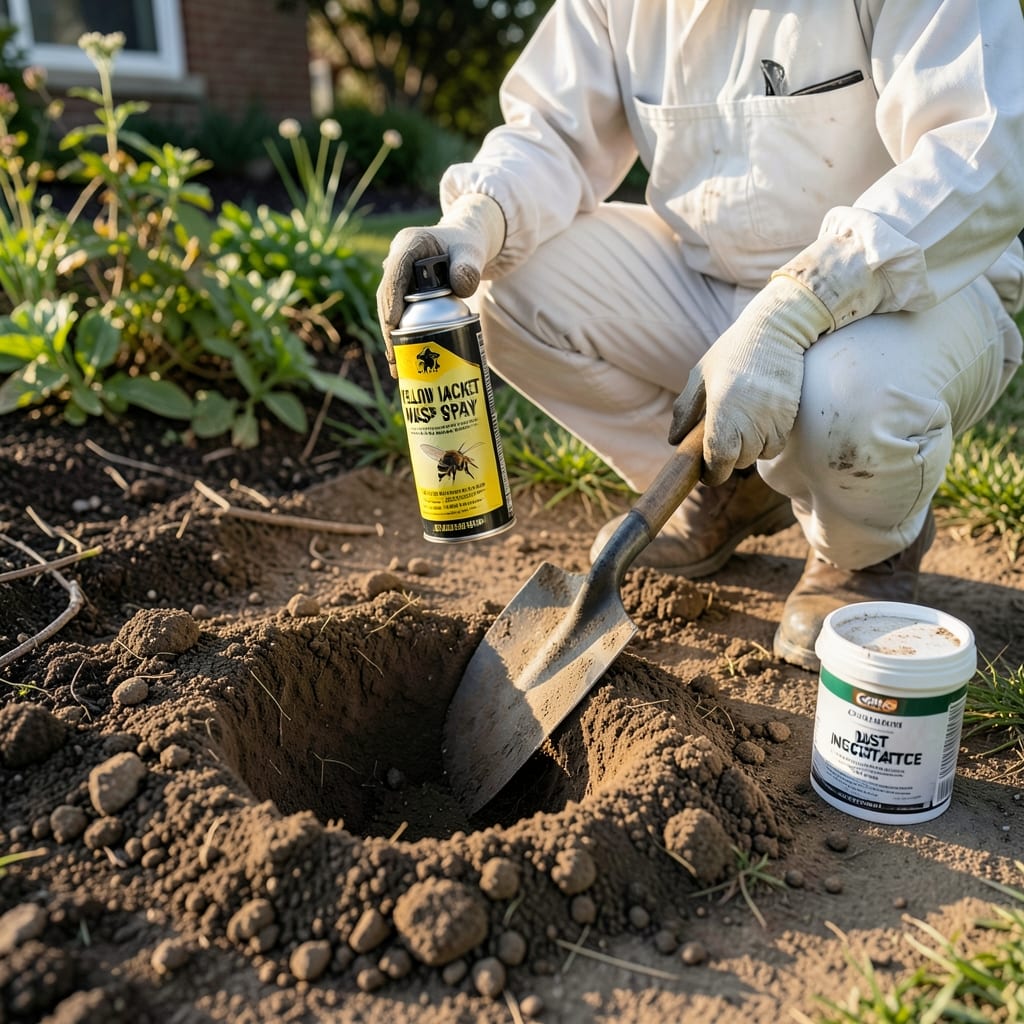
Eliminate a yellow jacket ground nest at dusk or dawn when they’re less active using soap and water or commercial insecticide. Wear protective clothing and avoid daytime attempts to prevent stings.
I’ve learned these insects are most docile during cooler hours, which reduces the risk of aggressive swarming. Soap and water works by breaking down their exoskeletons, while insecticides provide a more potent solution for larger colonies. Always approach with caution, as even a single disturbed nest can trigger a defensive response. ⚡
💡 In This Article
Yellow jackets prefer underground nesting because it provides natural insulation and protection. The soil maintains a stable temperature of 85-90°F in the nest, which is ideal for brood development. These insects are also drawn to abandoned rodent burrows, which offer ready-made cavities that save them the energy of excavating their own tunnels. 🔥
Colony structure plays a key role in this behavior. A typical yellow jacket nest contains 1,000-4,000 workers at its peak in late summer, with the queen laying up to 250 eggs per day.
The workers expand the nest by chewing wood fibers and mixing them with saliva to create a papery substance that lines the underground chambers.
Their aggressive nature in late summer stems from food scarcity and colony defense instincts. As food sources dwindle, workers become more protective of the nest and the developing larvae. This is when they’re most likely to sting repeatedly, unlike honeybees that die after stinging once.
The nest can grow to the size of a basketball, housing multiple combs stacked vertically.
Underground nests also offer strategic advantages. The entrance is often hidden beneath vegetation or in cracks in the ground, making it harder for predators to locate. This camouflage, combined with the workers’ aggressive defense, makes these nests particularly challenging to eradicate without proper preparation and timing. ✨
Seasonal patterns influence their nesting behavior too. Queens emerge in spring to start new colonies, and by late summer, the nest reaches maximum size. As temperatures drop in fall, the colony begins to decline naturally, but the nest may still be active and dangerous until the first hard frost kills off the workers.
Dusk or dawn is ideal because yellow jackets are less active. Most foragers have returned, and cooler temperatures make them sluggish.
Use 1-2 gallons of soapy water for bigger colonies. Spray directly into the entrance until fully saturated. Repeat the next evening if activity continues.
Yes, 2 tablespoons of any dish soap mixed with 1 quart of water works well. The soap breaks down their exoskeletons, causing dehydration.
Avoid the area for at least 24 hours. Check for activity the next evening before assuming the nest is inactive.