
Beautiful Plants For Your Interior
Beautiful Plants For Your Interior
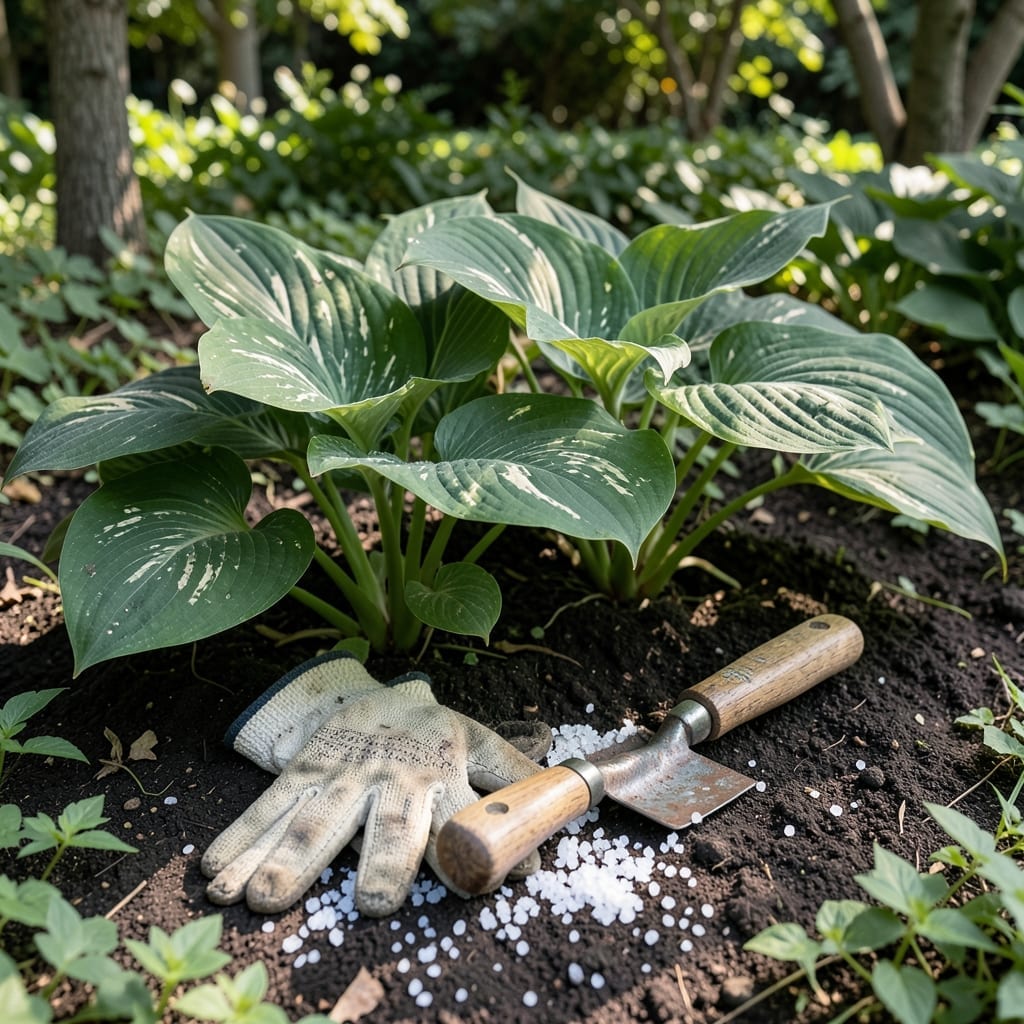
Struggling with yellowing leaves or stunted growth in your Hosta? 🌿 There might be a simple, natural solution to revive your plants and enhance their lush, vibrant foliage.
I discovered that a common household item can work wonders. It’s easier than you think to give your plants the boost they need for thriving growth.
Learn how to use this method effectively and watch your garden transform with minimal effort.
If your hostas show yellowing leaves or stunted growth, they might be starving for magnesium and sulfur. These are the two key nutrients in Epsom salt, which can work wonders. 🌿
As a gardener, I’ve seen how magnesium boosts chlorophyll production, giving those lush green leaves their vibrant color. Without it, you’ll notice interveinal chlorosis, where the veins stay green but the tissue between them turns yellow.
| Benefit | Effect on Hostas |
|---|---|
| Magnesium | Enhances chlorophyll and photosynthesis |
| Sulfur | Strengthens cell walls and roots |
| Nutrient Uptake | Improves nitrogen and phosphorus absorption |
| Stress Resistance | Helps plants resist disease and pests |
Sulfur is equally important, helping your hostas develop stronger cell walls and healthier root systems. It also aids in the production of essential proteins and enzymes that keep your plants thriving. 🪴
Another sign of deficiency is slow growth or weak stems. If your hostas seem to be lagging behind, a dose of Epsom salt can give them the push they need. I always recommend checking the soil first, though.
For best results, use Epsom salt as a soil amendment or foliar spray. This ensures the nutrients are readily available to the plant. Just remember, a little goes a long way—1 tablespoon per gallon of water is plenty.
I’ve also noticed that hostas treated with Epsom salt tend to have darker green leaves and a more robust appearance. It’s a simple way to enhance the beauty of your garden without harsh chemicals. ☀️
If you’re dealing with poor soil quality, Epsom salt can help balance things out. It’s particularly useful in sandy or acidic soils, where magnesium and sulfur might be lacking.
Don’t forget that overuse can lead to problems, though. Stick to the recommended dosage and monitor your plants for any signs of magnesium toxicity, like leaf scorch or salt buildup in the soil.
In my experience, early spring and early fall are the best times to apply Epsom salt to hostas. This gives them a boost when they need it most—during active growth periods. 🌱
Using Epsom salt on hostas is simple, but timing and method matter. I recommend starting in early spring when new growth appears, as this is when plants need magnesium most for chlorophyll production. 🌿
For soil application, sprinkle 1 tablespoon of Epsom salt around the base of each hosta. Gently work it into the top 1-2 inches of soil, then water thoroughly to help the nutrients reach the roots.
For a foliar spray, dissolve 1 tablespoon of Epsom salt in 1 gallon of water. Use a spray bottle to apply it directly to the leaves, preferably in the early morning to avoid evaporation.
I’ve found that monthly applications during the growing season work best. This keeps your hostas supplied with a steady stream of magnesium and sulfur without overdoing it. 🪴
If your hostas are in containers, reduce the amount slightly. Use 1 teaspoon per gallon of potting mix and mix it in before planting. This ensures even distribution and prevents root burn.
Always water your hostas after applying Epsom salt to help it dissolve and reach the roots. This is especially important in dry or sandy soils, where nutrients can leach away quickly. ☀️