
Beautiful Plants For Your Interior
Beautiful Plants For Your Interior
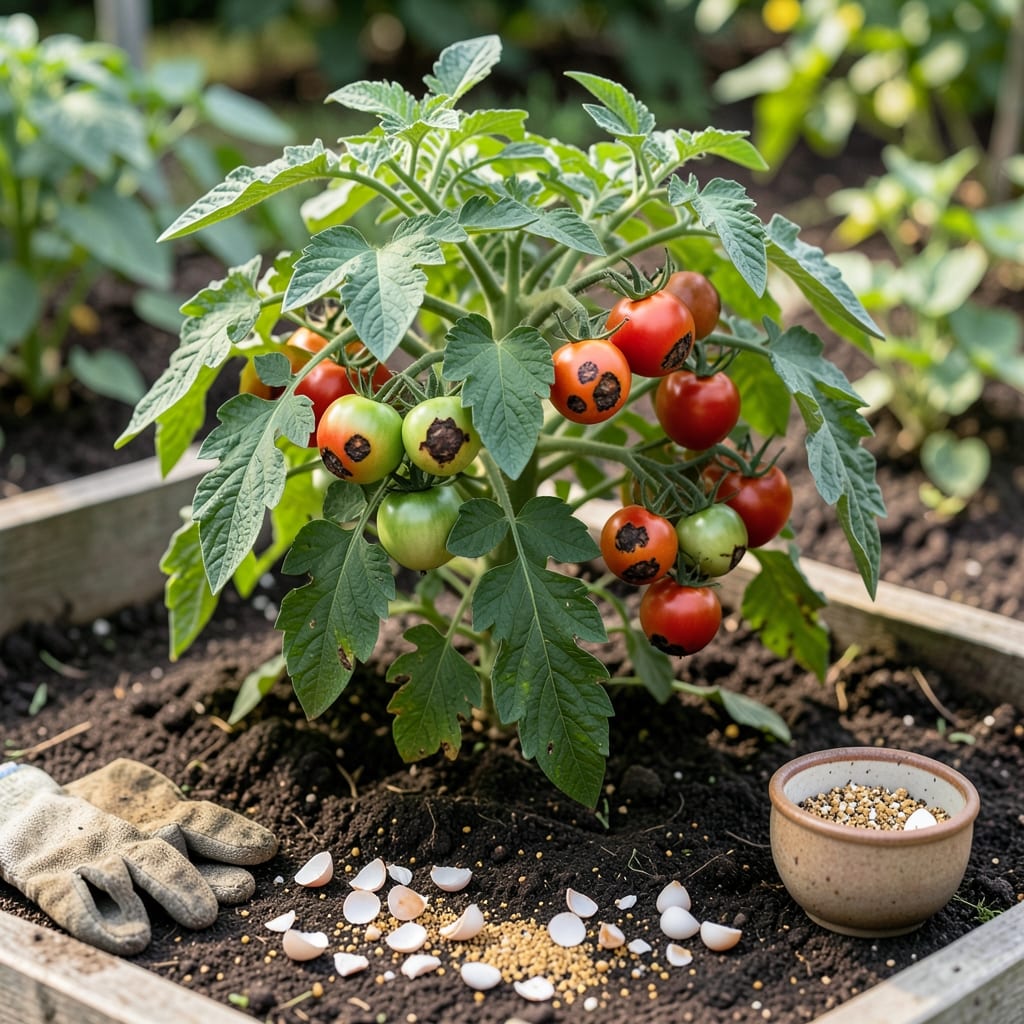
Crushed eggshells provide calcium to prevent blossom end rot in tomatoes and peppers. Work them into soil at planting or steep in water for a quick calcium boost.
I’ve seen many gardeners struggle with blossom end rot because their soil lacks sufficient calcium. The eggshells gradually break down, releasing this essential nutrient directly to the roots. For best results, I crush them finely and mix them into the top 6 inches of soil before planting. 🔥
This method is especially effective for heavy-feeding plants like tomatoes and peppers, which need consistent calcium to develop strong cell walls. ✨
💡 In This Article
Blossom end rot occurs when plant cells collapse due to calcium deficiency. Calcium is vital for cell wall development, and without it, new growth at the blossom end weakens and decays. Eggshells are 93% calcium carbonate, a form that slowly dissolves in soil, providing a steady supply of this crucial nutrient directly to the roots.
✨
The decomposition process is gradual, which is ideal for plants. Soil microbes and mild acids break down the eggshells over 2-6 months, releasing calcium ions that plants absorb through their root systems. This slow release prevents nutrient spikes that can stress plants, unlike synthetic fertilizers. 🔥
What makes eggshells particularly effective is their ability to target the root cause. Unlike foliar sprays that provide temporary relief, eggshells enrich the soil itself, ensuring long-term calcium availability. I’ve noticed this method works best in slightly acidic soils (pH 6.0-7.0), where the shells break down more efficiently. ⚡
For severe deficiencies, combining eggshells with other calcium sources like gypsum can provide both immediate and long-term solutions. The eggshells handle the slow release, while gypsum offers a quicker calcium boost, creating a balanced approach to preventing blossom end rot. 💫
This method also improves soil structure over time. As eggshells decompose, they add organic matter that enhances soil aeration and water retention, creating a better growing environment for plants. 🌟
Eggshells begin breaking down in 2-4 weeks, but full calcium release takes 2-6 months. For faster results, crush them finely or steep in water for 24-48 hours to create eggshell tea.
Tomatoes and peppers show the most dramatic improvement, as they’re prone to calcium deficiency. Other high-need plants include zucchini, cucumbers, and melons. Always focus on the root zone for best absorption.
Yes! Mix 1-2 tablespoons of crushed shells into the top layer of potting soil. For container gardens, eggshell tea works especially well since nutrients can leach out more quickly.
Rinsing with warm water removes residue and prevents mold. Drying them in the oven at 200°F for 10 minutes can help sterilize, but air-drying is usually sufficient for garden use.