
Beautiful Plants For Your Interior
Beautiful Plants For Your Interior
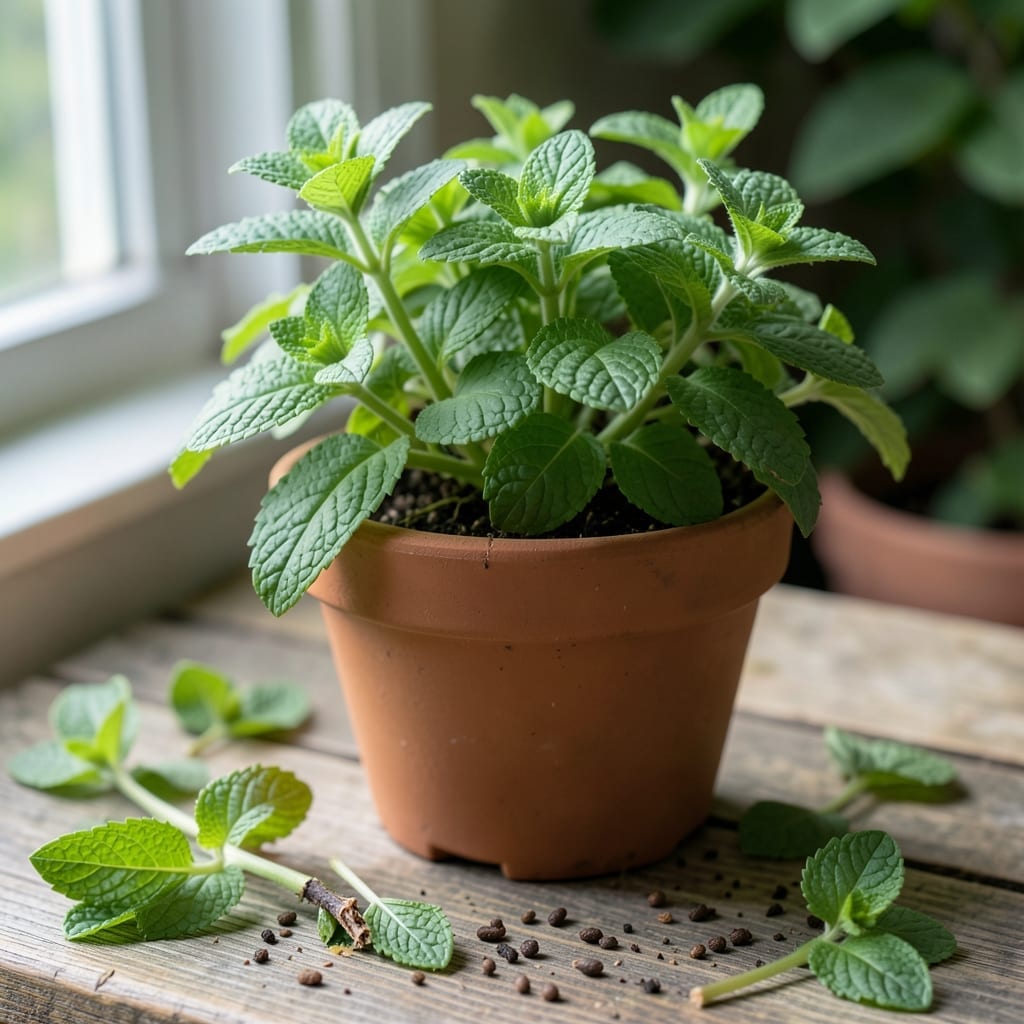
Mint leaves can deter mice due to their strong scent, which overwhelms the rodents’ sensitive sense of smell. However, effectiveness varies and fresh leaves work better than dried ones for this purpose.
The pungent oils in mint, especially menthol, create an environment that’s unbearable for mice. I’ve seen this work best in enclosed spaces like pantries or basements where the aroma can concentrate. 🔥 Fresh bunches maintain potency for about 3-4 days, while dried versions lose their impact faster.
For maximum effect, I recommend placing mint in areas where you’ve spotted rodent activity or potential entry points. ✨
💡 In This Article
Mint contains menthol and other volatile oils that attack mice’s olfactory systems. These compounds, concentrated at 40-45% in peppermint oil, trigger an aversion response by overwhelming their 1,000x more sensitive sense of smell compared to humans. The scent disrupts their ability to detect food and predators, creating an unstable environment they instinctively avoid.
Fresh mint releases these oils continuously, with peak concentration in the first 24-48 hours. Dried mint loses 60-80% of its volatile compounds within a week, reducing effectiveness. In enclosed spaces like cabinets, the aroma can reach 5-10 ppm (parts per million), the threshold where mice show clear avoidance behaviors in laboratory tests. 🔥
Temperature affects oil release rates. At 70°F, mint emits oils 30% faster than at 50°F. This is why summer applications often work better than winter ones. The oils also degrade under direct sunlight, with UV exposure breaking down menthol molecules within 6-8 hours of continuous light. ✨
Mice can develop tolerance to mint scents over 2-3 weeks of constant exposure. Rotating different mint varieties (peppermint, spearmint, pennyroyal) every 5-7 days prevents this adaptation. Pennyroyal contains pulegone, which is particularly effective but requires caution as it’s toxic to pets. 💫
For comparison, commercial mint oil repellents use concentrations of 0.5-2%, while fresh leaves provide about 0.1-0.3% oil content by weight. This explains why multiple bunches are needed for the same effect as a few drops of essential oil. The natural approach trades potency for safety and ease of use. ⚡
Fresh mint leaves maintain strong repellent properties for 3-4 days. After this, the volatile oils that deter mice begin to dissipate significantly. Replace them regularly for continuous protection.
Fresh leaves work best because they release more potent aromatic oils. Dried mint loses 60-80% of its effectiveness within a week and needs more frequent replacement.
Put them in small sachets near entry points, under appliances, or in enclosed spaces like cabinets. These areas allow the scent to concentrate where mice are most active.
Yes, mice can develop tolerance after 2-3 weeks of constant exposure. Rotate different mint varieties every 5-7 days to maintain effectiveness.